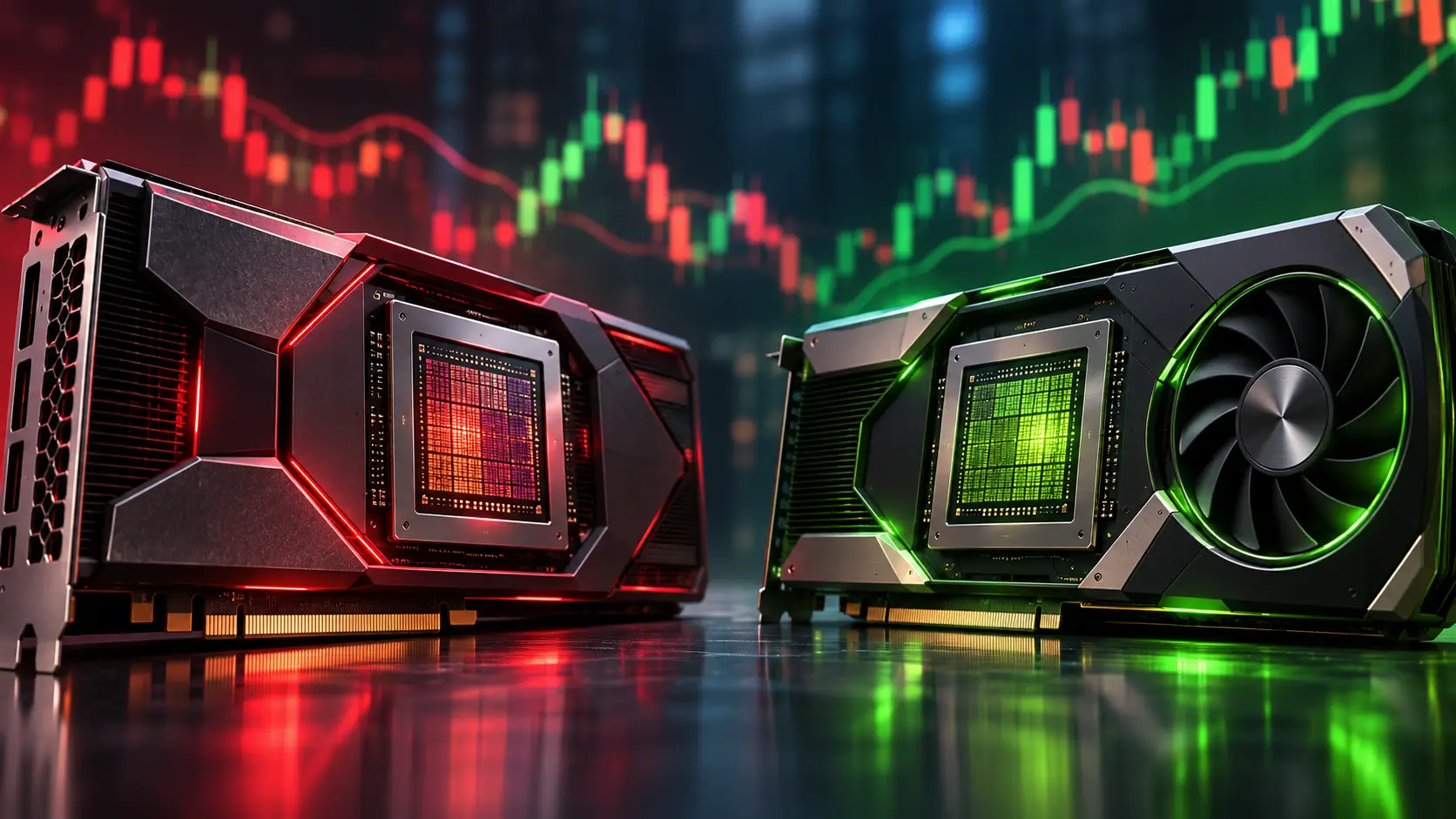
AMD, Broadcom and chip-equipment makers staged a sharp recovery on Monday. Nvidia, by contrast, slid. Meanwhile, new figures from TSMC and Infineon show that investment in AI infrastructure is still powering ahead.
The contrast on the stock market was stark on Monday, November 9. The Nasdaq Composite rose 2.74 percent, while Nvidia fell 4.27 percent. Rival AMD surged 13.26 percent. Chip-equipment makers Applied Materials and Lam Research also posted double-digit gains. In Amsterdam, ASML rebounded 4.69 percent.
The diverging performances show why it makes little sense to talk about “AI stocks” as if all these companies make money in the same way or face the same risks. For some, the story is demand for AI processors; for others, it is building chip factories, supplying memory or powering data centers. Nvidia, meanwhile, is dealing with a separate governance issue.
The share-price changes below cover the close of trading on Monday, November 9, 2026. The U.S. market was still open when this update was written on Tuesday, November 10, so Tuesday’s news is listed separately.
Nvidia and AMD head in opposite directions
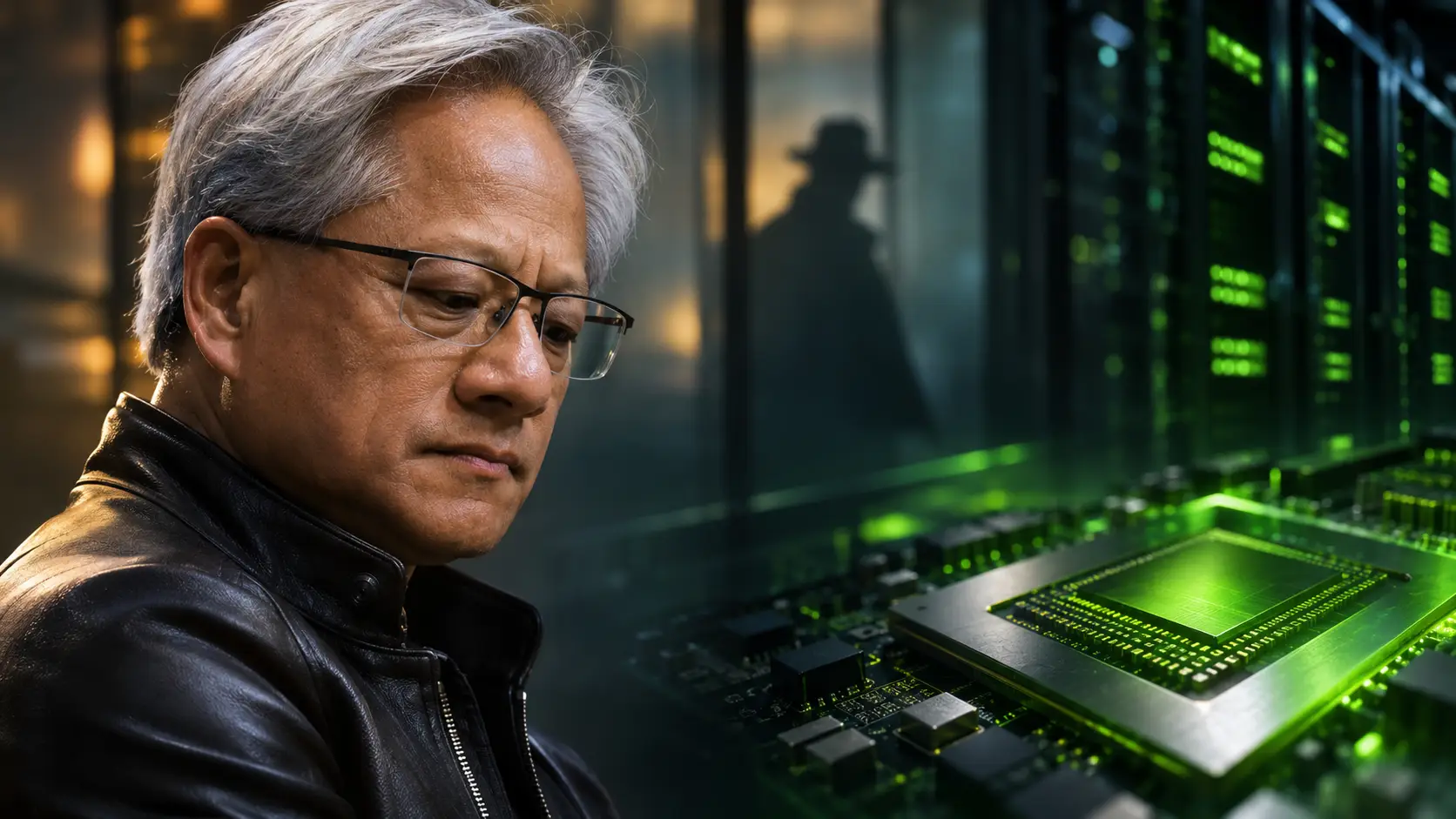
Nvidia is back in the spotlight, but not because of a new AI chip. The company is investigating whether CEO Jensen Huang was targeted in a foreign intelligence operation. Huang has acknowledged being unfaithful to his wife. The woman he was reportedly involved with, according to U.S. media reports, is said to have links to Chinese intelligence services.
The issue could have implications for trade in advanced AI chips, which are subject to U.S. export restrictions. Reuters reported on Tuesday on new allegations from a The Information investigation into chip shipments worth $7.5 billion. Reuters could not independently verify the report. There is no finding that Huang knowingly took part in espionage or illegal exports.
Nvidia shares closed Monday at $178.67, down 4.27 percent. In addition, shareholders have filed a lawsuit alleging that relevant information was not disclosed to investors in a timely manner. The allegations in the case have yet to be assessed. AI Wereld previously outlined what is known about Huang and the investigation.
AMD, by contrast, had concrete product news. On Monday, the company announced that its EPYC server processors will power the infrastructure behind Google Cloud’s new TPU 8tx. The TPU is Google’s own AI accelerator. AMD’s processors handle tasks including server management and the security of sensitive data.
The distinction matters: Google has not chosen AMD GPUs over Nvidia GPUs. But the deal shows that AMD can also benefit as AI systems built around other types of accelerators expand. Last week, AMD also reported that revenue from its data-center division surged 97 percent in the third quarter to $8.5 billion. The stock closed Monday at $508.58.
TSMC sets a revenue record, with growth nearing 60 percent
As investors weighed the market swings, Taiwanese chipmaker TSMC reported fresh revenue figures on Tuesday. Revenue in October reached 586.89 billion Taiwanese dollars, up 59.7 percent from a year earlier and 14.7 percent from September, according to the company’s official monthly report.
TSMC makes chips for Nvidia, AMD and other technology companies. That makes it a key link in the AI supply chain, no matter which chip designer gains market share.
But the figures need to be read with care. Monthly revenue includes several types of chips and customers, so the 59.7 percent increase does not mean AI revenue grew by the same amount. TSMC shares rose 3.51 percent on the U.S. market on Monday, closing at $388.62 per ADR.
Infineon’s update shows AI is also about electricity
One of the most notable updates from a European company came on Tuesday from Germany’s Infineon. The company expects revenue of around €20 billion in fiscal 2027, up from €16.35 billion in the last financial year. Revenue from power supplies for data centers is expected to approach €4 billion.
Infineon is less familiar to the public than Nvidia, but its technology is vital to data-center power management. AI servers need more than computing chips: they also require power supplies and electronics that efficiently convert and distribute electricity.
The forecast covers power supply for data centers in general, not just AI data centers. Still, it shows just how broad the investment boom has become: companies that neither build AI models nor make GPUs can benefit, too.
Applied Materials and Lam Research: the machines behind the chips
Chipmaking equipment makers saw a particularly strong rally on Monday. Applied Materials rose 11.37 percent, while Lam Research gained 10.41 percent. These companies sell the machines chipmakers need to expand production capacity and manufacture increasingly complex chips.
Applied Materials is especially relevant to Dutch readers. On October 26, the US company announced plans to increase its stake in Dutch company Besi to around 20 percent. The two companies are working together on advanced chip packaging, a technology that allows chips and memory to be placed closer together and connected. At the time of the announcement, the deal was still subject to conditions.
Applied Materials is also set to report its quarterly results on Thursday, November 12. The figures could shed more light on chipmakers’ actual investment plans after the recent market swings.
Lam Research had already announced a share repurchase authorization of up to $25 billion on November 5. The authorization allows the company to buy back shares; it does not guarantee that the full amount will be spent. Monday’s gain also reflected a broader rally among chip equipment makers.
In Amsterdam, ASML rose 4.69 percent on Monday to €1,343.80. ASM International gained 3.38 percent and Besi 2.51 percent. The rebound followed steep losses in the preceding trading sessions. AI Wereld previously covered the diverging fortunes of Dutch chip companies.
Broadcom and Micron: custom AI chips and memory
Broadcom gained 8.78 percent on Monday. The company makes network chips and custom-designed AI processors for major technology firms, among other products. One example is its partnership with OpenAI on the Jalapeño AI accelerator, announced in June. This gives Broadcom a different route into the AI market from the familiar GPUs made by Nvidia and AMD.
Micron rose 6.25 percent. The company supplies memory chips for servers and AI systems, among other products. They are essential: without fast, sufficient memory, powerful AI processors cannot fully use their computing capacity. In its latest annual results, Micron highlighted strong memory demand and multiyear agreements with customers.
The gain needs to be seen in context. On Thursday, November 5, Micron lost more than 17 percent. Monday’s rise did not mean the stock had recovered all its earlier losses.
Read also

Inflation and financing remain risks
A market rebound does not mean concerns about AI investment have gone away. On Tuesday, the US government reported that consumer prices rose 0.4 percent in October from September. Core inflation came in at 0.3 percent. Both figures were higher than expected, putting fresh pressure on technology stocks and interest-rate expectations. Reuters covered the market reaction to the inflation data.
Lenders are also taking a closer look at how AI data centers are financed. Companies that must invest billions before their contracts generate revenue are particularly vulnerable to higher borrowing costs. AI Wereld previously published a separate analysis of AI loans.
Investors will get fresh clues in the coming days. Applied Materials reports its results on Thursday. Nvidia will follow with its next quarterly update on Tuesday, November 17. Investors will be watching not only for growth in the AI chip market, but also for how much clarity the company can provide about the business impact of the ongoing investigation.
The key takeaway from these trading sessions is not that AI stocks are safe again, or that artificial intelligence has stopped growing. The market is increasingly distinguishing between companies with clear revenue growth, suppliers benefiting from the infrastructure buildout, and businesses facing their own commercial or financial risks.
This article is for journalistic information purposes only and is not investment advice. The share price movements refer to the trading day mentioned and may have changed since then.

Popular news
The Hidden Technical Debt Crisis Behind Prompt Driven Development
AI Engineer Compiles RISC-V Processor Inside Qwen 3.5 LLM Weights

South Korea Bets Big On Sovereign AI Infrastructure With NVIDIA Partnership

Amazon Shuts Down AI Educator Account Following Bulk Nvidia Hardware Orders

Asahi Linux Tightens Its License After AI Copying Complaints