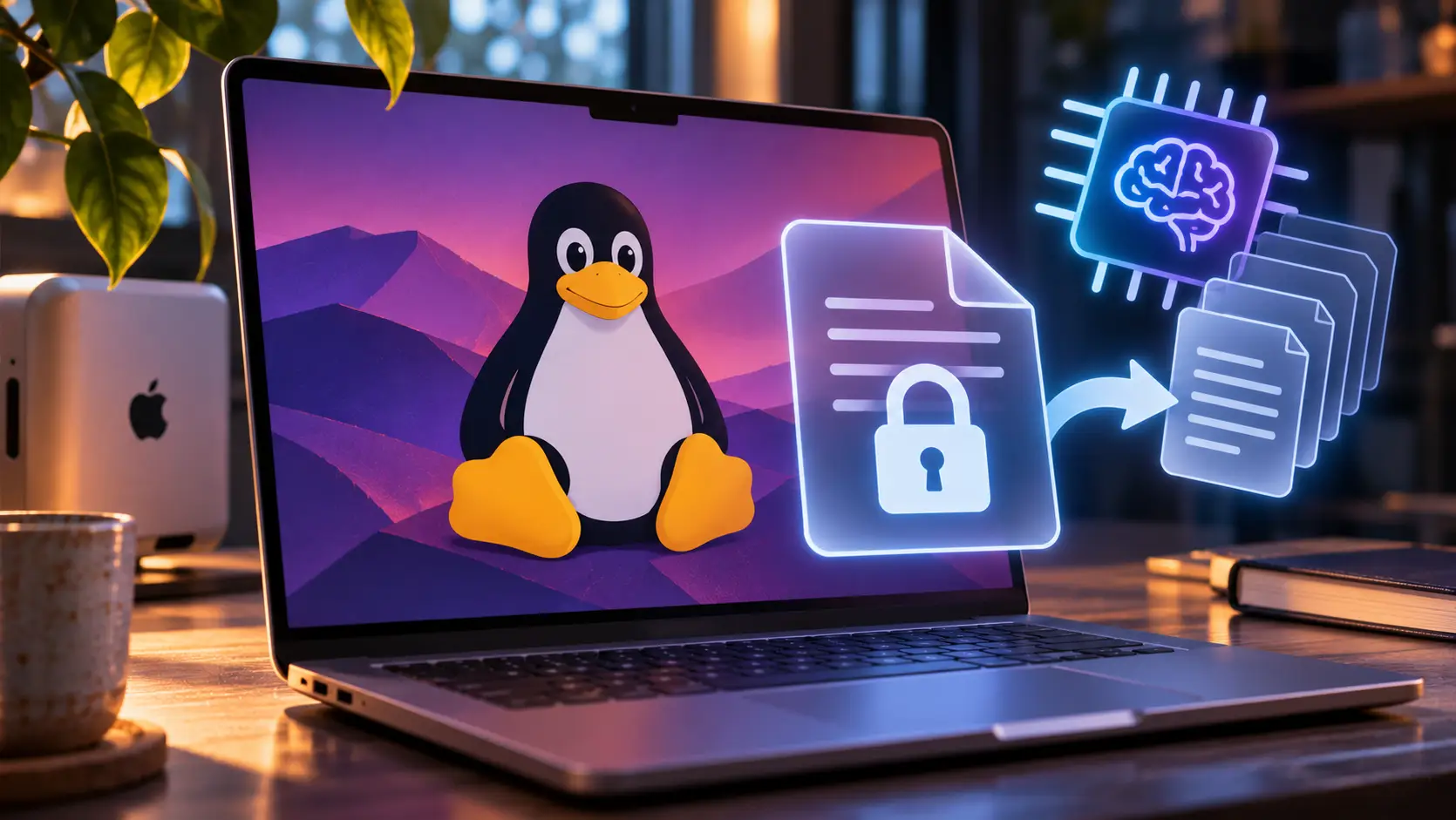
Asahi Linux is moving to a stricter open-source licence after complaints that others copied its code and rewrote it with AI. The project wants to stop people from building on its work without making those changes available to users.
The project develops Linux support for Apple Silicon and, according to its report , is beginning the switch to the GNU General Public License, version 2 or later.
Rewriting code to disguise its origins
The project says that, in some cases, others took code that Asahi developers were still working on. Asahi accuses them of publishing it without attribution or rewriting it with language models to make its origins harder to recognize.
Asahi has not named any companies or individuals involved. The report is not a court ruling, so it remains unclear whether any of the actions described were unlawful.
The team originally chose the permissive MIT licence to make collaboration with other free operating systems easier.
MIT allows a lot—but with conditions
The MIT licence gives users broad permission to copy, modify, distribute and sell software. That makes it attractive to companies incorporating open-source components into their own products.
But there is an important condition: copies or substantial portions of the software must retain the copyright notice and licence text. MIT does not give anyone carte blanche to remove all references to the original rights holder.
That distinction matters here. Commercial reuse may be allowed under the existing licence, while a particular way of distributing the software could still violate its terms. A general allegation of copying alone does not establish whether that happened.
GPL keeps distributed changes accessible
Under the GPL, anyone distributing a modified version must also make its corresponding source code available under the licence’s terms. Recipients can then study, modify and redistribute the software themselves.
The Free Software Foundation explains that the GPL allows commercial sales. Nor does an organization automatically have to publish changes used only internally. The obligations apply primarily when software is distributed.
For businesses, the exact licence matters more than simply calling something ‘open source’. Even publicly available AI models vary in which components they provide and how they can be used. Access to files does not tell the whole story about the terms governing how others can build on them.
Asahi already had a strict AI policy
The move builds on Asahi’s existing generative AI policy. The project broadly prohibits using such tools to make substantive contributions to its software. Anyone who conceals extensive AI use may be banned from further participation immediately, under the policy. It also says the project may close a bug report written with AI and point to the rules.
Asahi points to a specific concern: it is investigating how Apple hardware works without using prohibited source material. This approach is known as clean-room reverse engineering. The team fears that language models could introduce information they should not use—and that developers may be unable to trace where generated output came from.
Asahi says human oversight can be especially weak when AI agents carry out multiple research steps. The project is therefore setting rules not only for how others use its code, but also for how new contributions are produced.

Popular news

Singapore General Hospital Wins Global Healthcare Award For Antibiotic AI Tool

Nvidia CEO Jensen Huang Admits to an Affair as Company Probes Possible Chinese Espionage

Global Media Leaders Forge AI Action Plan at Beijing Summit
Nvidia Board Launches Probe Into Foreign Intelligence Reports Targeting CEO

Developers Test Free Local AI Stack Against Premium Cloud Coding Agents