Why AI Needs So Much Electricity: The Physical Demands of Modern AI Infrastructure
ExplainersSunday, 17 May 2026 at 12:00
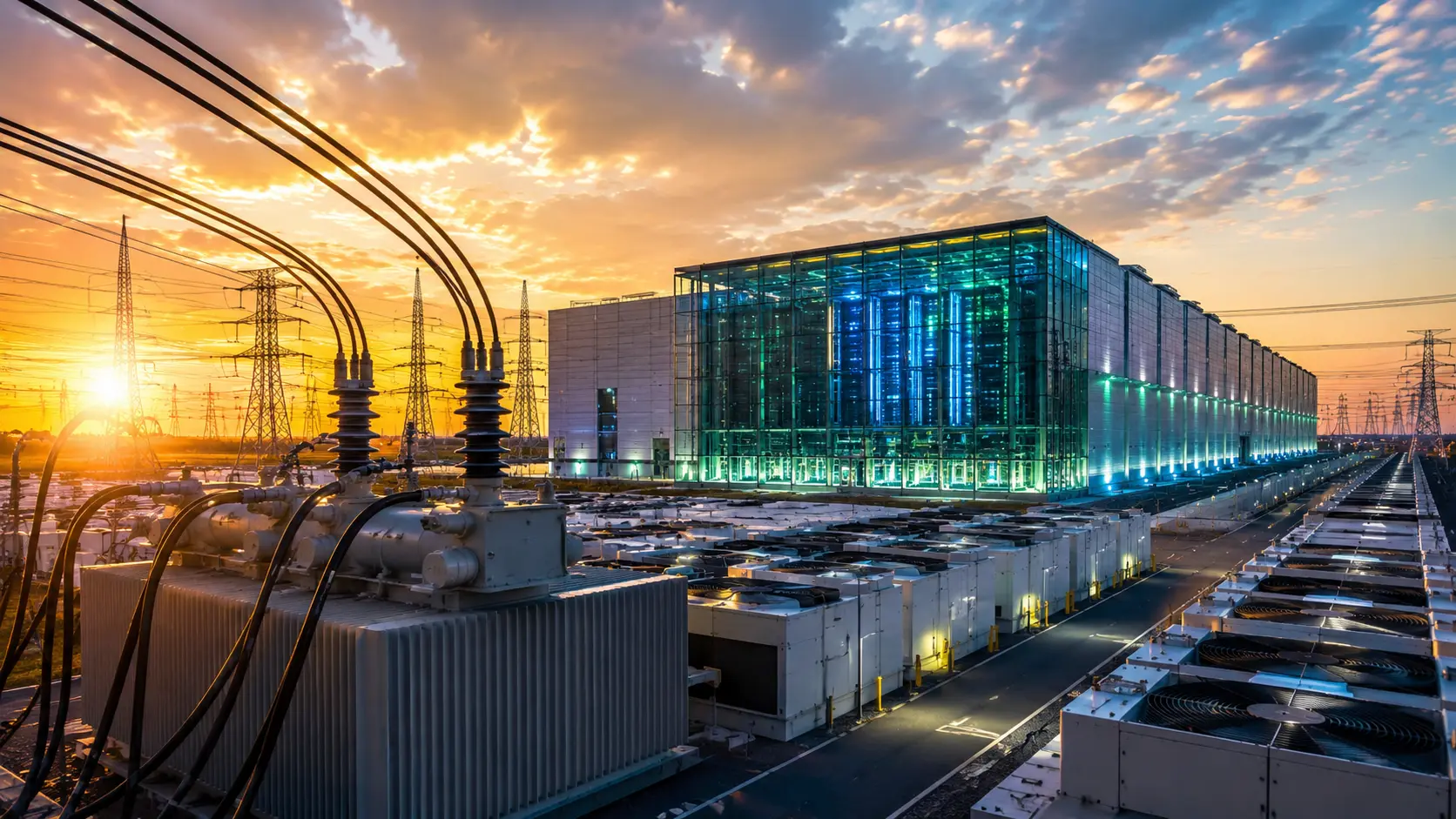
Artificial intelligence has become one of the fastest-growing sources of electricity demand in the global economy. AI consumed around 0.5% of the world's electricity in 2025, with AI-focused data centers using approximately 155 terawatt-hours of power annually. This surge stems from the computational requirements of training large models, running inference at scale, and maintaining the physical infrastructure that supports AI operations around the clock.
The electricity challenge extends far beyond the servers themselves. Modern AI systems depend on high-performance GPUs that draw substantial power, cooling systems that prevent hardware failure, and networking equipment that connects distributed computing resources. These components operate continuously in specialized facilities designed to handle power densities far exceeding traditional data centers.
Understanding AI's energy consumption requires examining the entire infrastructure stack. From the chips processing billions of calculations per second to the cooling towers dissipating heat, each element contributes to a system that now accounts for a significant portion of new electricity demand in regions like the United States, where data centers consume 5% of total power generation.
Key Takeaways
- AI infrastructure consumed 155 terawatt-hours globally in 2025, driven by power-intensive GPUs, cooling systems, and continuous operations at hyperscale data centers
- Data center electricity demand is geographically concentrated, creating regional grid stress in states like Virginia where facilities use over a quarter of available power
- The energy footprint of AI extends beyond visible chatbot queries to include model training, image generation, and diffuse deployment across enterprise systems and internet services
Factors Driving Rising Electricity Demand
AI-related electricity consumption is expected to grow by 50% annually from 2023 to 2030. This surge stems from multiple factors that are reshaping power grids worldwide.
Data centers now consume electricity at unprecedented rates. Global data center electricity demand is set to more than double by 2030 to around 945 terawatt-hours, roughly equal to Japan's total consumption today.
GPU processing requirements represent the largest driver. Training large language models requires thousands of GPUs running simultaneously for weeks or months. These processors generate substantial heat and demand constant power flow.
Key demand factors include:
- Training runs for foundation models
- Inference requests from millions of users
- Cooling infrastructure for thermal management
- Network equipment and storage systems
- Backup power and redundancy systems
In the United States, data centers will account for almost half of electricity demand growth through 2030. Hyperscalers like Microsoft, Google, and Amazon are building facilities that each require hundreds of megawatts.
Cooling systems alone consume 30-40% of total data center power. Advanced liquid cooling can reduce this burden but requires significant infrastructure investment.
The concentration of energy and AI infrastructure in specific regions creates localized grid stress. Some areas face capacity constraints as utilities struggle to meet sudden demand spikes from new facilities.
Power Consumption Patterns in AI Models
AI models consume electricity differently depending on what stage they're in. The four main stages are preparation, training, fine-tuning, and inference.
Training is when your AI model learns from data. This stage uses the most power because it requires massive processing over days or weeks. Large models need thousands of GPUs running at the same time, which creates enormous electricity demand.
Key Power Consumption Differences:
- Training: Highest energy use, happens once per model
- Inference: Lower per-operation use, but happens billions of times daily
- Fine-tuning: Moderate power needs for model adjustments
The size of your AI model directly impacts how much electricity it needs. Smaller AI systems use minimal energy. But larger models demand vast amounts of power to operate.
Accelerated servers running AI workloads are growing at 30% annually, much faster than conventional servers at 9% per year. These high-performance servers create concentrated power demand in data centers.
Your choice of AI model affects energy consumption in real time. When you use generative AI tools, each query triggers inference operations across multiple servers. While a single query uses less power than training, the combined demand from millions of users adds up quickly across the grid.
The frequency of AI model use matters too. Models that run constantly for real-time applications maintain steady power draw. Models used occasionally create variable demand patterns that grid operators must manage.
Training Versus Inference: A Technical Energy Split
AI's electricity consumption breaks down into two distinct phases: training and inference. Each places different demands on your data center infrastructure and power supply.
Training consumes massive amounts of energy upfront. You're running thousands of GPUs simultaneously for weeks or months to build a single model. This phase requires peak power density, advanced cooling systems, and stable grid connections that can handle sustained loads of 50-100 kilowatts per rack.
Inference is the real-time application of trained models. While a single inference operation uses less power than training, the cumulative demand becomes substantial because it happens billions of times daily across global deployments.
The energy dynamics between training and inference are shifting. Training large models uses huge amounts of energy initially, but inference becomes the larger long-term demand because it happens every time users interact with AI systems.
Key differences in power requirements:
- Training: High power density, batch processing, predictable schedules
- Inference: Lower per-query power, continuous operation, unpredictable traffic patterns
Your infrastructure planning must account for both workloads. Training facilities need proximity to renewable energy sources and robust cooling infrastructure. Inference clusters require geographic distribution near end users and redundant power systems for reliability.
This split is reshaping global data center deployment strategies as hyperscalers optimize each facility type for specific workloads. You'll see training concentrated in regions with cheap electricity while inference spreads across edge locations worldwide.
Read also
The Energy Profile of GPUs
Graphics processing units draw substantial amounts of electricity compared to traditional computing hardware. A single modern AI GPU consumes up to 3.7 MWh of power per year when running continuously. This consumption level reflects the intensive computational work these chips perform.
When you deploy AI chips in data centers, their power requirements extend beyond the GPU itself. The GPU power draw creates heat that stresses cooling systems and increases electricity usage across your entire facility.
Key Power Consumption Factors:
- Base GPU operation: Requires continuous electricity for processing
- Clock frequency settings: Higher speeds demand more power
- Server overhead: Additional components supporting GPU function
- Cooling requirements: Heat removal systems add to total draw
Your infrastructure must account for these layered demands. GPUs need significant energy because they run thousands of processing cores simultaneously, unlike traditional CPUs that handle fewer complex operations.
The thermal output from high-performance GPUs requires robust cooling infrastructure. Your facility's Power Usage Effectiveness ratio measures how much extra electricity goes toward cooling versus actual computing. This ratio directly impacts your total energy costs.
Modern GPUs can run at reduced clock frequencies to lower power consumption. However, this trade-off affects processing speed and may extend the time needed for AI workloads, potentially offsetting energy savings.
AI Data Centers and High Power Density
AI workloads concentrate computing power in ways traditional data centers never had to handle. A single rack running AI training models can pull 50 to 100 kilowatts of electricity. That's ten times more than what you'd find in a standard server rack.
The difference comes down to GPUs. These specialized processors power machine learning tasks but consume far more electricity than conventional CPUs. When you pack hundreds of GPUs into a single facility, AI data centers face power density challenges that strain existing electrical infrastructure.
Key Power Density Comparisons:
| Facility Type | Power per Rack |
| Traditional Data Center | 5-10 kW |
| AI Data Center | 50-100+ kW |
The power demand from AI data centers could reach 123 gigawatts by 2035, up from just 4 gigawatts in 2024. That's a thirtyfold increase in eleven years.
Your electrical grid wasn't built for this. Some utilities have stopped accepting new applications because they can't meet the demand from facilities housing ChatGPT and similar AI systems.
High power density creates intense heat. Liquid cooling systems are replacing traditional air conditioning in many facilities. This shift requires new specialists in thermal engineering and power systems who understand AI infrastructure requirements.
Hyperscalers building these facilities now plan for nuclear and renewable baseload power from day one. The era of plugging into existing grid capacity is over.
Cooling Systems in AI Operations
The processors running AI workloads generate extreme heat that standard air conditioning cannot handle. AI data centers require advanced liquid-based cooling solutions because they generate substantially more heat than traditional facilities.
Your cooling infrastructure represents a significant portion of total energy consumption. About 40% of the average data center budget goes toward cooling alone. This creates pressure on both your operational costs and the electrical grid.
Two Primary Liquid Cooling Approaches:
- Direct-to-chip cooling - Cool liquids pass through cold plates connected directly to hot components, extracting heat and transferring it to the liquid
- Immersion cooling - Entire servers sit in dielectric fluid that directly removes heat from components
Immersion cooling delivers superior efficiency, potentially reducing your power usage effectiveness (PUE) to 1.02. Direct-to-chip cooling achieves PUE below 1.2. Both vastly outperform air cooling systems, which typically operate at 1.8 PUE.
The need for advanced cooling systems also leads to excessive water consumption, creating environmental concerns in water-scarce regions. You face a trade-off between energy efficiency and resource consumption.
Hyperscalers are deploying these technologies rapidly. Liquid cooling has moved from niche high-performance computing into mainstream data centers as AI infrastructure demands increase. Your cooling strategy directly impacts grid demand and long-term operational sustainability.
Electricity Consumption by Hyperscale Providers
Hyperscale data centers represent the largest concentration of AI computing power in the world. These massive facilities are driving unprecedented electricity demand as they scale up GPU clusters for generative AI workloads.
Hyperscale data centers account for approximately 40-45% of global data center energy consumption while delivering the majority of cloud computing services. A typical hyperscale facility uses 100 megawatts of electricity, equivalent to powering 100,000 households. That represents the low end of the spectrum.
Connection requests for new facilities tell a more striking story:
- Hyperscale operators are requesting 300-1000 MW capacity
- Lead times range from 1-3 years
- Local grids are struggling to deliver power at this pace
These infrastructure demands are straining already aging electrical grids. Utilities warn that AI-optimized facilities consume as much power as a small city.
Your hyperscale providers have responded by becoming leaders in renewable energy procurement. Many have committed to 100% carbon-free electricity targets. As of 2024, natural gas supplied over 40% of electricity for U.S. data centers, while renewables like wind and solar contributed about 24%. Nuclear power supplied around 20%.
The challenge intensifies as AI data centers are projected to consume over 90 TWh of electricity annually by 2026. This forces hyperscalers to rethink how they produce, deliver, and consume power.
Global Shifts in Energy Demand Driven by AI
AI infrastructure is fundamentally reshaping electricity consumption patterns worldwide. Data center electricity demand could more than double between 2022 and 2026, with AI training and inference workloads accounting for much of this growth.
The numbers reveal the scale of transformation you're witnessing. By the early 2030s, AI infrastructure may require 75-100 GW of new electricity generating capacity to supply up to 1,000 terawatt-hours annually. Data centers currently consume about 1% of global electricity, but projections show this rising above 3% by 2030.
Hyperscaler companies are driving this demand through massive GPU clusters that require unprecedented power densities. These facilities need sophisticated cooling systems that add further electricity overhead. Your existing grid infrastructure faces mounting pressure as AI adoption increases electricity consumption by 80% from 2020 levels.
Energy companies are responding by expanding both traditional and renewable generation capacity. Nuclear power is gaining renewed attention for its ability to provide stable baseload electricity. Meanwhile, AI applications could unlock 175 GW of transmission capacity through optimization—more than the projected increase in data center load through 2030.
The geographic distribution of AI infrastructure creates regional hotspots where electricity demand concentrates around major data center facilities. This uneven distribution challenges grid operators who must balance supply and demand across increasingly complex networks.
AI's Interface With the Power Grid
The connection between AI data centers and electricity infrastructure creates significant challenges for grid operators. AI-driven electricity demand is placing extraordinary pressure on power grids that were designed decades ago for different usage patterns.
Much of the U.S. power grid infrastructure is over 25 years old. Key upgrades will require at least a decade to implement, even as your energy needs from AI computing grow rapidly.
The grid now faces stress from both sides. On the supply side, more electricity comes from variable renewable sources like wind and solar. On the demand side, electrification and AI computing are driving unprecedented growth.
Key Grid Integration Challenges:
- Hyperscale data centers lack a standard electricity load profile
- Grid operators struggle to compare scenarios and estimate future costs
- Aging infrastructure must handle complex new demand patterns
- Resource adequacy planning becomes more difficult
AI data center power consumption needs a baseline that would help you and other stakeholders design better demand-side flexibility incentives. Without standardized profiles, renewable energy developers and policymakers cannot accurately gauge what the grid will need.
The solution requires accelerated investments in electricity generation and grids, improved data center efficiency, and stronger dialogue between policymakers, tech companies, and energy providers. Your ability to benefit from AI depends on whether electrical infrastructure can keep pace with compute demands.
Integrating Renewable Energy Into AI Infrastructure
Your AI infrastructure faces a critical challenge: meeting massive power demands while reducing carbon emissions. Data center power demand will grow 160% by 2030, forcing hyperscalers to rethink their energy strategies.
Traditional grid infrastructure cannot support AI workloads that consume 3-5 times more energy than conventional computing. You need direct renewable energy integration to power your GPU clusters and cooling systems without overwhelming existing electrical grids.
Key Integration Strategies:
- On-site solar and wind installations that provide dedicated power to data centers
- Power purchase agreements (PPAs) securing long-term renewable energy supplies
- Advanced battery storage systems managing intermittent renewable generation
- Vehicle-to-grid technology creating flexible energy distribution networks
AI can help manage power grid operations and infrastructure planning, creating a feedback loop where AI optimizes the very renewable systems powering it. Machine learning algorithms forecast solar and wind generation patterns, allowing you to schedule compute-intensive tasks during peak renewable production.
Your energy transition requires more than adding solar panels. AI enables demand-side management through advanced forecasting and optimization, letting you shift workloads to match renewable availability. This reduces grid pressure during peak hours.
The economics work in your favor. Renewable energy costs have dropped significantly, making direct integration financially viable. Your infrastructure investments now include energy storage and distribution innovations alongside traditional computing hardware, fundamentally changing how you plan data center development.
Nuclear Energy's Role in Supporting AI
Tech companies are turning to nuclear power as AI data centers require 24/7 electricity that wind and solar cannot consistently provide. Unlike renewable sources, nuclear plants deliver constant baseload power without carbon emissions.
Major hyperscalers have already committed to nuclear expansion:
- Google signed a deal with Kairos Power for up to 500 megawatts by 2035
- Amazon invested in X-energy's small modular reactor project in Washington state
- Microsoft secured power from the reopened Three Mile Island facility through 2028
The challenge you need to understand is timing. Building new nuclear reactors takes close to a decade, but your data center power needs arrive in three to five years. This gap means fossil fuels will bridge the shortfall despite nuclear announcements.
Nuclear capacity in the US has remained flat at around 800 terawatt-hours annually for two decades. Meeting projected 2030 data center demand through nuclear alone would require expanding the reactor fleet by 50 percent.
Your options include extending licenses for 24 existing reactors set to expire before 2035 or upgrading current sites to add two to eight gigawatts of capacity. Small modular reactors promise faster deployment, but demonstration projects won't deliver commercial-scale power until the early 2030s.
The reality is that nuclear power will be part of a broader energy mix alongside natural gas, renewables, and battery storage to meet your AI infrastructure demands.
Environmental Considerations of AI Electricity Use
The environmental impact of AI extends beyond just electricity consumption. When you power AI data centers with fossil fuels, you generate significant greenhouse gas emissions that contribute to climate change.
A typical AI data center uses as much electricity as 100,000 households. The largest facilities under development will consume 20 times more power than that. This massive demand creates pressure on your local grid infrastructure.
Key Environmental Concerns:
- Carbon emissions from fossil fuel-powered electricity generation
- Water consumption for cooling high-density GPU clusters
- Electronic waste from frequent hardware upgrades
- Land use for sprawling data center campuses
Your GPU clusters generate intense heat that requires constant cooling. Many facilities use water-based cooling systems that consume millions of gallons annually. This strains local water resources, especially in drought-prone regions.
The concentration of AI facilities in specific states creates regional environmental stress. Virginia, Texas, and California host the majority of data center capacity, putting disproportionate pressure on those grids.
Your choice of power source matters significantly. Data centers running on coal or natural gas have much higher carbon footprints than those using nuclear or renewable energy. The projected doubling of data center electricity consumption by 2030 makes the transition to clean energy critical for limiting AI's climate impact.
Water Requirements and Cooling Obstacles
AI data centers face mounting pressure from water consumption as data centers directly consumed 66 billion liters in 2023, up from 21.2 billion liters in 2014. The cooling systems you rely on to manage heat from high-performance GPUs create trade-offs between energy efficiency and water usage.
Challenges of Water Usage for Cooling
Your choice of cooling method directly impacts water consumption at your facility. Traditional air cooling uses fans and air conditioning with minimal water but consumes substantial electricity. Evaporative cooling has become popular because it handles higher heat loads more efficiently, but you lose significant water through evaporation in the process.
Training GPT-3 in Microsoft's U.S. data centers directly evaporated 700,000 liters of clean freshwater. Each 100-word AI prompt you generate consumes approximately 519 milliliters of water.
Beyond direct consumption, your indirect water footprint reaches 800 billion liters nationally through electricity generation at thermal power plants. Producing a single microchip requires 2.1-2.6 gallons of water for cooling machinery and contamination control.
More than 160 new AI data centers have emerged in water-scarce regions over the past three years. Your facility's water demands peak during summer months when local utilities already face strain, creating conflicts with municipal water supplies.
Regional Grid Limitations and Stress Factors
Different parts of the country face different levels of pressure from AI data center growth. Your local grid's ability to handle new demand depends on existing infrastructure, generation capacity, and transmission networks.
Northern Virginia hosts roughly 70% of global internet traffic and operates over 4,900 MW of data center capacity. The region experienced a voltage fluctuation that disconnected 60 data centers simultaneously, creating a 1,500 MW power surplus that required emergency grid adjustments.
Texas presents a different challenge. ERCOT projects peak summer demand could reach 145 GW by 2031, up from 85 GW in 2024. About 32 GW of this increase comes from data centers and cryptocurrency operations. The state's rapid growth prompted lawmakers to pass Senate Bill 6, which reformed interconnection processes and cost-sharing rules.
Key Regional Constraints:
- Transmission bottlenecks limiting power delivery to high-demand areas
- Transformer shortages delaying new connections
- Aging infrastructure over 25 years old across much of the U.S. grid
- Planning timelines requiring at least a decade for major upgrades
Grid infrastructure struggles to keep pace with AI-driven demand growth. Your region may experience grid volatility from data center workloads that change within seconds.
Some areas now face delayed project timelines as companies wait for grid capacity. Others see utilities contracting power directly from private producers to bypass congested transmission lines.
Locational Trends: Siting AI Infrastructure Near Energy Sources
AI data centers are increasingly being built near existing power generation facilities. This strategy helps companies secure reliable electricity access and avoid the costs of upgrading transmission infrastructure.
Key Location Strategies:
- Nuclear plant proximity - Data center operators are pursuing agreements with nuclear facilities to access stable baseload power
- Natural gas hubs - Regions with abundant natural gas infrastructure attract AI facilities due to flexible generation capacity
- Renewable energy zones - Wind and solar-rich areas offer lower-cost power, though intermittency creates challenges
The concentrated siting of AI data centers creates regional pressure on local power systems. When multiple hyperscalers build facilities in the same area, you see rapid strain on distribution networks and generation resources.
Regional Hotspots for AI Infrastructure in the USA:
| Region Type | Power Source | Primary Advantage |
| Mid-Atlantic | Nuclear & gas | Reliable baseload capacity |
| Texas | Natural gas & wind | Deregulated market flexibility |
| Pacific Northwest | Hydro | Low-cost renewable power |
Your choice of location determines which energy sources will power your AI operations. Natural gas currently supplies the largest share of data center electricity, with nuclear potentially playing a larger role in future deployments.
The geographic concentration of AI infrastructure means some regions face electricity scarcity among users as facilities compete with residential and industrial customers for available capacity.
Economic Implications of AI Electricity Use
The electricity demands of AI are creating significant economic pressure across multiple sectors. AI-related electricity consumption is expected to grow by as much as 50% annually from 2023 to 2030, forcing utilities and governments to reconsider infrastructure investments.
Your electricity costs may rise as data centers compete for power resources. A typical AI data center uses as much electricity as 100,000 households, with the largest facilities consuming 20 times more. This puts strain on aging grids and creates competition between residential, industrial, and tech sector customers.
The infrastructure buildout required is substantial. You're looking at 75-100 GW of new electricity generating capacity needed to supply as much as 1,000 terawatt-hours annually by the early 2030s. These investments demand billions in capital expenditure for generation facilities, transmission lines, and grid modernization.
Key economic factors include:
- Rising capital costs for power generation infrastructure
- Increased electricity prices in regions with concentrated data center development
- Competition for renewable energy resources between sectors
- Investment in natural gas and nuclear capacity to meet baseload demands
In the United States, data centers are projected to account for almost half of electricity demand growth through 2030. By that year, you'll see the US economy consuming more electricity for data processing than for manufacturing aluminum, steel, cement, and chemicals combined.
Improving the Energy Efficiency of AI
You can reduce AI's electricity consumption through several technical approaches that data center operators are already implementing. Hardware improvements offer the most direct path forward.
Key efficiency strategies include:
- Designing specialized chips that perform AI calculations with less power
- Upgrading cooling systems to reduce thermal management costs
- Optimizing software algorithms to require fewer computational steps
- Running models on smaller, more efficient architectures when possible
Your GPU infrastructure represents a major opportunity for gains. Modern accelerators can deliver up to 40% better performance per watt compared to previous generations. Hyperscalers are investing heavily in liquid cooling systems that reduce energy overhead by 15-30% compared to traditional air cooling.
Data center operators are improving the efficiency and flexibility of data centers by matching workloads to available renewable power. You can schedule training runs during periods of high solar or wind generation. This approach doesn't reduce total consumption but aligns demand with cleaner electricity sources.
Power management techniques allow your systems to scale resources dynamically. Instead of running GPUs at full capacity continuously, intelligent workload distribution reduces waste during low-demand periods.
Companies developing AI sustainability standards are measuring performance against electricity usage. This metric helps you compare models based on their computational efficiency rather than accuracy alone.
The industry needs continued innovation in chip design, cooling technology, and grid integration. Your investment in these areas determines whether AI growth remains viable as electricity demand from AI-optimized data centers is projected to more than quadruple by 2030.
Outlook for AI Energy Infrastructure
The AI-driven surge in electricity demand requires substantial expansion of power generation capacity. You're looking at a need for 75-100 GW of new electricity generating capacity to supply as much as 1,000 terawatt-hours annually by the early 2030s.
Grid Infrastructure Challenges
Your existing power grid faces significant pressure. Much of the U.S. grid infrastructure is over 25 years old, and key upgrades will require at least a decade to implement. This timeline creates a critical gap between AI's growth and available power supply.
Power Generation Solutions
You'll see investment flowing into multiple energy sources:
- Natural gas expansion for baseload power
- Nuclear energy for reliable, carbon-free generation
- Renewable power installations with battery storage
- Off-grid solutions for remote data center locations
Emissions and Policy Impact
Under current energy policies, AI could add 1.7 gigatons in global greenhouse gas emissions between 2025 and 2030. This matches Italy's energy-related emissions over five years.
Capital Requirements
Your utilities need access to sufficient capital for necessary infrastructure improvements. The balance between data center expansion and power infrastructure development requires cross-sector coordination. GPU cooling systems, hyperscaler facilities, and transmission networks all demand substantial investment to support AI's trajectory.
Conclusion
AI's electricity demands stem from fundamental technical requirements. The computational power needed for training and running AI models translates directly into electricity consumption at data centers worldwide.
Your understanding of this issue matters because AI infrastructure growth shows no signs of slowing. Generative AI models consume 10 to 30 times more energy than task-specific AI systems, putting pressure on electricity grids in regions with concentrated data center development.
The cooling requirements alone create substantial electricity overhead. Advanced liquid cooling systems must run continuously to manage the heat generated by densely packed GPUs processing AI workloads.
Key factors driving AI electricity use:
- GPU-intensive processing requirements
- 24/7 data center operations
- Advanced cooling infrastructure
- Growing model complexity and size
- Increasing adoption across industries
Your local grid may already feel the impact. Hyperscalers are pursuing diverse energy solutions including nuclear power and renewable installations to meet their expanding needs. These investments reflect the long-term electricity commitments required for AI infrastructure.
The relationship between AI development and energy consumption will shape infrastructure planning for years ahead. Data centers must secure reliable baseload power while managing thermal loads that exceed traditional computing facilities. Your awareness of these electricity demands helps contextualize the infrastructure investments and grid planning decisions happening across the energy sector.
Frequently Asked Questions
AI systems require enormous amounts of electricity to train models on thousands of GPUs and to serve billions of daily inference requests across global data centers. These operations also demand substantial water for cooling and place growing pressure on power grids.
What parts of training large AI models consume the most electricity?
Training large AI models requires thousands of GPUs running simultaneously for weeks or even months. The GPUs themselves draw the bulk of power as they process vast datasets and adjust billions or trillions of parameters.
GPT-4 reportedly contains over a trillion parameters. Models of this scale need massive computational power to learn patterns across their training data.
Beyond the chips themselves, data centers require advanced cooling solutions because AI workloads generate substantially more heat than traditional computing. The supporting infrastructure doubles the actual energy consumption when you account for cooling systems and other hardware.
Why does running AI inference at scale draw significant power in data centers?
Inference happens every time you prompt an AI model. While a single query uses relatively modest energy, billions of users making multiple requests daily creates sustained power demand that exceeds training costs over time.
Generative AI consumes 10-30 times more energy than task-specific AI during inference. Reasoning models that explain their thinking step-by-step consume far more power than standard models because they process hundreds of additional tokens per response.
The number of GPUs needed to serve requests quickly multiplies as user demand grows. Major AI services route your queries to data centers worldwide, each drawing power from different grids at different times.
How much electricity do major AI services use globally each year?
Data centers currently account for 4.4 percent of all energy consumption in the United States. This figure is projected to grow to up to 12 percent by 2028 as AI workloads expand.
AI's energy needs already match small cities and are projected to rival entire countries. The exact consumption figures remain unclear because major AI companies do not disclose their complete energy data.
OpenAI CEO Sam Altman claimed an average ChatGPT query uses energy equal to what an oven would consume in slightly over one second. However, this figure lacks context about what constitutes an "average" query and excludes the energy used for training, hardware manufacturing, and cooling infrastructure.
Why do AI workloads also increase water use for data-center cooling?
AI chips generate substantially more heat than traditional server processors. Your queries trigger computational work that produces thermal output requiring constant cooling to prevent hardware failure.
Data centers use water-based cooling systems to manage these extreme temperatures. Transparency from AI companies about water consumption remains limited, making it difficult to assess the full environmental impact.
Summer months and daytime hours place additional strain on cooling systems. Higher outside temperatures force cooling infrastructure to work harder and consume more energy and water resources.
What trends and forecasts exist for AI-related electricity demand over the next decade?
Electricity demand from AI data centers is expected to grow rapidly as generative AI becomes more widespread across industries and consumer applications. The shift to newer, more powerful chips like Nvidia's H100 accelerates this growth.
Grid operators face mounting pressure to supply power for planned data center expansions. Meta has agreed to purchase 150 megawatts of geothermal energy from Sage Geosystems starting in 2027 to power its AI infrastructure.
The forecasts remain uncertain because companies do not share detailed roadmaps for model development and deployment. Your increased use of AI services directly contributes to rising baseline electricity demand that utility providers must meet.
What practical steps can companies take to reduce the energy footprint of AI systems?
Choosing the right model size for each task reduces unnecessary energy consumption. Small models can handle simple questions with less than a third of the carbon production of larger reasoning models while maintaining comparable accuracy.
Tools like Hugging Face's AI Energy Score rank models based on energy use across different tasks, helping you identify the most efficient option for your specific needs. These leaderboards show that giving up a small amount of performance can save significant energy.
Companies can also optimize query phrasing by removing unnecessary words. Extra input requires additional processing power, and politeness terms like "please" and "thank you" cost millions of dollars in aggregate energy consumption.
Scheduling AI workloads during off-peak hours when power demand drops and temperatures cool can reduce grid strain. Powering data centers with renewable energy sources and improving model efficiency through better design also lower your overall energy footprint.



Loading