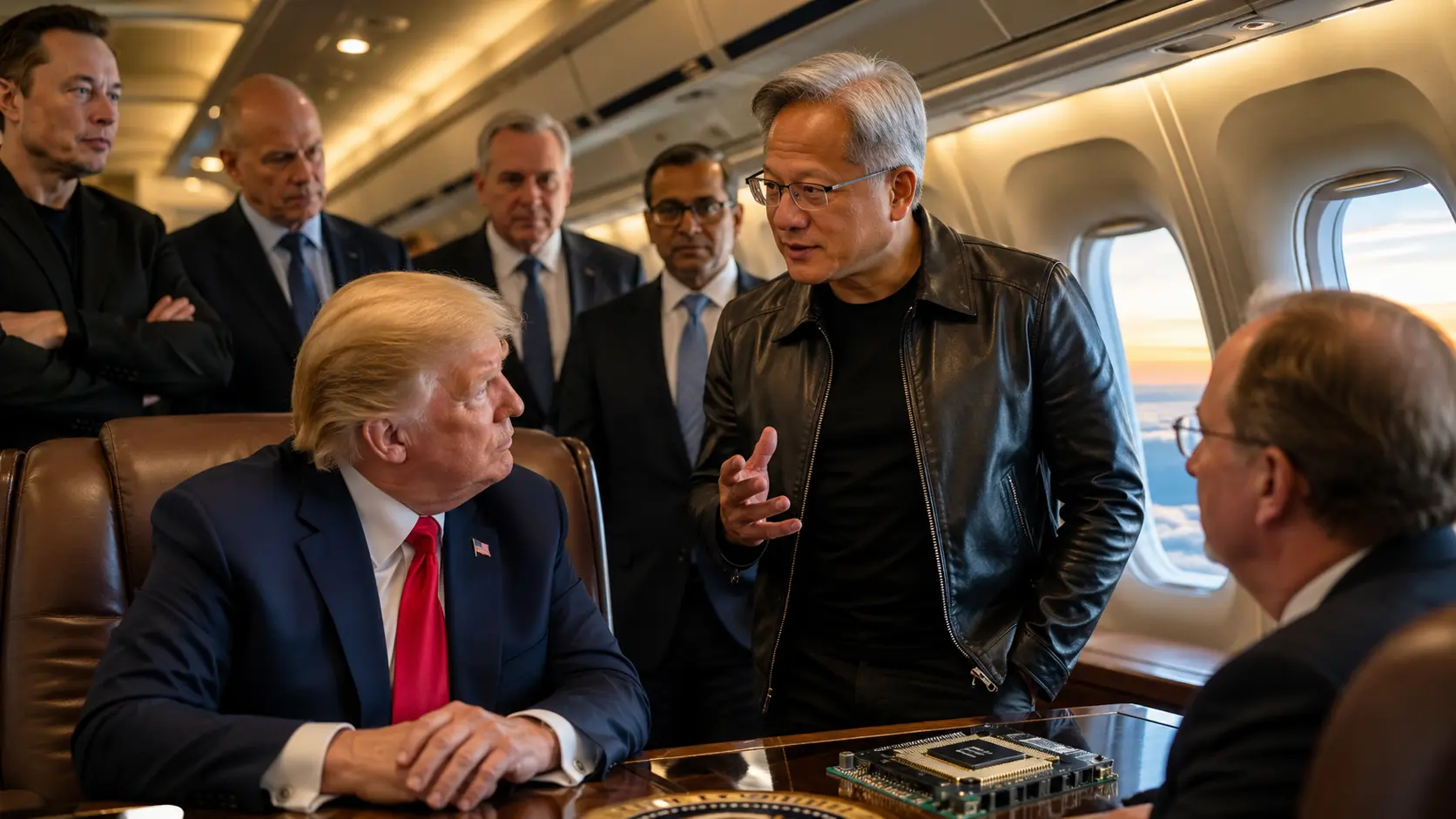
U.S. President Donald Trump has confirmed that Nvidia CEO Jensen Huang is part of a high-profile American business delegation to China. That contradicts earlier CNBC reports claiming Huang was not invited to a meeting with Chinese President Xi Jinping.
According to a post Trump published Tuesday night on Truth Social, Huang is currently aboard Air Force One with a group of prominent U.S. CEOs. Trump names Elon Musk, Goldman Sachs chief David Solomon, Qualcomm CEO Cristiano Amon, Micron CEO Sanjay Mehrotra, and BlackRock chief Larry Fink, among others.
The public show of support for Huang comes at a sensitive time. Nvidia sits at the center of a geopolitical power struggle over artificial intelligence, semiconductors, and export controls between the United States and China.
Trump puts AI front and center on China trip
Trump wrote that he plans to ask President Xi Jinping to further “open up” China to American companies and technology. He highlights the role of tech leaders who, in his words, can “work their magic” in China.
Trump’s decision to single out Jensen Huang is notable. In recent years, Huang has become one of the most influential figures in the global AI industry. Nvidia currently dominates the market for AI chips powering systems from OpenAI, Microsoft, Google, and Meta.
Huang’s presence on the trip signals that AI and chip technology will be high on the economic agenda in talks between Washington and Beijing.
Nvidia squeezed between U.S. export rules and Chinese demand
Nvidia has long been in a complex position. In recent years, the U.S. government has tightened export restrictions on advanced AI chips bound for China, fearing the technology could be used for military purposes and strategic AI development.
At the same time, China remains a crucial market for Nvidia. Chinese tech firms are pouring money into generative AI and data centers, keeping demand for powerful GPUs high.
According to earlier reports from Reuters and Bloomberg, Nvidia has been developing modified chip variants that comply with U.S. export rules. The company aims to retain access to the Chinese market without violating American regulations.
Why this meeting matters strategically
The gathering of top U.S. executives with Xi Jinping could have major consequences for the global AI industry.
Three themes are likely to dominate:
- access to Chinese markets;
- export rules for AI chips;
- cooperation on technology and infrastructure.
For U.S. companies, China remains one of the biggest growth markets despite political tensions. For China, access to advanced American semiconductors is essential for AI development.
That sets up a complicated power play. Washington wants to preserve its technological edge, while Beijing is racing to reduce its dependence on American chip technology.
Jensen Huang becomes a geopolitical power player
Long known primarily as a tech entrepreneur, Jensen Huang is now playing a geopolitical role. Nvidia’s AI processors are widely seen as critical infrastructure for generative AI systems worldwide.
The explosive growth of AI has turned Nvidia into one of the most valuable companies on the planet, drawing closer scrutiny from governments.
Trump’s public defense of Huang against alleged “fake news” coverage underscores how central Nvidia has become to America’s economic and strategic agenda.
The trip also makes one thing clear: AI is no longer just a tech topic. It is increasingly shaping trade policy, diplomacy, and global power dynamics.
Read also
Global AI tensions keep rising
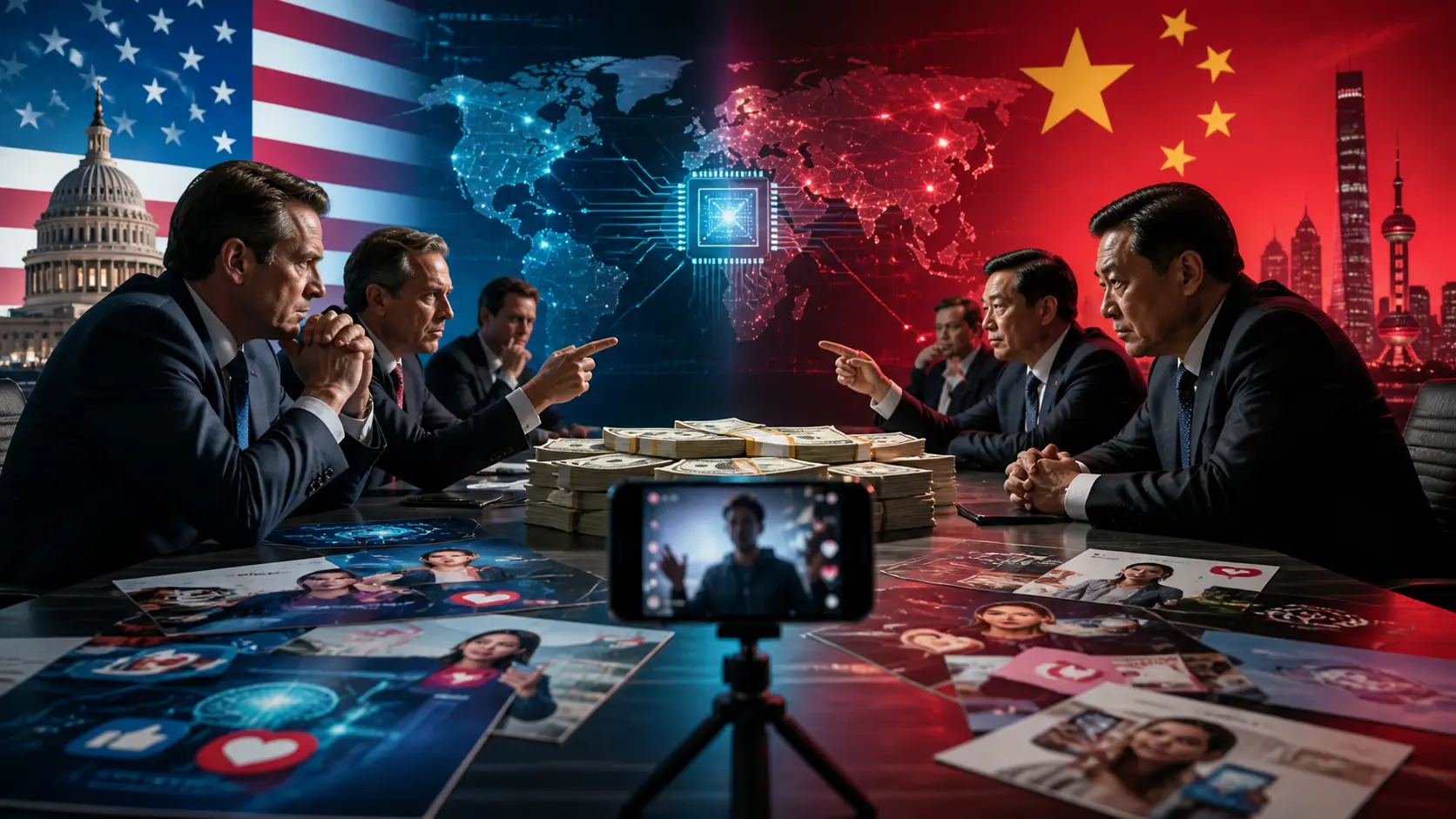
The United States and China are investing hundreds of billions of dollars in AI, semiconductors, and digital infrastructure—while tightening restrictions on each other.
Washington is seeking to curb exports of advanced AI technology to China. Beijing, meanwhile, is accelerating development of its own AI chips and alternative supply chains.
Nvidia’s presence in talks with Xi Jinping shows how commercial interests and geopolitical strategy are becoming inseparable.
For the AI sector, the outcome of these discussions could reshape access to chips, international collaboration, and the future balance of power in artificial intelligence.

Popular news

Latest comments
Loading