European Commission moves toward an AI energy label, opens call for input on energy use
NewsFriday, 01 May 2026 at 20:00
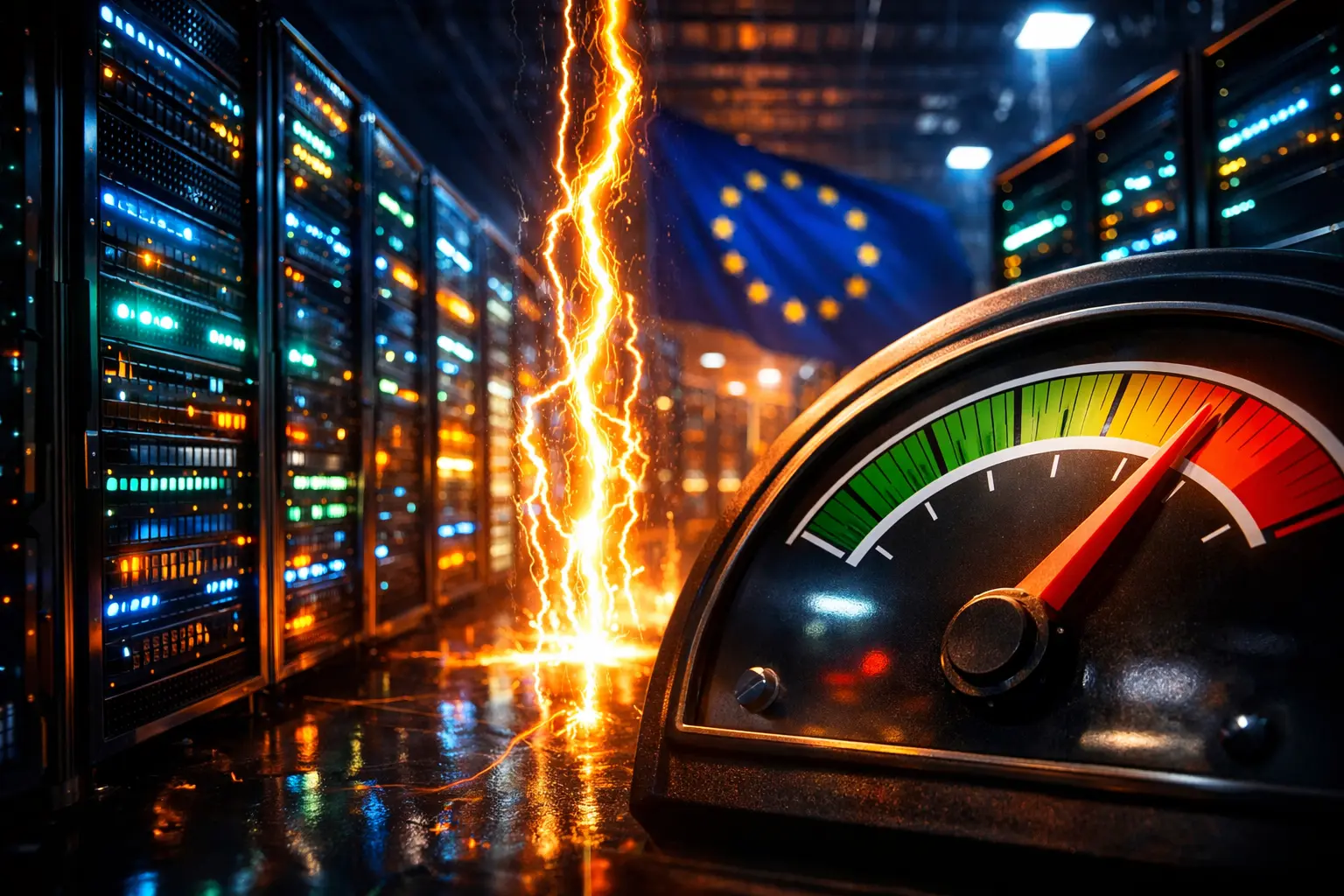
In early April 2026, the European Commission opened a targeted consultation on the energy use of AI models, aiming to establish standardized measurement methods and lay the groundwork for a potential energy label.
The consultation runs through May and directly implements the AI Act, making sustainability an explicit part of AI regulation in Europe for the first time.
It marks a shift: AI will no longer be judged only on performance and risk, but also on energy efficiency and climate impact.
Why is the EU focusing on AI’s energy use now?
The Commission is acting because AI systems are driving up electricity demand, threatening climate targets. Large models require massive compute and run in energy-intensive data centers, leading to rising CO₂ emissions.
This applies to two phases:
- Training: building the model on huge datasets
- Inference: everyday use of AI applications
The Commission wants answers to three core questions:
- How much energy do AI models really consume?
- What factors drive efficiency?
- How do we make this transparent and comparable?
The answers should lead to a single European measurement framework.
What does the EU consultation actually cover?
The consultation asks companies, researchers, and institutions how AI energy use should be measured. The goal is a technical standard deployable across the EU.
The European Commission is focusing on:
- Energy per model (training and use)
- CO₂ emissions linked to infrastructure
- Hardware impact, such as GPU and CPU usage
- Data center efficiency and energy sources
The challenge is significant. AI energy use is hard to track because data is spread across systems and cloud environments.
Is an AI energy label really coming?
Yes. The consultation clearly points toward an energy label for AI systems. The Commission is exploring a label for AI models similar to those on household appliances.
Such a label could show:
- An AI model’s energy efficiency
- Expected CO₂ impact
- Comparability across providers
That makes energy use visible to users and regulators—and pushes companies to design more efficiently.
How does this fit into the AI Act?
The AI Act is the legal framework for this consultation. Where the law first focused on safety and risk, sustainability is becoming an added dimension.
Concretely, this could mean:
- Reporting obligations for AI providers
- Stricter rules for large models (including generative AI)
- Energy use as part of compliance
The consultation is not a standalone move but a building block for future regulation.
What does this mean for Dutch companies?
In the Netherlands, AI firms should prepare for measurement and transparency on energy use. This directly affects sectors with heavy AI adoption.
Key sectors include:
- AI startups and scale-ups
- Cloud and data center providers
- Financial services (fintech)
- Healthcare and medical AI
- Logistics and industry
The Netherlands is a major digital infrastructure hub—so the impact will be relatively large here.
The effect cuts both ways:
- Opportunity: innovation in energy‑efficient AI
- Risk: higher costs and administrative burden
How do you measure AI’s energy use?
Measuring AI energy use means collecting data across every step of the AI lifecycle. It goes beyond just electricity consumption.
Key metrics include:
- GPU and CPU utilization
- Energy during training
- Energy during inference
- Hardware specifications
- Data center efficiency
The toughest hurdle is standardization. Without common definitions, figures remain hard to compare across companies and countries.
Why is this strategically important for Europe?
With this move, Europe positions itself as a leader in sustainable AI governance. The combination of the AI Act and energy requirements is unique globally.
It aligns with broader goals:
- Climate neutrality
- Digital sovereignty
- Responsible innovation
For businesses, energy efficiency becomes a strategic metric—alongside safety and performance.
What happens after the consultation?
After the consultation, the European Commission will analyze all input and work toward concrete standards and guidelines.
Expected next steps:
- Development of measurement protocols
- Potential certification of AI systems
- Introduction of energy labels
- Integration into AI Act supervision
Initial proposals are expected later in 2026.
Read also

Bottom line: an AI energy label looks increasingly likely
The EU consultation makes clear that energy use will be a core pillar of AI policy. What starts as a technical measurement question could result in a mandatory energy label for AI models.
For the Netherlands, that means companies should act now. Those who invest early in efficient AI will gain an edge in a tightly regulated European market.

Popular news

Anthropic Secures Thirty Two Billion Dollar Queensland Data Centre Deal for Claude

Zuckerberg Rejects AI Slowdown Calls Amid Industry Safety Debate

Crusoe Secures Nearly Four Billion Dollars to Scale Factory Built AI Data Centers

Amazon Secures Generac Stake in Massive Eight Billion Dollar Generator Pact

Spain Registers First End-to-End Autonomous AI Data Breach

MIT and Suffolk Unveil How AI is Reshaping Construction Productivity
Latest comments
Loading