DeepL taps Mixhalo to push real-time AI translation to the next level
NewsWednesday, 24 June 2026 at 14:47
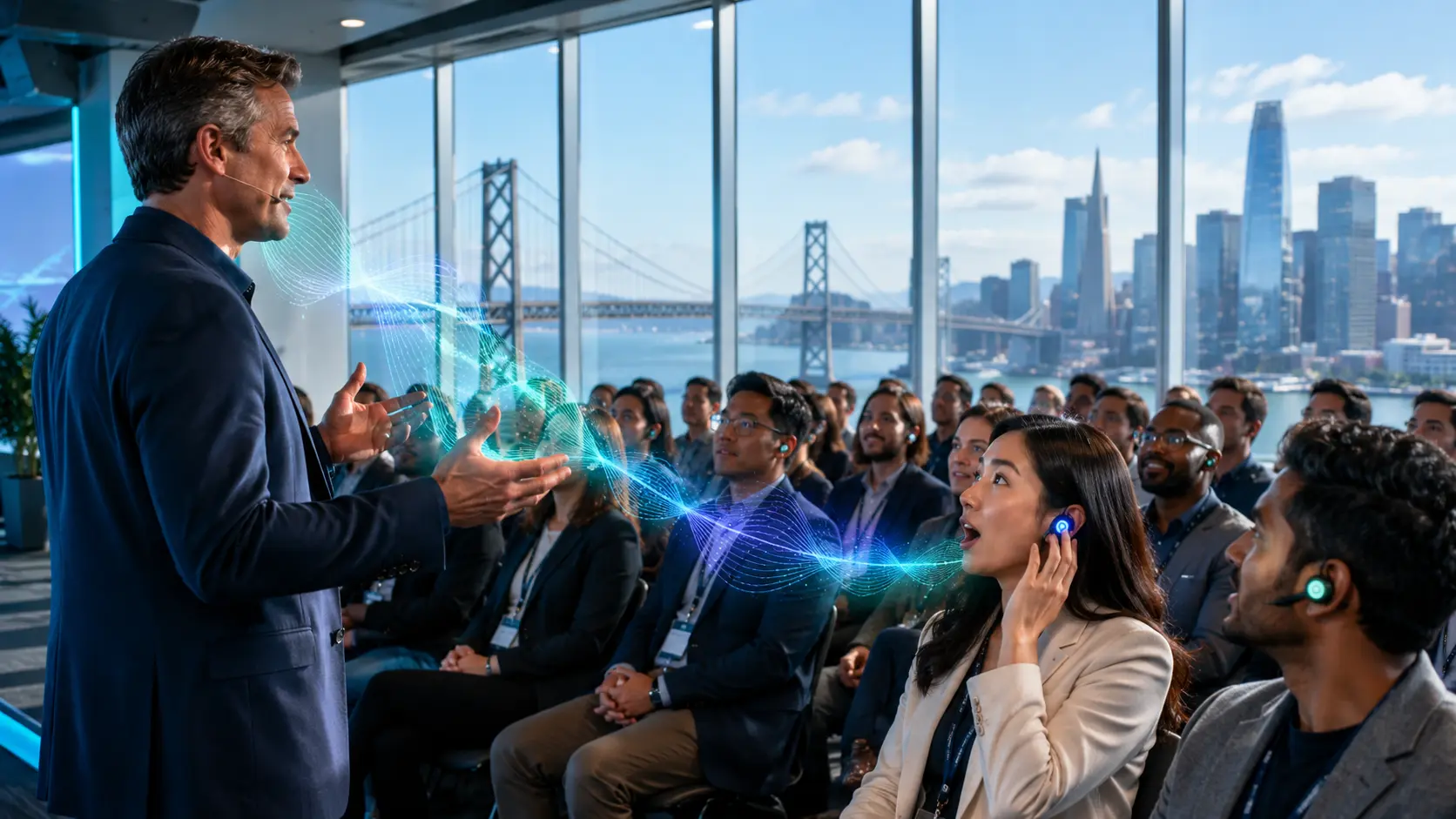
DeepL is doubling down in the United States, bringing on the team and technology behind audio platform Mixhalo. The German AI company aims to strengthen its real-time speech translation and support massive live events and complex communications environments.
The announcement coincides with the opening of DeepL’s first San Francisco office—a strategic move in what it calls its fastest-growing market.
Real-time voice translation takes center stage
DeepL is best known for AI-powered text and document translation, but has been investing heavily in voice tech. With DeepL Voice, the company already offers real-time translation for calls, meetings, and in-person conversations.
By integrating Mixhalo, DeepL wants to scale this to scenarios where thousands listen to translated audio or captions at once—think international conferences, large corporate events, high-volume contact centers, and any setting where even seconds of delay can ruin the experience.
Mixhalo built technology to stream ultra–low-latency audio to large audiences. It’s been used across sports, concerts, and enterprise conferences in recent years.
From meeting rooms to arenas
DeepL says low latency—the gap between speech and translation—is one of the toughest technical hurdles in real-time voice translation. When an AI must transcribe, translate, and then synthesize speech back to audio, every extra millisecond is noticeable.
Mixhalo’s tech is meant to cut that delay further, delivering translated audio and live captions nearly in sync with the original speaker—even with thousands of simultaneous listeners.
DeepL and Mixhalo have worked together before: DeepL’s Voice API already powered Mixhalo’s platform for real-time translation at events.
A strategic U.S. push
The move underscores how critical the U.S. market has become for DeepL. The company says nearly half of Fortune 500 firms now use its translation services. U.S. customers include NVIDIA, Cisco, and Nasdaq.
A San Francisco office also puts DeepL closer to the Silicon Valley ecosystem of AI companies, developers, and tech partners—an edge as competition in generative AI and voice tech heats up.
Voice AI heats up
The AI speech-translation market is evolving fast. Microsoft, Google, Zoom, and others are also investing in real-time translation for meetings and enterprise communications.
Meanwhile, demand is rising for tools that lower language barriers in global collaboration. Multinationals, customer service organizations, and event organizers are testing how AI translation can complement—or in some cases partially replace—human interpreters.
For DeepL, adding Mixhalo broadens the portfolio. After breaking out with text translation, the company is shifting focus to real-time communication between people who don’t share a language.
What it means for the market
Pairing AI translation with high-performance audio infrastructure hints at Voice AI’s next phase. The race isn’t just about translation quality anymore—it’s about speed, reliability, and scale.
If DeepL can deliver real-time translation with imperceptible delay to large audiences, it could unlock new use cases across events, education, cross-border collaboration, and customer support.
Bringing Mixhalo’s technology and team onboard fits a broader trend: AI companies are adding specialized infrastructure to make generative AI viable at commercial scale.

Latest comments
Loading