JD.com Founder Warns: Robots Will Eventually Replace 700,000 Delivery Workers
NewsWednesday, 24 June 2026 at 16:00
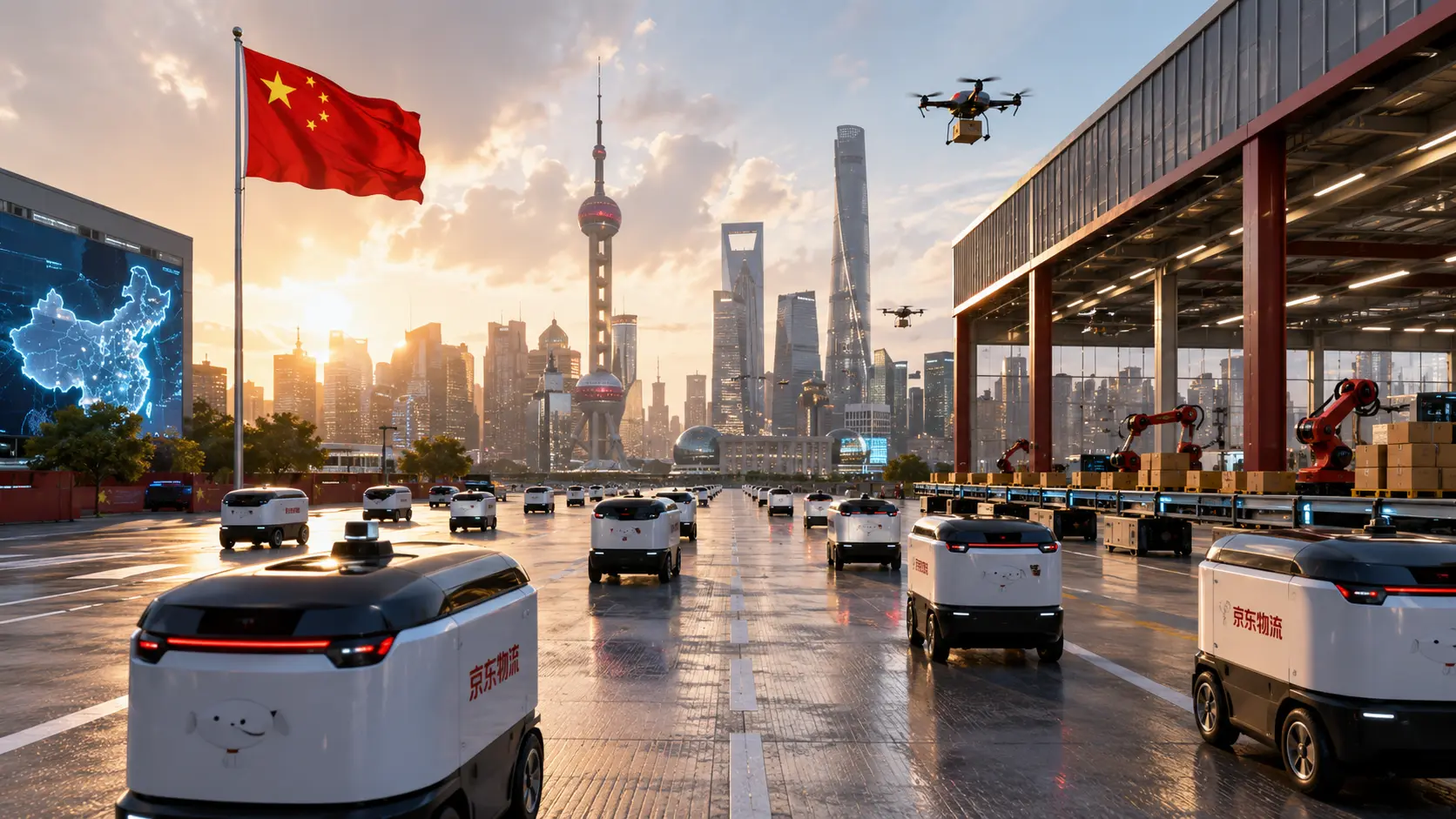
“There will come a day when couriers are no longer needed.” With that striking claim, JD.com founder Richard Liu reignited the debate over AI and work.
The Chinese logistics giant currently employs around 700,000 couriers and logistics workers, but Liu says robots will ultimately take over those jobs entirely. That makes JD.com one of the first major tech companies to speak so bluntly about entire professions disappearing due to automation.
As the founder of China’s largest e-commerce company, Liu is no lightweight. He told the APEC China CEO Forum that robots will eventually handle all delivery tasks, making today’s 700,000 couriers and logistics workers essentially redundant. International outlets noted he offered no timeline, but he made clear he sees this shift as inevitable.
The remark stands out because big tech firms usually stress that AI and automation will assist workers, not replace them. Liu opted for a far more direct line. At the same time, he said JD.com won’t leave employees behind when robots take over their jobs.
JD.com doubles down on worker retraining
The core of Liu’s plan is large-scale reskilling. JD.com has, he says, signed agreements with about 120 educational institutions in China to prepare staff for new roles in a highly automated economy. Think maintenance, repair, and management of robotic systems.
Liu has also said employees won’t be laid off just because their job is automated. Instead, they would be reassigned or retrained for other roles inside the company.
According to Liu, future demand will grow for people who can monitor, maintain, and optimize autonomous systems. Robots will take over much of the physical labor, he argues, but will still rely on human expertise when failures occur or systems need updates.
Years of autonomous logistics pilots at JD.com
The comments don’t come out of the blue. JD.com has long been among China’s most automated logistics operations, investing heavily in delivery robots, self-driving vehicles, drone drops, and fully automated warehouses.
One standout example is in Beijing, where roughly 90 percent of the work in a major sorting center is reportedly handled by robots. It’s part of a broader push to make logistics faster, cheaper, and more efficient.
Beyond JD.com, autonomous systems are spreading quickly. Amazon, DoorDash, and several Chinese logistics players have been testing delivery robots and autonomous vehicles for the “last mile” to the consumer for years.
The real test: the labor market
The key question is no longer whether robotic delivery will work. The tech is advancing fast and getting cheaper. The bigger challenge is what this means for millions of workers worldwide.
Liu pitches retraining as the answer, but experts note the math is tough. Jobs in robot maintenance, AI operations, and technical management will likely be far fewer than today’s delivery roles. They also demand different skills and higher qualifications.
That makes JD.com a telling test case for the future of work. The company is trying to craft a model where automation and employment can coexist. Whether that scales to 700,000 workers remains to be seen.
Why this matters for AI and automation
Liu’s comments capture a broader shift. The debate is moving from whether AI will replace jobs to which new roles will emerge in their place.
While much AI talk centers on office and knowledge work, JD.com shows physical labor is firmly in automation’s sights. Logistics, transport, warehousing, and retail may see the most dramatic changes over the next 10 to 20 years.
That puts the spotlight not only on technology, but also on education, labor policy, and social safety nets. JD.com’s experiments could be an early preview of the choices governments and businesses worldwide will soon face.

Latest comments
Loading