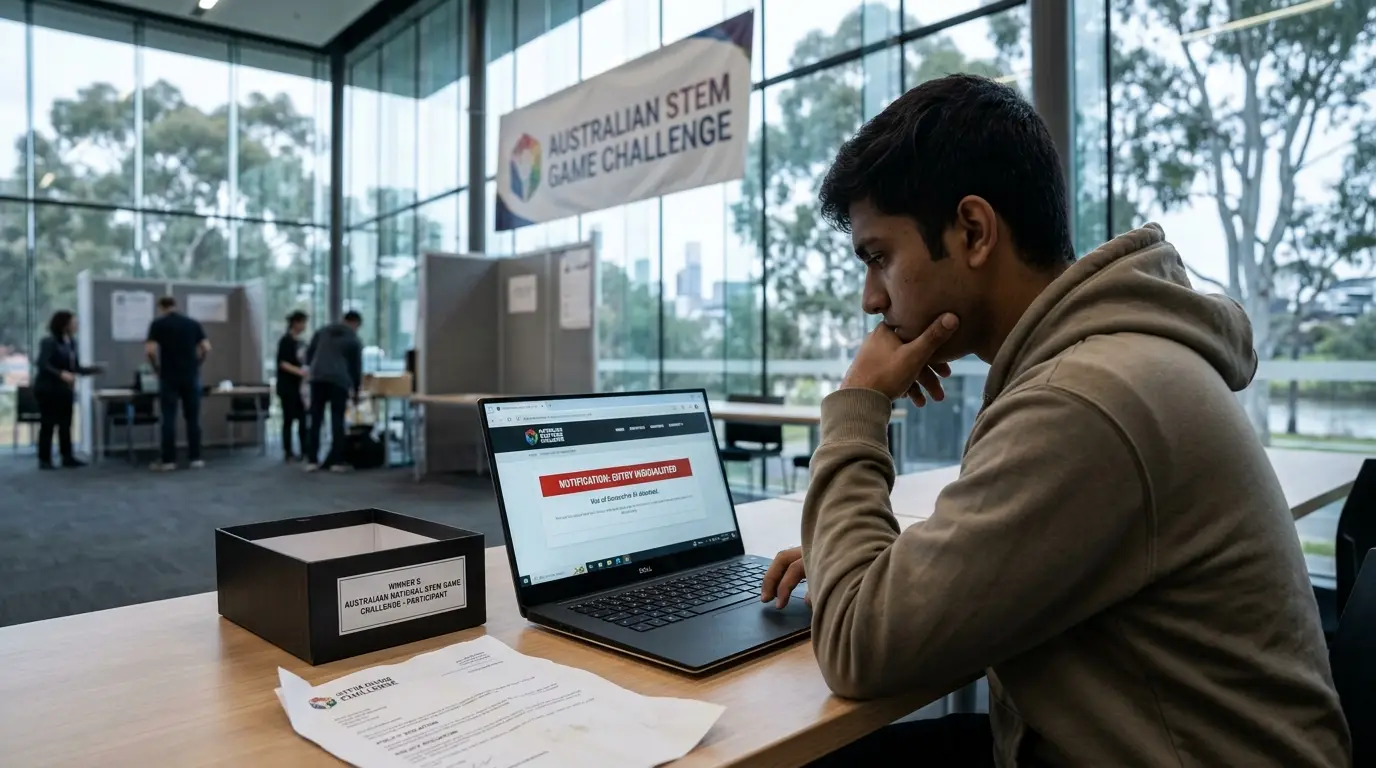
For over a decade, the Australian STEM Videogame Challenge gave students a brilliant platform to build, code, and showcase their own interactive projects. It pushed kids to dive deep into science, technology, engineering, and mathematics through game design. Now, the free national competition is shutting its doors for good. The reason? A massive flood of entries built entirely by generative AI.
The Judging Dilemma
The cancellation was first hinted at by self-proclaimed judges online before the Australian Council for Educational Research officially stepped in to confirm the news. According to Cathy Zemaitis, the Head of the Student Learning and Progress division at the organization, the current 2026 event will serve as the competition's final chapter.
The core issue isn't merely that kids are using modern tools to speed up their workflow. The fundamental problem lies in assessment and authenticity. Judges found themselves staring at fully fleshed-out games, entirely unsure of what the students actually coded versus what a text prompt generated. You cannot fairly score a student on their programming logic or creative problem-solving when a software algorithm did the heavy lifting behind the scenes.
As originally reported by PC Gamer, the rapid rise of these tools has fundamentally moved the program away from its original purpose. The challenge was meant to teach kids how to build things from scratch, not how to write better prompts. Rather than pivot to a new format that embraces the technology, organizers have decided to pull the plug completely.
The Broader Industry and Educational Impact
This localized cancellation reflects a much larger friction point happening globally. Schools and professional studios alike are struggling to define where human effort ends and machine output begins. Recent data highlights just how deeply these automated tools have infiltrated both classrooms and professional development houses.
| Metric | Recent Statistic | Official Source |
| Developers Currently Using GenAI | 36% of global studios | GDC State of the Game Industry |
| Developers Viewing AI Negatively | 52% of industry pros | GDC 2026 Industry Survey |
| Universities Drafting AI Rules | 66% of higher ed institutions | UNESCO Global AI Education Survey |
| Educators Experimenting with AI | Nearly 50% in teaching | UNESCO Digital Education Report |
No Alternative Plans in Sight
While the professional gaming sector wrestles with intense ethical debates surrounding AI, educational bodies are taking a much harder line. The Australian organizers confirmed they are not looking at ways to adjust the competition to accommodate prompt engineering or AI-assisted workflows.
Instead of modifying the rules, the focus is shifting back to direct partnerships with schools to find new methods of engagement. The goal remains enriching the learning experience, but the vehicle for doing so will no longer be a nationwide game design contest. It is a stark reminder that when technology outpaces our ability to measure actual human skill, sometimes the only logical move is to stop the game entirely.
The Death of the Learning Process
The ultimate irony of this cancellation is that the students technically learned how to use cutting-edge technology. However, they bypassed the actual learning process that the competition was designed to foster. Debugging broken code, designing sprite sheets, and balancing game mechanics are frustrating but essential parts of the educational journey. When a machine handles those hurdles instantly, the student loses the critical thinking benefits that come from failing and fixing their own mistakes.

Popular news
AI Engineer Compiles RISC-V Processor Inside Qwen 3.5 LLM Weights

AI stocks rebound, but Nvidia falls as AMD jumps 13%

Goldman Sachs Pulls the Plug on Vibe Coding for Traders
Homelabber Runs Massive AI Model on Discontinued Memory While Battling Severe Heat

AI firm Databricks invests half a billion dollars in the Netherlands and doubles its team