What Is Overstory? The AI Startup Helping Prevent Power Outages and Wildfires
ExplainersThursday, 25 June 2026 at 06:00
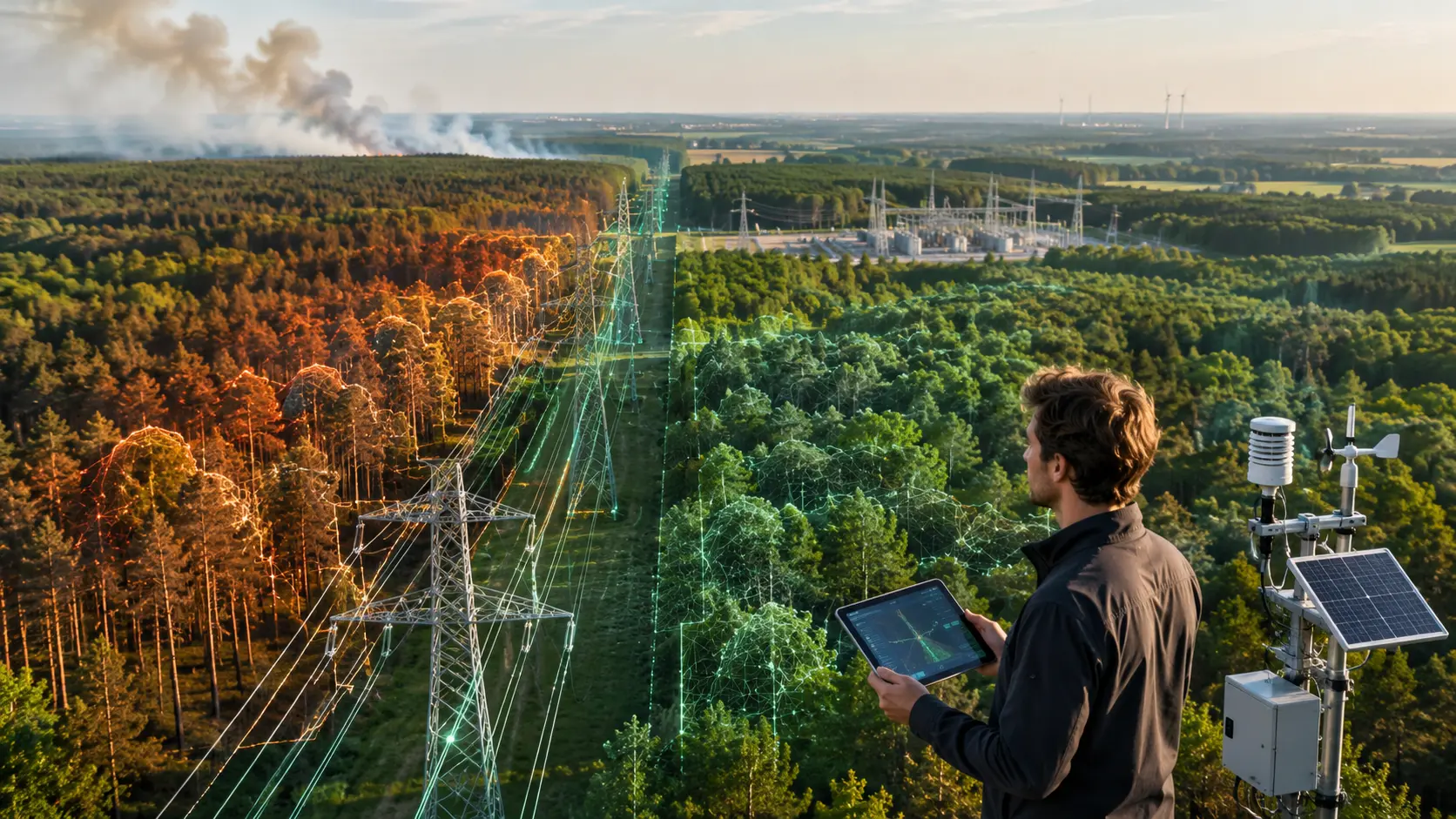
Overstory uses AI to help utilities prevent outages and wildfires. The company analyzes satellite and aerial imagery to map trees and vegetation around power lines.
That gives utilities a clearer view of risks before damage occurs. The platform combines imagery with data on asset locations, terrain, and fire danger.
As a result, utilities can schedule pruning and maintenance more precisely. The company is known for AI-driven vegetation intelligence that strengthens grid resilience.
It also develops AI models that predict where faults and wildfires could start—shifting operations from reactive fixes to proactive management. AI is taking a bigger role in nature and the environment.
Key takeaways
- Overstory uses AI and satellite data to predict vegetation risks around power networks.
- Utilities apply these insights to reduce outages and fire hazards.
- The platform enables data-driven planning and stronger grid operations.
AI in vegetation management
Overstory targets vegetation near energy networks with AI-powered analysis. It blends satellite data, remote sensing, and machine learning to flag risks early and plan maintenance smarter. Dutch start-ups build many things—but this is a notably fresh, differentiated concept.
Satellite data and remote sensing
Overstory uses high-resolution satellite data to map vegetation along transmission and distribution lines. These images show where trees grow too close to conductors or where branches pose a threat in high winds.
With remote sensing, the system measures vegetation height, density, and growth rate. Grid operators see not just where vegetation stands, but how quickly the risk is rising.
According to the description of their utility vegetation management platform, this approach optimizes trim cycles and targets budgets. Analysis runs at span and circuit level.
That level of detail lets teams prioritize specific stretches instead of treating entire areas at once.
Proprietary AI models and machine learning
Overstory applies proprietary AI models to satellite and other remote sensing data. These machine learning models detect patterns linked to outage or fire risk.
The models connect vegetation data with grid information, such as asset locations and historical faults, to calculate risk scores per tree, span, or circuit.
Reports on their approach explain how AI-driven vegetation intelligence for utilities can pinpoint specific high-risk trees. That helps field teams act before an outage occurs.
The models improve as more data comes in—learning from past inspections and completed work to refine predictions.
Aerial imagery and ground fuel analysis
Beyond satellites, Overstory uses aerial imagery to assess vegetation at even higher resolution—adding detail where it matters.
The company also built a fuel detection model focused on ground fuels. It analyzes combustible material like dry shrubs and grass that can intensify wildfires.
In an explainer on their use of satellite data and AI for vegetation management, Overstory shows how combining ground fuels, tree height, and distance to infrastructure clarifies where preventive work delivers the biggest impact.
Wildfire prevention and grid resilience
Overstory uses AI and satellite data to spot wildfire risk and grid faults early. By linking vegetation insights to grid data, utilities can make targeted decisions for wildfire prevention and stronger networks.
AI-powered wildfire intelligence
Overstory builds wildfire intelligence with high-resolution satellite imagery and proprietary AI models. The platform assesses vegetation tree by tree and connects it to the locations of lines, towers, and transformers.
Satellite data helps estimate risk on a per-tree basis. Operators can then prioritize maintenance in zones with elevated wildfire risk.
The AI models combine factors including:
- tree height and distance to lines
- signals of tree mortality
- growth rate and crown volume
- terrain and historical fire maps
The result is a risk score per segment. Operators see which areas fall into a high-ignition-risk corridor and can focus resources there.
That strengthens AI-powered grid resilience through prevention rather than emergency repairs.
Detecting vegetation and fuel risks
Vegetation is often the top operational risk to the grid. Overstory’s vegetation intelligence maps both contact risk and fuel load.
The platform detects dead or weakened trees, dense brush, and build-ups of combustible material. A report on Blume Equity’s investment notes that Overstory flags trees before they hit lines or spark fires—supporting AI for wildfire prevention and grid resilience.
A simplified view of risks:
| Risk type | What the model measures | Impact on grid |
| Vegetation risk | Distance to conductors | Short circuits or outages |
| Tree mortality | Health indicators | Falling trees |
| Vegetation and fuel risk | Biomass and dryness | Faster fire spread |
The fuel detection model helps spot dry zones where fire can spread quickly—guiding targeted trimming and fuel removal.
Predictive models
Overstory uses AI-based risk models to forecast outages and fires before they happen. The models analyze weather, vegetation status, and grid configuration together.
Founded in 2018, the company applies AI to track interactions between vegetation and infrastructure nearly in real time.
This enables two core actions:
- Wildfire mitigation by removing high-risk trees in time
- Preventive shutdowns in areas with extreme risk
By modeling scenarios, operators see which interventions most improve grid resilience. Maintenance can shift to segments with the highest probability of outage or ignition.
Dynamic scenarios
With dynamic scenario modeling, Overstory maps risks at network level and ties them directly to costs and interventions. The system unifies vegetation data, fault history, and asset data in a single actionable approach.
Cost-benefit analysis for risk programs
Overstory uses Overstory Scenarios to help utilities weigh investments in grid safety. The model combines satellite imagery, tree height and health, historical outages, and aging asset data.
The result is a focused cost-benefit view per segment or network area. Instead of broad maintenance cycles, the system highlights where a specific action moves the needle most.
Think removing a diseased tree, clearing dry growth around a pole, or replacing an aging component in a high-risk corridor. According to the announcement of Overstory Scenarios for dynamic resilience modeling, this helps utilities reduce more risk within existing budgets.
Key elements in the analysis include:
- Expected reduction in outages
- Lower ignition risk
- Cost per intervention
- Long-term impact on maintenance planning
Simulating interventions and outcomes
With dynamic scenario modeling, Overstory simulates multiple maintenance strategies before money is spent. The model predicts where outages or utility-caused fires are most likely to start—down to a specific tree or pole.
An operator can compare, for example, three scenarios:
| Scenario | Action | |
| A | Trimming only | Moderate drop in vegetation risk |
| B | Trimming + pole replacement | Bigger drop in outage risk |
| C | Targeted replacement in risk corridor | Significant drop in ignition risk |
The simulations show direct effects on asset and vegetation risks—shifting decisions from reactive to data-driven.
Leaders see not just where risk sits, but which intervention delivers the best return per dollar spent.
Working with utilities
Overstory partners closely with energy companies that manage large networks in high-risk regions—tying satellite data and AI into day-to-day fieldwork.
Partners and customers
Overstory primarily serves U.S. utilities with extensive overhead lines in fire-prone areas. In California, for instance, energy companies manage tens of thousands of kilometers of lines across mountainous terrain.
That raises the odds of faults and wildfires. Overstory helps these operators with targeted vegetation analysis.
Overstory’s AI software for utilities helps teams find and remove risk trees faster. In the large-utility market, players like Pacific Gas and Electric Company (PG&E) are often cited as facing major wildfire-related liabilities.
Those conditions make precise risk assessment around high-voltage lines essential. Beyond the U.S., Overstory is looking to Canada and Europe.
Companies like Hydro Ottawa apply similar strategies for vegetation management—underscoring the relevance of this kind of AI analysis.
Operational integration and field results
Overstory doesn’t ship static reports; it delivers data that plugs into existing utility systems—crucial for planners and crews working within established processes.
The AI assesses risk per tree for a specific line. Teams receive maps and prioritized lists, enabling targeted trimming instead of broad, preventive clearing.
Industry experts stress that AI results must flow into work order and asset management systems.
Integration prevents insights from getting stuck in standalone dashboards. In broader digital programs, utilities often team with technology partners like Bentley Systems for infrastructure data.
Connecting AI analysis to such platforms creates a single view of networks, risks, and completed actions—reducing missed risk trees and making maintenance more auditable.
Funding and investors
Overstory raised growth capital to scale its AI platform for vegetation monitoring, focusing on international expansion and deeper analytics for utilities.
Series B round
Overstory closed a $43 million Series B to scale its technology. According to coverage of $43 million for Overstory, the company aims to improve its AI models and serve more utilities.
The platform uses satellite imagery and proprietary algorithms to analyze vegetation around power networks. With the new capital, Overstory is investing in product development, hiring, and expansion in North America and Europe.
The round positions the company to grow faster as wildfire prevention and grid safety move up the agenda. Utilities want measurable data to cut risk and plan maintenance better.
Lead investors and partners
The Series B was led by B Capital and Blume Equity, with participation from Energy Impact Partners, Semapa Next, Pale Blue Dot, CapitalT, Convective Capital, MCJ, and Moxxie Ventures.
Energy Impact Partners focuses on energy-sector innovation—well aligned with Overstory’s utility customer base.
Blume Equity and Pale Blue Dot back climate solutions—their involvement underscores Overstory’s role in cutting wildfire risk and safeguarding infrastructure.
B Capital adds global scale expertise. Investors like Convective Capital and MCJ bring climate and fire-risk experience—valuable beyond capital.
Leadership and mission
Overstory pairs strong leadership with a clear climate mission—driving measurable impact, reliable data, and broad AI deployment for practical climate outcomes.
Fiona Spruill leads Overstory with a sharp focus on scalable impact. Her stance: AI only matters if it directly improves infrastructure safety and reduces climate risk.
Under her leadership, Overstory uses satellite imagery and machine learning to monitor vegetation around energy networks—helping utilities spot wildfire and outage risks early and act decisively.
Spruill pushes international growth while guarding the core: dependable analytics and clear results for customers. She works with experts like Michelle Capiod to tightly align data, technology, and execution.
Her priorities:
- Scalable AI solutions
- Direct, measurable climate impact
- Transparent customer collaboration
Why climate solutions matter
Overstory focuses on practical climate solutions that cut risk and control costs. It helps operators plan vegetation work based on live risk data, not rigid schedules.
That aligns with a broader view that AI isn’t just a tech project—it depends on leadership and direction. Publications like AI adoption is not a technology problem but a leadership challenge argue that clear choices and communication are critical to success.
Overstory applies this by putting climate impact at the center of every decision. The company measures, among other things:
- Reduced fire risk
- Better use of maintenance budgets
- Faster decision-making from AI analysis
By tying technology to a clear mission, Overstory makes climate data usable in daily operations.
Overstory continues to refine its AI platform to make vegetation management more accurate, faster, and more scalable—linking product improvements directly to field use and expansion into new regions.
Continuous product innovation
Overstory keeps advancing its models for image recognition and risk analysis. It uses satellite imagery, aerial data, and historical growth patterns to automatically classify vegetation near infrastructure.
The focus: faster detection of risk zones and better growth forecasts—helping operators plan maintenance with greater precision.
Small mapping errors can have outsized consequences, so accuracy is non-negotiable. The broader AI sector is shifting to practical tools that save time and money.
Overstory reflects that by not only flagging risks but also suggesting actions within existing workflows. The platform integrates with asset management systems and tools like AMP.
This sends data straight to planning and maintenance teams without extra manual steps.
Expanding into new markets
Overstory is expanding into regions with large electricity and rail networks. In these markets, demand for data-driven vegetation management is rising due to stricter safety rules and climate change.
New markets require local model adaptation. Vegetation types, growth patterns, and seasons vary widely by country.
Overstory trains models with regional data to keep error margins low. There’s growing attention on AI across sectors like transport and energy.
Overstory taps into this by partnering with grid and infrastructure operators seeking scalable solutions—focusing on measurable outcomes: fewer faults, lower maintenance costs, and better planning.
Frequently Asked Questions
Overstory applies AI to precisely map vegetation risks around power networks. It combines satellite imagery, aerial data, and grid information to predict risks, prioritize maintenance, and help prevent outages or fires.
Which AI applications are in Overstory’s products and services?
Overstory’s AI models analyze tree height, tree health, and fuel load along power lines. The company processes satellite and aerial imagery with proprietary algorithms to detect vegetation at tree level.
It also developed models that run scenarios and predict outage and wildfire risk. In announcements of new models, Overstory describes work on AI that forecasts outages and wildfires.
These capabilities let operators plan maintenance based on risk instead of fixed cycles.
Which data sources and sensors power Overstory’s AI models?
Overstory blends satellite imagery with aerial photos to measure vegetation in detail. The platform enriches this data with local inputs like network locations, terrain, and fire-risk maps.
According to company materials on AI-driven vegetation intelligence, remote sensing data underpins the models—enabling consistent analysis of large networks across countries.
The models process massive amounts of imagery and link it to specific assets within the power grid.
How does Overstory ensure quality, reliability, and explainability of AI outputs?
Overstory validates its models with customers and vegetation experts. Case studies show experts have checked and confirmed accuracy across large network distances.
In a public product explainer, vegetation specialists reviewed results over thousands of kilometers via the satellite-based vegetation management platform.
Combining field expertise with model outputs creates a feedback loop that flags anomalies and corrects course.
How does Overstory handle privacy, data protection, and GDPR compliance in AI use?
Overstory focuses on vegetation and infrastructure around power networks. It does not analyze personal data—only geographic and environmental information.
The imagery comes from satellites and aerial surveys covering broad areas. The company processes this data for utility operations such as risk assessment and maintenance planning.
The focus remains on physical assets and the natural environment, not individuals.
To what extent does Overstory’s AI automate decisions versus human control?
Overstory’s systems generate risk scores, maps, and priority lists. Utilities use these insights to decide on trimming, inspections, and investments.
The platform supports decisions but does not replace human responsibility. Users review recommendations and align them with budgets, regulations, and local conditions.
Which results and KPIs improve measurably with Overstory’s AI?
Overstory targets fewer outages, lower wildfire risk, and reduced unnecessary maintenance costs. It works with dozens of utilities, including several major North American operators.
As detailed on the page about vegetation management for more reliable grids, focusing maintenance on the highest-risk locations lets operators deploy budgets more effectively.
The payoff: better prioritization and more efficient use of crews.

Latest comments
Loading