What Is Quantib? The Dutch AI Startup Making MRI Scans Smarter
NewsThursday, 25 June 2026 at 14:46
Updated at Thursday, 25 June 2026 at 16:49
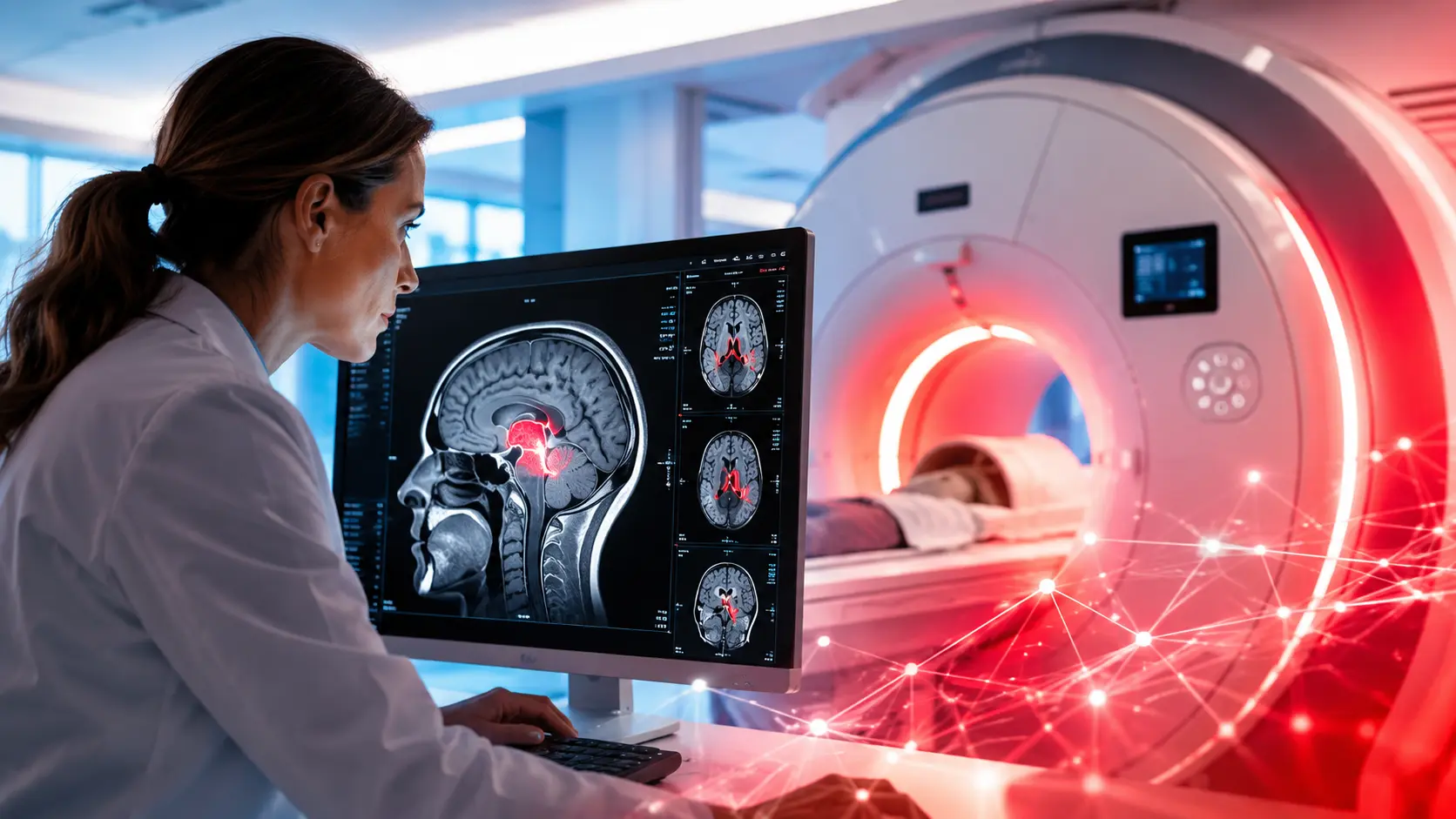
Quantib builds AI software that helps radiologists analyze MRI and CT scans faster and more accurately. The focus is on clinical use cases including prostate cancer, breast cancer, and neurodegenerative diseases.
Using artificial intelligence, Quantib analyzes medical images and supports physicians in making faster, better diagnoses.
Once a Dutch spin‑out, Quantib is now a global player in radiology AI. In 2022, U.S. imaging group RadNet acquired the company, giving Quantib international momentum and accelerating development.
With solutions like Quantib Brain, the company helps clinicians analyze brain MRIs with measurable data. The software automates segmentation, quantification, and visualization, streamlining the workflow. Healthcare professionals get clear insights that fit modern, data‑driven care. AI is taking an increasingly prominent role in healthcare.
Key takeaways
- Quantib uses AI to analyze medical scans faster and more objectively.
- After RadNet’s acquisition, Quantib scaled internationally.
- The technology supports physicians in prostate and brain imaging, among others.
Acquisition and evolution
Quantib evolved from an academic spin‑out into a global AI player within RadNet’s U.S. healthcare network. The acquisition and integration into DeepHealth marked a new growth phase.
Merger with DeepHealth
Quantib joined DeepHealth, RadNet’s AI division focused on AI‑assisted screening for common cancers such as breast, lung, and prostate.
Integration with DeepHealth gave Quantib immediate access to vast clinical datasets—critical fuel for training and improving medical imaging algorithms.
RadNet operates 350+ imaging centers across the U.S., where around 800 radiologists read millions of scans annually. That scale lets Quantib test, validate, and deploy software faster.
RadNet’s acquisitions of Quantib and Aidence were strategic moves to accelerate AI in radiology.
RadNet as parent company
RadNet is a major U.S. provider of outpatient radiology services, delivering diagnostic imaging via a nationwide network.
Quantib was fully acquired and integrated into this organization.
As a subsidiary, Quantib benefits from:
- direct access to clinical experts
- a large patient population
- commercial strength in the U.S.
RadNet processes millions of images yearly. This real‑world setting enables not only AI development but also broad clinical deployment.
For Quantib, it marked the shift from a growing European tech firm to a core component within a U.S. healthcare group.
Roots at Erasmus MC
Quantib was founded in 2012 as a spin‑out from Erasmus MC in Rotterdam, building on research from the Biomedical Imaging Group led by Professor Wiro Niessen.
They develop AI software that assists radiologists in analyzing MRI scans of the brain and prostate, among others. The software detects patterns and measures abnormalities objectively.
The academic DNA remains visible: from day one, Quantib collaborated closely with Erasmus MC clinicians and researchers.
That scientific foundation earned credibility with hospitals and research institutes. The move to RadNet then enabled broader, day‑to‑day clinical application at scale.
AI‑driven health informatics
Quantib builds software that automatically analyzes and quantifies medical images. As part of DeepHealth and RadNet, it focuses on scalable, AI‑powered health informatics that help radiologists work faster and more consistently.
Radiology leadership
Quantib started at Erasmus MC and grew into an international AI player for radiology. In 2022, RadNet acquired Quantib, and in 2023 it was integrated into DeepHealth.
The team developed CE‑marked and FDA‑cleared products for prostate cancer and neurological conditions. Products like Quantib Prostate and Quantib ND are now integrated as DeepHealth Prostate and DeepHealth Brain.
The software automatically analyzes MRIs, measuring, for example, volume changes and tissue characteristics. Radiologists can objectively assess abnormalities and track changes over time.
Through DeepHealth, Quantib AI extends its reach across RadNet’s large care networks, accelerating clinical rollout in the U.S. and Europe.
Interoperability and workflow
Quantib prioritizes integration with existing radiology systems. The software works with standard PACS and imaging platforms so radiologists can keep their familiar workflow.
DeepHealth Prostate, for instance, connects with leading fusion‑biopsy systems and automates multiple manual steps. Fewer clicks, less admin.
With Quantib AI Node, hospitals can centrally manage algorithms. IT teams roll out updates without disrupting clinicians.
This interoperability focus aligns with the broader strategy of AI‑powered health informatics: combining automatic image analysis with practical, day‑to‑day implementation.
Prostate cancer detection and analysis
Quantib developed AI that automatically analyzes prostate MRI scans, helping radiologists pinpoint suspicious lesions and plan targeted biopsies.
DeepHealth Prostate
DeepHealth Prostate builds on Quantib Prostate technology. It analyzes multiparametric MRI and highlights suspicious areas in the prostate.
The software calculates volumes, compares tissue characteristics, and generates structured summaries, enabling faster review and targeted fusion biopsies.
According to DeepHealth Prostate, the solution integrates with leading fusion‑biopsy systems and automates repetitive workflow steps, cutting manual work.
Quantib AI is built around measurable image analysis. Its algorithms detect subtle tissue changes that can be hard to see with the naked eye.
Integrating Quantib Prostate
Launched as an Erasmus MC spin‑off, Quantib created software for automatic medical image analysis and grew into a provider of AI solutions for radiology.
Following the acquisition, Quantib became part of DeepHealth, a RadNet subsidiary. As a result, Quantib Prostate is now integrated into DeepHealth’s broader portfolio.
The integration enables connections with existing radiology systems and archives, keeping analysis inside the radiologist’s usual environment.
In clinical practice, the technology fits into the diagnostic pathway. Organizations such as the Prostate Cancer Foundation (Netherlands) on testing and diagnosis describe how imaging and biopsy work together to support diagnosis.
With AI‑assisted MRI analysis, clinicians can more confidently decide on additional testing.
FDA and CE approvals
Quantib has developed multiple machine‑learning products that are both FDA‑cleared and CE‑marked—meaning they meet regulatory standards in the U.S. and Europe.
Clearance requires technical documentation, clinical validation, and quality controls to demonstrate safety and fitness for clinical use within the cleared indications.
According to Quantib, the original products have since been integrated and renamed within DeepHealth’s portfolio.
Not everything is available everywhere; availability depends on local regulations and market rollout.
Bottom line: Quantib AI, clinical validation, and formal approvals make the system fit for regulated healthcare environments.
Advances in brain analysis
Quantib built AI that automatically analyzes brain MRIs and delivers measurable data on brain structures, focusing on atrophy, white matter hyperintensities, and longitudinal change.
DeepHealth Brain
DeepHealth Brain builds on Quantib ND and Quantib Brain. It assists radiologists and neurologists with automatic segmentation and quantitative analysis.
As outlined in the description of Quantib Brain AI software, the solution supports image interpretation and provides measurable outputs, integrating with clinical workflow.
After RadNet acquired Quantib, it moved under DeepHealth. The current solution, as described on DeepHealth Brain, combines AI analysis with reference data to make brain atrophy and abnormalities visible.
Key capabilities include:
- Automatic segmentation of brain structures
- Detection of volume loss
- Analysis of white matter hyperintensities
- Reporting with reference values
The software processes 3D MRI and delivers objective measurements for clinical assessment.
Volumetric quantification
Volumetric quantification sits at the core of Quantib ND. The system identifies brain regions in 3D images and calculates per‑region volumes.
It uses machine‑learning algorithms for automatic segmentation. According to the description of Quantib® ND, the software identifies brain regions and computes volumes without manual measurements.
This yields:
- Objective volume measurements
- Comparison with a reference population
- Rapid processing of complete MRI datasets
Radiologists gain insight into atrophy patterns typical of neurodegenerative diseases. The software does not replace clinical judgment; it supports it with hard data.
By standardizing measurements, the system reduces inter‑reader variability and makes reports more consistent.
Detecting white matter hyperintensities
White matter hyperintensities (WMH) are bright lesions on specific MRI sequences. They’re common with aging and in vascular or neurodegenerative conditions.
Quantib ND automatically detects and marks these lesions. According to product information for Quantib® ND with WMH detection, it measures both volume loss and white matter abnormalities.
The application offers:
- Automatic WMH detection
- Quantification of total WMH burden
- Image‑level visualization
Findings are linked to reference data so clinicians can instantly see how values compare with a healthy population.
This structured approach supports consistent assessment and helps document disease progression.
Longitudinal monitoring of neurodegeneration
Neurodegenerative diseases typically progress slowly—reliable monitoring demands consistent measurements over time.
DeepHealth Brain and Quantib ND enable longitudinal comparison by analyzing serial MRI scans with the same algorithms. The software is designed for automated segmentation and analysis focused on atrophy and WMH.
On follow‑up scans, the software can:
- Calculate changes in brain volume
- Quantify WMH progression
- Report results clearly
These data help clinicians track disease and evaluate treatment. Standardized criteria support consistent, reproducible follow‑up.
In some settings, Quantib AI Node acts as the distribution hub for AI apps, making analyses available directly within the clinical environment.
Product portfolio and technology
Quantib develops AI that automatically analyzes MRI and CT images. The portfolio targets concrete clinical use cases—such as prostate cancer and neurodegenerative diseases—and is partly integrated into DeepHealth solutions.
Quantib ND and other modules
Quantib ND focuses on quantifying brain abnormalities on MRI. It measures brain atrophy and white matter abnormalities and translates them into clear metrics and reference values.
Clinicians use these data to assess and monitor neurodegenerative change, supporting decisions in conditions like dementia and multiple sclerosis.
Quantib also developed other modules, including prostate analysis. Products such as Quantib Prostate and Quantib ND have both CE marking and FDA 510(k) clearance.
Since the 2022 acquisition, several solutions have been integrated into DeepHealth’s portfolio, including DeepHealth Brain and DeepHealth Prostate.
Key module features:
- Automatic segmentation of anatomical structures
- Quantitative reporting with reference data
- Visual overlays on standard MRI
- Support for follow‑up and trend analysis
AI Node platform
The Quantib AI Node platform is the technical backbone for deploying Quantib AI in hospitals. It processes imaging data on‑premises and integrates with existing IT environments.
Quantib applies AI for segmentation, quantification, and visualization of MRI and CT, automating parts of the clinical and research workflow.
The platform supports multiple AI apps within one infrastructure, allowing hospitals to manage different modules without separate installs.
Key AI Node functions:
| Functie | Doel |
| Beeldverwerking | Analyse van DICOM-beelden |
| Applicatiebeheer | Centrale aansturing van AI-modules |
| Integratie | Koppeling met PACS en andere systemen |
This setup lets hospitals scale Quantib AI across radiology departments.
Compatibility with medical systems
Quantib started as an Erasmus MC spin‑off and works with academic and clinical partners. According to Amsterdam Academic Ventures on Quantib, the company runs AI partnerships with major Dutch university hospitals and international healthcare institutions.
The solutions are designed to work with standard radiology systems and image archives, integrating into existing workflows without overhauling infrastructure.
Certain applications are also compatible with leading fusion‑biopsy systems for prostate diagnostics, as noted on the DeepHealth site.
Compatibility revolves around:
- Standard DICOM image formats
- Integration with PACS environments
- Support for clinical reporting systems
This technical fit ensures radiologists can use Quantib AI within their familiar environment.
QuantLib and quantitative finance applications
QuantLib provides a practical toolkit for pricing, modeling, and risk measurement of financial instruments. It supports developers, analysts, and institutions with a flexible codebase and extensions such as QuantLibXL.
QuantLib overview
QuantLib is an open‑source library for quantitative finance. Developers use it to build models, price instruments, and manage risk in real markets—especially appealing to teams that want hands‑on control over their tools.
It’s written in C++ with a clear object model, and it’s accessible from Python, C#, Java, R—you name it. That means teams can deploy the same models across different stacks.
QuantLib includes modules for:
- Pricing bonds, swaps, and options
- Interest‑rate and credit curves
- Monte Carlo simulations
- Model calibration
The software uses a modified BSD license, allowing use in both open‑source and commercial products with minimal legal friction.
Banks, software firms, and research institutions often use QuantLib as a base or benchmark for their own models.
QuantLibXL add‑in
Beyond the programming library, QuantLibXL is an Excel add‑in that brings QuantLib’s capabilities directly into spreadsheets.
QuantLibXL is part of the broader QuantLib ecosystem and is featured on the official QuantLibXL and add‑ins pages. It lets users build complex instruments with standard Excel functions—no C++ required.
With the add‑in, you can:
- Build rate curves in worksheets
- Value derivatives with built‑in functions
- Run scenario analyses
- Link results directly to reports
It makes advanced models accessible to analysts without programming backgrounds.
Practical use and audiences
QuantLib targets professionals in quantitative finance. On the QuantLib C++ library GitHub, you’ll find a broad framework for financial modeling and risk management.
Typical users include:
- Quants developing pricing models
- Risk managers calculating valuations and sensitivities
- Researchers testing new pricing approaches
- Students learning practical tooling
In practice, teams apply QuantLib for valuing interest rate swaps, exotic options, and bond portfolios—also for model validation, stress testing, and regulatory reporting.
That mix of open code, multi‑language support, and an active community makes QuantLib fit for both education and production—a Swiss Army knife for quant developers.
Global footprint and what’s next
Quantib has outgrown its spin‑off status and is now part of a larger international network. The focus: U.S. and European rollout, ongoing innovation, and deep clinical partnerships.
Expansion in Europe and the U.S.
Quantib started at Erasmus MC and grew into an international medical AI player. In 2024, RadNet, a major U.S. radiology provider, completed the full acquisition—see InnovationQuarter on RadNet’s deal.
With hundreds of imaging centers, RadNet gives Quantib AI direct access to a massive network of radiologists and clinics.
In Europe, Quantib remains active through partnerships and commercial efforts. The blend of a European research base and American scale accelerates AI‑supported diagnostics for prostate, breast, and lung cancer.
Innovation and deeper integration
Quantib builds software that automatically analyzes MRI and other medical images, helping radiologists spot patterns and measure abnormalities. It may sound futuristic—but it’s already daily practice.
According to Amazing Erasmus MC on Quantib’s new direction, the company now operates within RadNet’s AI division. Working with DeepHealth, RadNet’s AI platform, it aims to enhance screening and clinical decision‑making.
Integration focuses on:
- automatic detection of suspicious lesions
- objective volumetric measurements
- support for clinical scoring systems like PI‑RADS
This makes it easier to slot Quantib AI into existing workflows, delivering faster, reproducible results and more consistent decisions.
Partnerships and research
Quantib works closely with Erasmus MC, partnering with the Biomedical Imaging Group Rotterdam led by Prof. Dr. Wiro Niessen.
Such collaboration gives direct access to clinical expertise and research data. New algorithms are tested in academic settings before wider rollout.
Quantib also invests in validation studies and clinical evaluations. By combining academic research with commercial deployment via RadNet and DeepHealth, the company stays grounded in both science and practice.
Frequently Asked Questions
This company develops AI software for automatic medical image analysis, with applications in prostate diagnostics and brain assessment. The solutions focus on precise image interpretation, seamless integration with hospital systems, and compliance with medical regulations.
What types of medical imaging and AI solutions does the company offer?
The company builds software for quantitative MRI analysis, helping clinicians detect and measure tissue abnormalities—saving serious time in the process.
After the RadNet acquisition, Quantib became part of DeepHealth, as noted in Quantib is now part of DeepHealth. Original products like Quantib Prostate and Quantib ND are now integrated as DeepHealth Prostate and DeepHealth Brain.
The software automates image analysis and outputs measurable values such as volumes and white matter lesion detection, supporting consistent radiology reporting.
Which clinical areas is the software used in most (e.g., oncology or radiology)?
The software is primarily used in radiology. Prostate cancer diagnostics is a key use case.
DeepHealth Prostate supports lesion detection and integrates with fusion‑biopsy systems, making targeted biopsy planning far more efficient.
DeepHealth Brain is used to measure brain atrophy and detect white matter hyperintensities, aiding assessment of neurodegenerative diseases.
How does implementation work in a hospital, including PACS/RIS integration and workflow?
The software fits into standard radiology workflows. Hospitals connect it to PACS and RIS so images are processed automatically.
After image acquisition, results appear in the radiologist’s familiar viewer with minimal extra steps.
Implementation requires coordination with IT departments and imaging vendors. Availability and compatibility can vary by country.
What validation and performance data demonstrate accuracy and reliability?
The products are built with machine learning and clinical datasets. According to the company, multiple solutions hold FDA and CE clearances.
Several machine‑learning products have been cleared for clinical use. Such approvals require technical documentation and validation data.
Hospitals typically request clinical evaluations and technical performance metrics before adoption—key to assessing reliability.
How are data security, privacy, and GDPR handled end‑to‑end?
Processing medical images is subject to strict privacy rules, such as GDPR in the EU. Providers remain responsible for lawful processing of patient data.
The software typically runs within secure hospital networks or controlled cloud environments. Access controls and logging are essential.
Vendors must demonstrate appropriate technical and organizational measures, including encryption, user authentication, and data‑processing agreements.
Which certifications and regulatory approvals apply for healthcare use?
These products carry CE marking in Europe, and the FDA has cleared multiple applications in the U.S.
The description of Quantib and its integration into DeepHealth notes that several machine‑learning products are both FDA‑ and CE‑cleared—requirements for use as medical devices.
Exact functionality depends on national regulations and market authorization. Healthcare providers must verify that a product is approved for their region—it’s their responsibility.

Latest comments
Loading