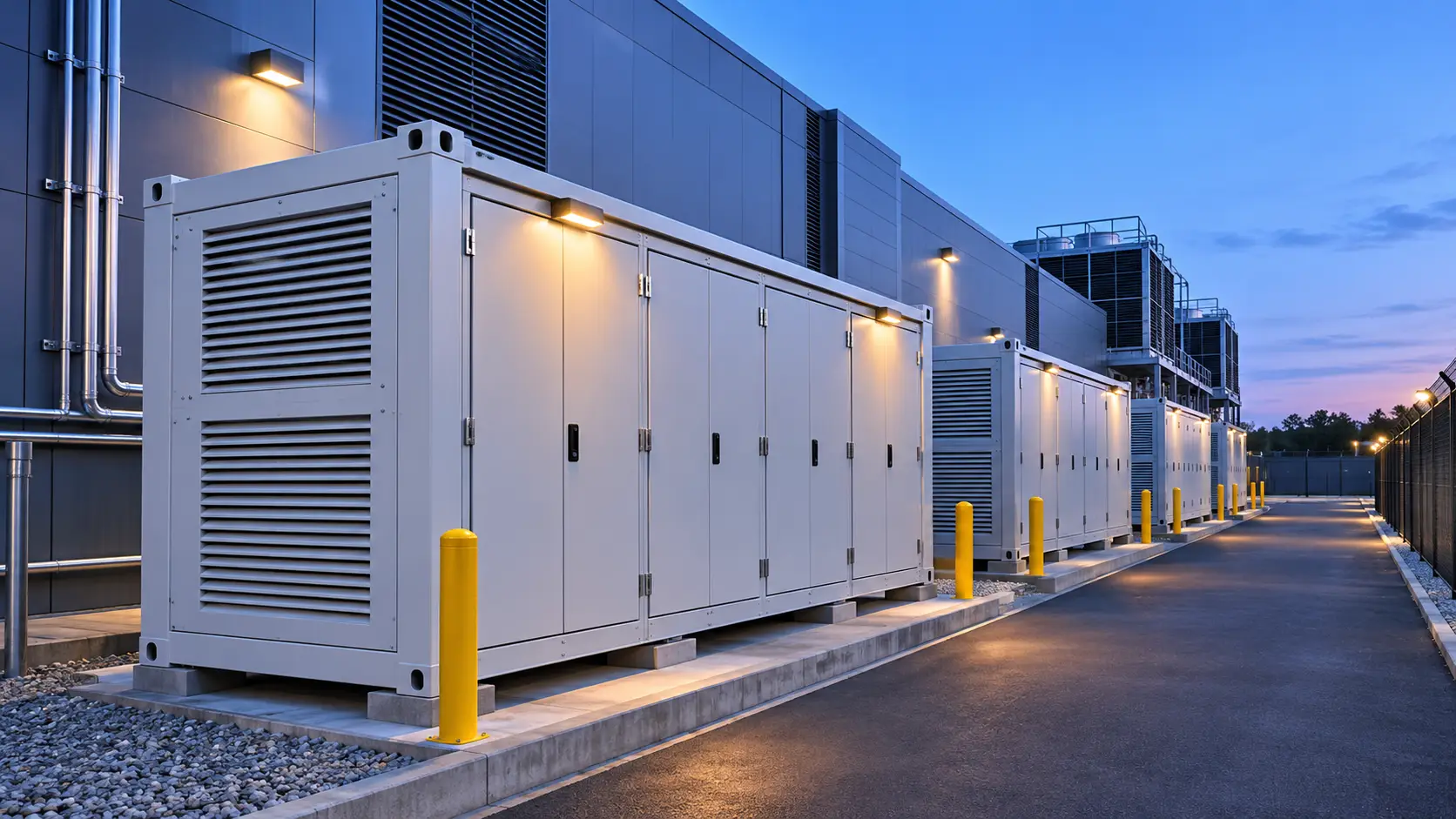
Editorial illustration of on-site battery storage at a data center.
A data center can draw less power from the grid at a busy hour by moving work to later in the day or using power it stored on site. A utility can ask for that change if the site agreed to it. The meter can show the drop, but you need a baseline to tell how much the site cut.
Read what the grid can call on
A site with firm service generally expects the utility to deliver power under its usual service rules. An interruptible contract spells out when the utility can call for a cut. Ask how much notice it must give, how long the cut can last, how often it can happen and what the customer gets in return.
A demand response program can pay a site for reducing its grid draw at times when the system needs relief. The Federal Energy Regulatory Commission’s overview of demand response sets out how it can help grid reliability. Look at the terms of the program. A site might agree to a limit on how much it can draw or offer to cut a set number of megawatts.
Three ways a site might handle a call
Suppose a site would draw 50 MW during a two-hour event. Assume other loads stay the same. The following options are three separate examples. Lawrence Berkeley National Laboratory’s data center research examines how shifting work and using on-site power can help.
Delay a batch job. A team could move a 6 MW job, such as a set of reports due overnight, out of the event window. The site would then draw 44 MW from the grid. Across two hours, that is a 12 MWh drop in grid energy during the event. The delayed job still needs power later.
Keep live requests running. A service that needs to answer now may have no room to wait. If the site makes no other change, it still draws 50 MW. It may be able to send requests to a second site. Ask where that site draws its power before you count the change as a cut for the wider grid.
Use an on-site battery. If a battery can supply 6 MW for the two hours, the meter would again show 44 MW from the grid. The site still uses 50 MW in this example. It needs at least 12 MWh that the battery can deliver and must later charge the battery again.
Check the meter against the event
Start with the dispatch notice or event record. It should give the window and the meter or site. Then ask for data taken at intervals during that window and the method used to estimate how much the site would otherwise have drawn. The PJM market operations manual describes customer baselines and meter records for its program. Other programs may set different rules.
A battery log can help confirm when the site discharged and when it charged again. Job logs can show what actually moved. Compare those records with the same meter and time window. Less power drawn from the grid in two hours can help when demand is high. To see whether the site also used less energy across the whole day, include what happened before and after the event.
Browse our data center coverage for projects that mention flexible grid service. A promise to cut load is worth checking against a real event, a clear baseline and meter readings.
A site’s annual load factor tells you how steadily it uses power over a year. For a grid event, check the short window and the meter data for the call.



Popular news

Soitec jumps 6.9% as European chip stocks rebound and Eutelsat falls

Ant Group releases a design image model that tops the open-weight ranking

Kioxia jumps 12.6% as Asian AI stocks trade through Thanksgiving

Perplexity lets developers search the web as it looked on an earlier date

AI sends more shoppers to retail sites ahead of Black Friday