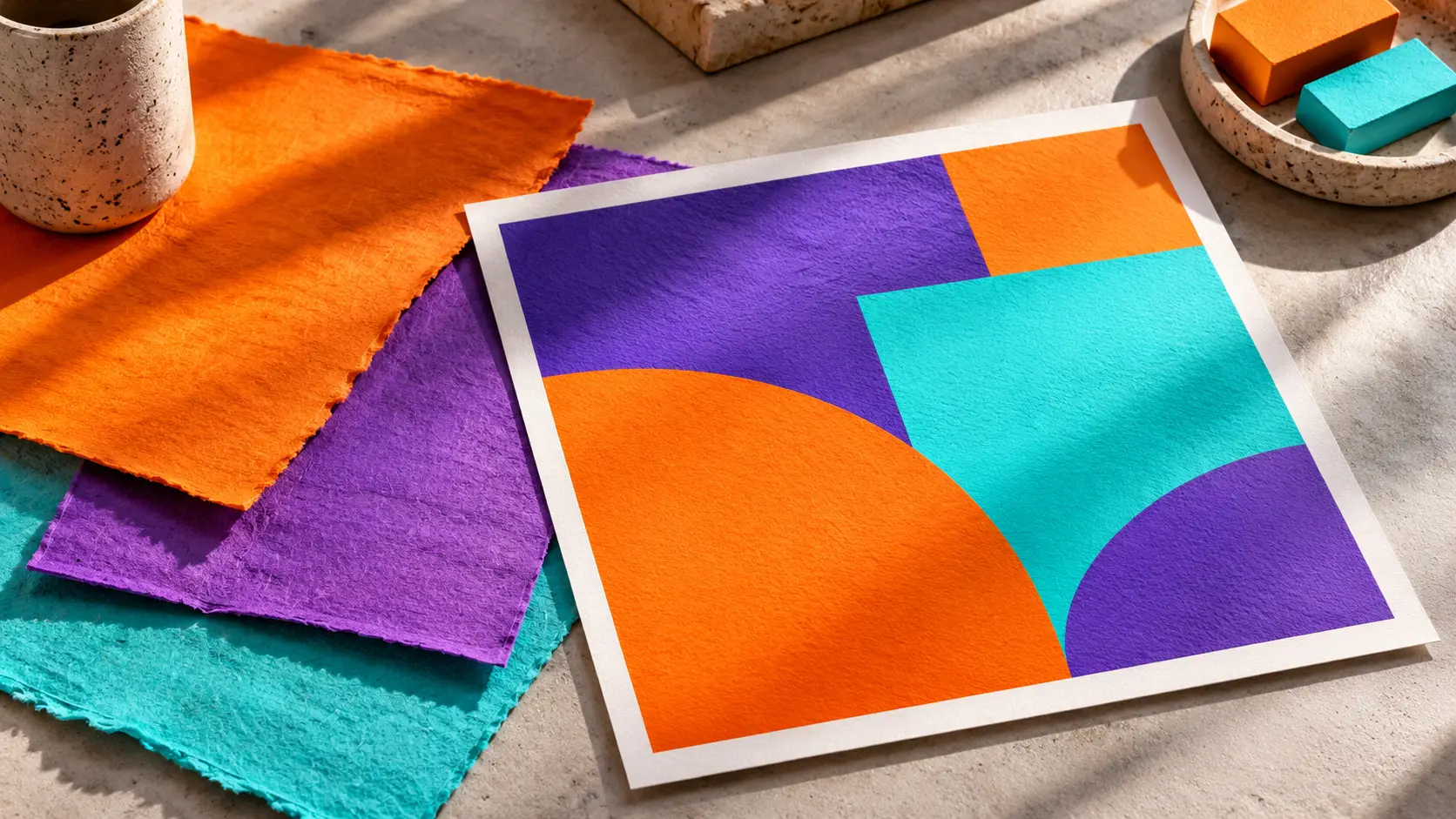
Paper swatches and an abstract layout illustrate the kinds of design drafts the Ming model can generate.
Ant Group’s InclusionAI has released the weights for Ming-Image-0.2-Design, an AI model that makes product images, posters and website mockups. It leads the open-weight models on Artificial Analysis’s text-to-image ranking. The lab tested it on a graphics card with 80 GiB of memory.
The release notes and weights are on Hugging Face under the MIT license. The team aimed to make text clearer and keep objects and light in step across a busy scene. Its examples include a page with several sections and a product shot for the top of a store page.
What the image ranking measures
Artificial Analysis gives Ming an Elo score of 1,095, with a reported range of 1,083 to 1,107 from 4,936 comparisons. That puts it first among models with weights people can download and 24th on the full table when checked on November 26.
People pick between two images from the same prompt. Their votes tell you which outputs they tended to prefer. They do not tell you how often a poster gets every price and line of text right. A shop that uses a draft should check the details against the brief. Kling Image 4.0’s launch raises a similar question about when a sharper image is ready to use.
What designers can use today
A page mockup is a picture of a possible design. To build a working page, a developer still has to add links, forms and other controls. The team describes a separate workflow that pairs its image model with a language model to turn a design into a page.
The weights are for the model that makes the first image. Its default size is 2,048 pixels on each side. The team offers a public code repository and lists wide, square and tall output sizes. The lab has yet to say how low the memory can go. It verified the 80 GiB setup.
A separate Layer model can split a flat image into pieces that a designer can move or change on their own. The lab’s November 26 announcement says the new Layer version is due next week. The project still points to its older Layer model for that step.


Popular news
Soitec jumps 6.9% as European chip stocks rebound and Eutelsat falls

Kioxia jumps 12.6% as Asian AI stocks trade through Thanksgiving

Midjourney’s Niji 8 brings back a way to reuse anime characters

Bleckmann will test two humanoid robots in European warehouses

Before AlphaGo, DeepMind learned to play Atari from the screen