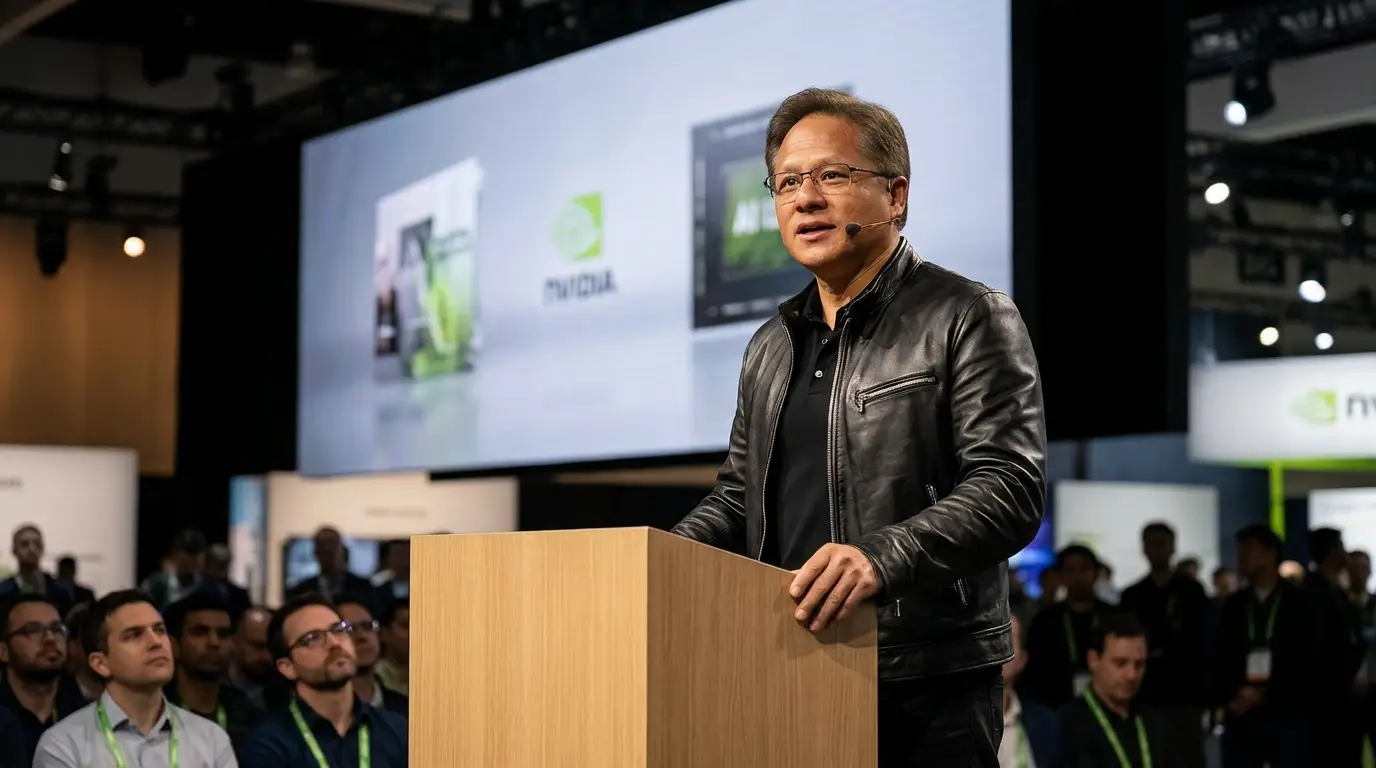
A black king and a pale knight stand on a wooden chessboard in front of a computer cabinet. AI-generated editorial illustration by AI World Today.
Nvidia’s RTX Spark compact desktops are now available from ASUS, Dell and MSI, the company announced on November 18. With up to 128GB of unified memory, they are designed to run supported AI models on a dedicated Windows computer.
Their arrival makes a practical question harder to ignore: when software promises “local AI,” which part of the work actually stays on your machine?
Where the work actually happens
An installed app, an agent working with local files and a model generating answers locally describe different parts of a workflow. An app can sit on your desktop while sending requests to a remote model. An agent can edit your files while relying on that model to decide what to do next.
Consider an illustrative example: an office manager asks an assistant to turn a folder of customer feedback into a morning report. The files begin on the office computer. The assistant reads them there. If it sends their contents to a cloud model for analysis, local file access has not kept that analysis on the device.
If a suitable model instead generates the report on the same computer, that stage uses local inference. The manager still needs to check the report against the feedback. Sending the finished document through an online email service introduces another network step, even when the model itself ran locally.
Ask where the input goes, where the answer is generated and what services receive the result. AI World Today’s guide to local AI explains these boundaries in more detail.
Why memory matters
The appeal of RTX Spark’s memory is room for larger workloads. But fitting a model is only part of the calculation. Ollama’s documentation explains how context and parallel requests also consume memory. A longer conversation or multiple simultaneous jobs can change the requirement.
The unified memory in Nvidia’s specifications is shared by the processor and graphics hardware. Capacity helps determine what can run; the quality and speed of a particular result still require testing. Our local AI hardware guide provides further background.
For the office manager, a useful comparison includes the time spent checking the report, whether each finding points to an original message, and the complete cost of the job. Local processing can offer control over data while still requiring careful review of the answer.
Mistral and Google illustrate the distinction
Mistral Vibe Desktop, released November 17, is generally available for macOS and Windows, with Linux coming. Its desktop guide describes sessions using a local repository or a cloud sandbox. Local sessions can work with files, commands and the development environment. That describes where tools operate; it does not, by itself, establish offline model inference.
Google’s November 18 Gemini expansion concerns access on lower-memory phones. Eligible Android Go devices need at least 2GB of RAM, subject to account, country and language requirements. Google’s help page says “Hey Google” and “Ask about this screen” are unsupported on Go. The eligibility threshold does not mean the full model fits into two gigabytes or works entirely offline.
Safety findings and Anthropic’s closing update
A GAO report publicly released November 18 describes spring 2026 tests in which safeguards on ChatGPT, Claude, Gemini and Grok were bypassed and systems produced information useful for harmful attacks. Investigators contributed expertise and outside information, with parts of the plans checked safely. The investigation demonstrates failures under those test conditions; it does not establish a current failure rate or rank today’s models.
Separately, Anthropic announced its IPO closing on November 20. The public offering generated approximately $93.5 billion gross, including shares sold by existing stockholders; approximately $91.6 billion was Anthropic’s portion, before fees and expenses. A separate concurrent private placement brought approximately $26 billion. The entire public offering total should not be described as money received by the company.
Follow AI World Today on Spotify or Apple Podcasts.
Read also


This episode uses an AI voice.

Popular news

XPeng Bets Everything on Physical AI and Robotics at Upcoming Tech Summit

AI Boom Will Push Data Center Carbon Emissions Up 70 Percent by 2030

AI Stocks Turn Red as Tech Shares Take a Hit
Google adds HelpBench to Gemini 4 Carbon safety tests

US AI Chip Restrictions Threaten Indonesia Tech Investments