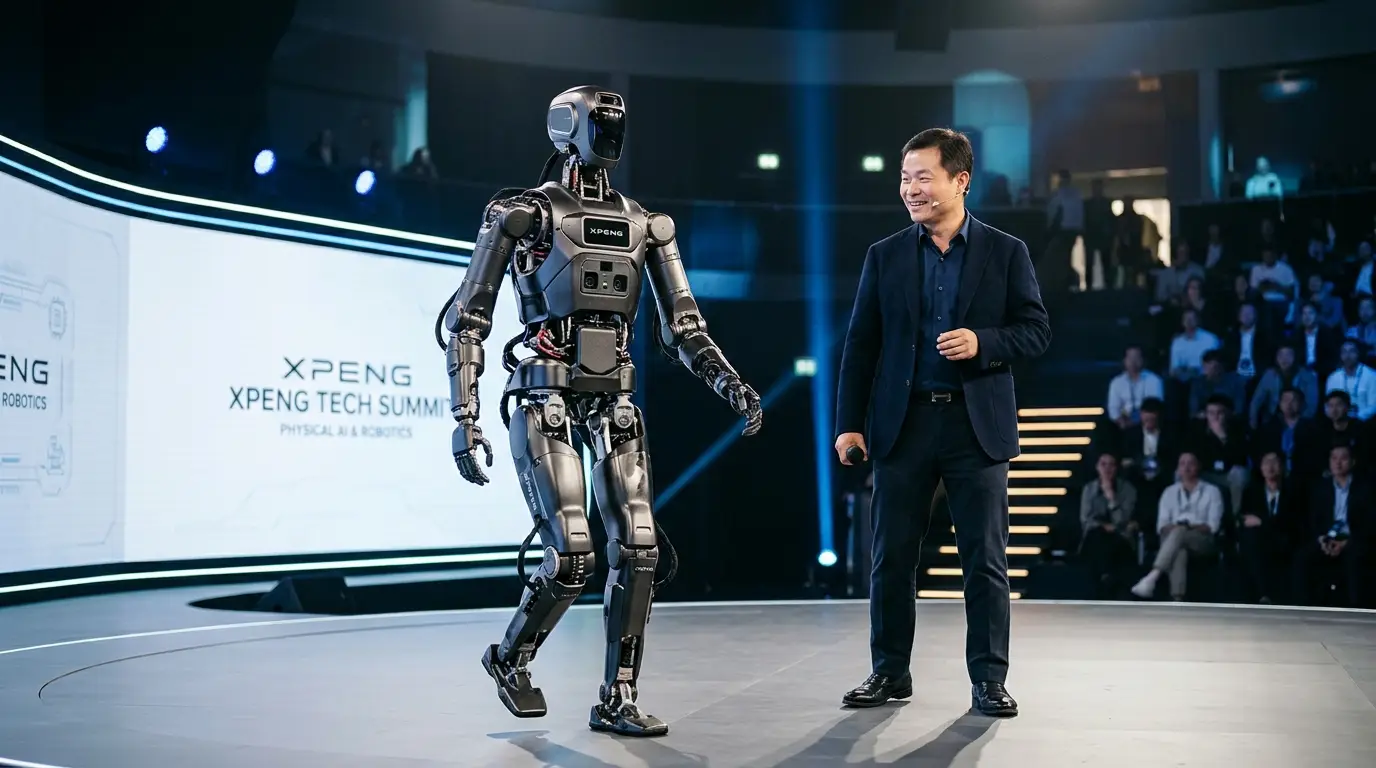
The race to build the ultimate autonomous machine is shifting from the highway to the factory floor. On November 25, Chinese electric vehicle manufacturer XPeng will host its highly anticipated 2026 AI Day in Guangzhou, just days before the city's international auto show kicks off. According to industry reports from EV-Route, the event will carry the theme "Origin" and focus heavily on the co-evolution of software models and physical hardware. CEO He Xiaopeng confirmed that the company's flagship humanoid robot, Iron, will take the stage to interact live with attendees, marking a pivotal moment for the brand's transition from a pure EV maker to a broad-spectrum robotics company.
Iron Steps Out of the Factory
While XPeng is best known for its smart EVs, the real star of the upcoming showcase is the next-generation Iron humanoid robot. The machine is designed to operate in both manufacturing and retail environments. According to XPeng's official robotics press releases, the Iron platform is powered by three proprietary Turing AI chips that deliver a staggering 2,250 TOPS of effective computing power directly on the robot's body. This massive localized compute allows the machine to run complex physical world large models without relying on cloud latency, enabling real-time reflexes and bionic movement across its 82 degrees of freedom.
| Hardware Metric | Traditional EV Smart Driving | XPeng Iron Humanoid Robot |
| Primary Compute Unit | Single Automotive SoC | 3x Turing AI Chips (2,250 TOPS combined) |
| Model Parameters | 10B - 15B Vision Models | Up to 30B Physical World Models |
| Power Source | 800V High-Voltage Liquid Battery | Custom All-Solid-State Battery |
| Actuation Complexity | Steering and Braking Control | 82 DOF with 22-DOF Dexterous Hands |
Bridging the Sim-to-Real Gap
The core challenge of physical intelligence is that a digital brain inside a finite physical body must process real-world feedback instantly. As noted in recent academic research on embodied AI evolution, bridging the gap between simulation and reality requires rigorous algorithm-hardware co-design. If the software model hallucinates or lags, the physical body falls over or drops an object. By utilizing the Turing AI chip architecture, which features a 40-core processor specifically tailored for large-scale AI models, XPeng is attempting to solve this exact bottleneck. The chip ensures that the robot's sensory inputs are processed locally, allowing the physical body to send real-world corrections back to the neural network instantly.
Mass Production on the Horizon
This tech summit isn't just a science fair; it is a prelude to commercialization. XPeng recently activated its dedicated humanoid robot production line and has already secured approvals for its Turing-powered Level 4 robotaxis in Guangzhou. With Iron entering the pre-production stage and solid-state batteries rolling off the line in small batches, the November 25 event will likely serve as the official starting gun for XPeng's mass-market robotics ambitions in early 2027.

Popular news

Anthropic opens at $111.50 on Nasdaq, 34.34% above IPO price

Google brings Gemini to Android Go phones with 2GB RAM

IBM finds chief AI officers often lack control over budgets
Google adds HelpBench to Gemini 4 Carbon safety tests
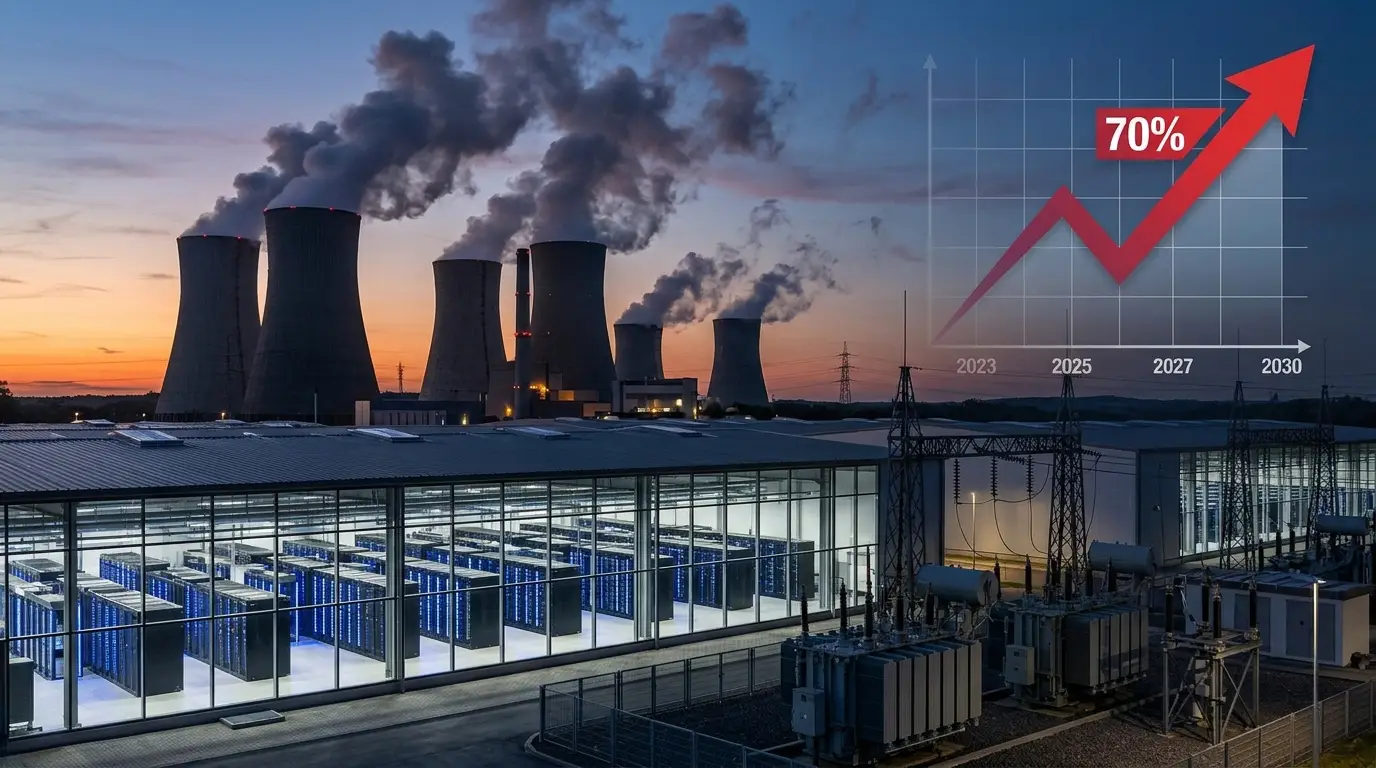
AI Boom Will Push Data Center Carbon Emissions Up 70 Percent by 2030