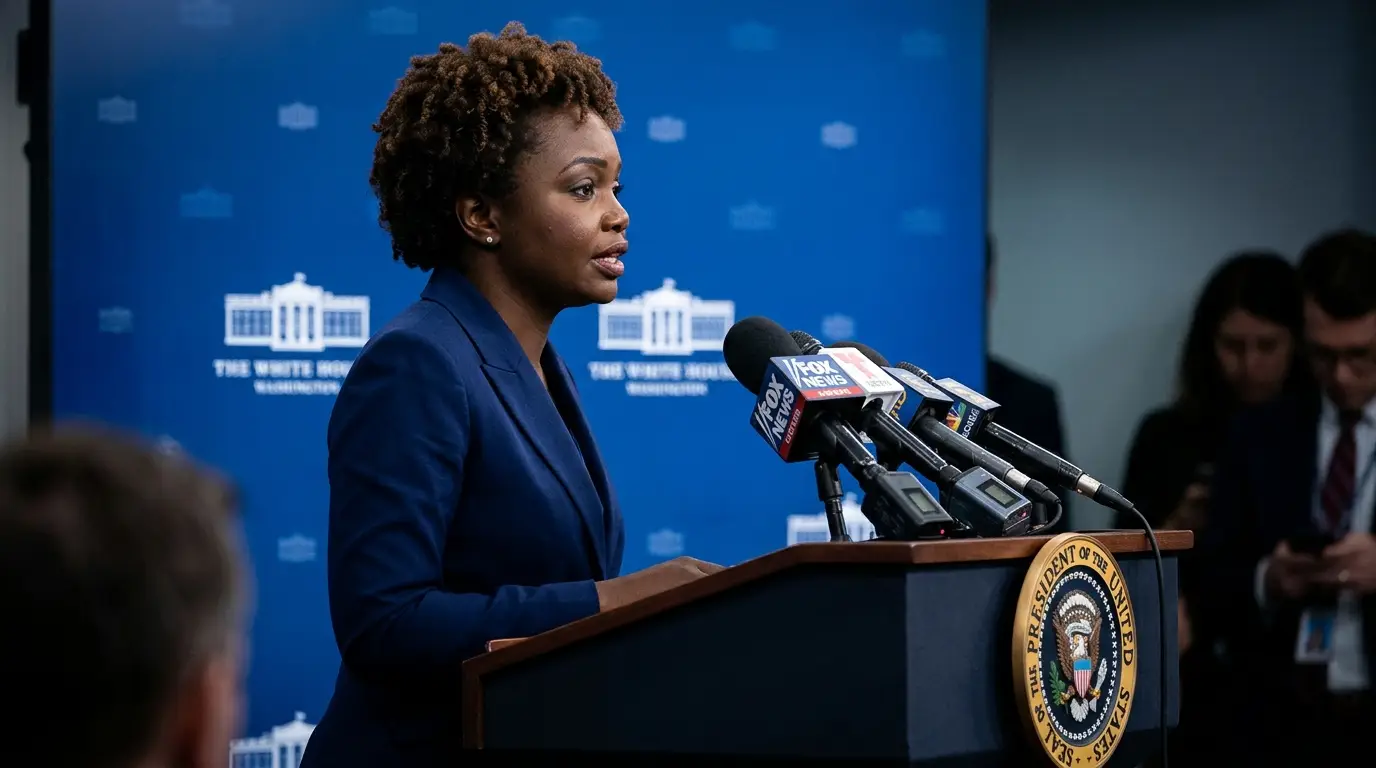
President Donald Trump drew a hard line in the sand regarding artificial intelligence regulation during a November 8 broadcast of CBS’s 60 Minutes. Speaking with correspondent Ross Douthat, the president acknowledged that AI risks are manageable and stated he is open to implementing industry guardrails. However, he attached a massive geopolitical asterisk to that cooperation, warning that any new rules must not place the United States in a "deep second position" behind China. As political analysts at ExplainX noted shortly after the broadcast, this conditional flexibility marks a distinct pivot from his September hardline refusal to support an industry-wide development pause.
Finding The Legislative Middle Ground
The post-midterm political reality has forced a change in strategy. With Democrats securing congressional wins earlier in the month, outright blocking safety legislation is no longer mathematically viable. Instead of fighting every proposed restriction, the administration seems willing to negotiate on frameworks that resemble speed limits rather than parking brakes.
This rhetorical opening gives lawmakers immediate leverage to push forward bipartisan bills like the GUARD Act, which mandates strict age verification and restricts chatbots from mimicking empathy when interacting with minors. Furthermore, liability frameworks such as the AI LEAD Act could finally see floor action. That specific legislation creates a federal cause of action for products liability claims when an autonomous system causes measurable harm. If the White House accepts these guardrails as "manageable risk" mitigations rather than existential threats to innovation, Congress might actually pass a unified federal standard before the end of the year.
| Policy Area | US Legislative Proposal (119th Congress) | Chinese Regulatory Equivalent | Primary Strategic Objective |
| Child Protection | S.3062 (Guidelines for User Age-verification and Responsible Dialogue) | CAC Generative AI Minor Mode Restrictions | Prevent psychological dependency and limit data harvesting from minors. |
| Algorithmic Liability | S.2937 (Aligning Incentives for Leadership, Excellence, and Advancement) | Civil Code Tort Liability for Algorithmic Defects | Establish clear financial responsibility for autonomous system failures. |
| Compute Scaling | Executive Orders Preempting State-Level Power Grid Bans | Next Generation AI Infrastructure Subsidies | Guarantee uninterrupted electricity and hardware access for frontier training. |
| National Security | DOD AI Institutes and Export Control Lists | Ministry of Foreign Affairs Global Governance Initiative | Restrict rival nations from accessing dual-use foundation models. |
The Geopolitical Speed Limit
The absolute red line for the current administration remains the international tech race. Trump explicitly told CBS that he views China as being "all-in" on achieving superintelligence, operating with far fewer domestic restrictions. Beijing certainly views AI supremacy as a top-tier national mandate, recently publishing updated guidelines through the Cyberspace Administration to heavily regulate and simultaneously boost innovative AI agents. Meanwhile, the Ministry of Foreign Affairs continues to push a global governance initiative that heavily emphasizes state sovereignty over data and compute.
Because rival nations are aggressively subsidizing compute clusters and bypassing the friction of safety debates, Washington is terrified of regulatory friction slowing down domestic labs. The takeaway for Silicon Valley is incredibly clear. You can expect new mandates for algorithmic transparency, deepfake watermarking, and child safety locks. Just do not expect the federal government to sign off on any compute caps or mandatory training pauses that might let foreign competitors close the gap. Safety is on the table, but slowing down is not.

Popular news

The Hidden Technical Debt Crisis Behind Prompt Driven Development
Amazon Shuts Down AI Educator Account Following Bulk Nvidia Hardware Orders

Developers Test Free Local AI Stack Against Premium Cloud Coding Agents

Global Media Leaders Forge AI Action Plan at Beijing Summit

South Korea Bets Big On Sovereign AI Infrastructure With NVIDIA Partnership