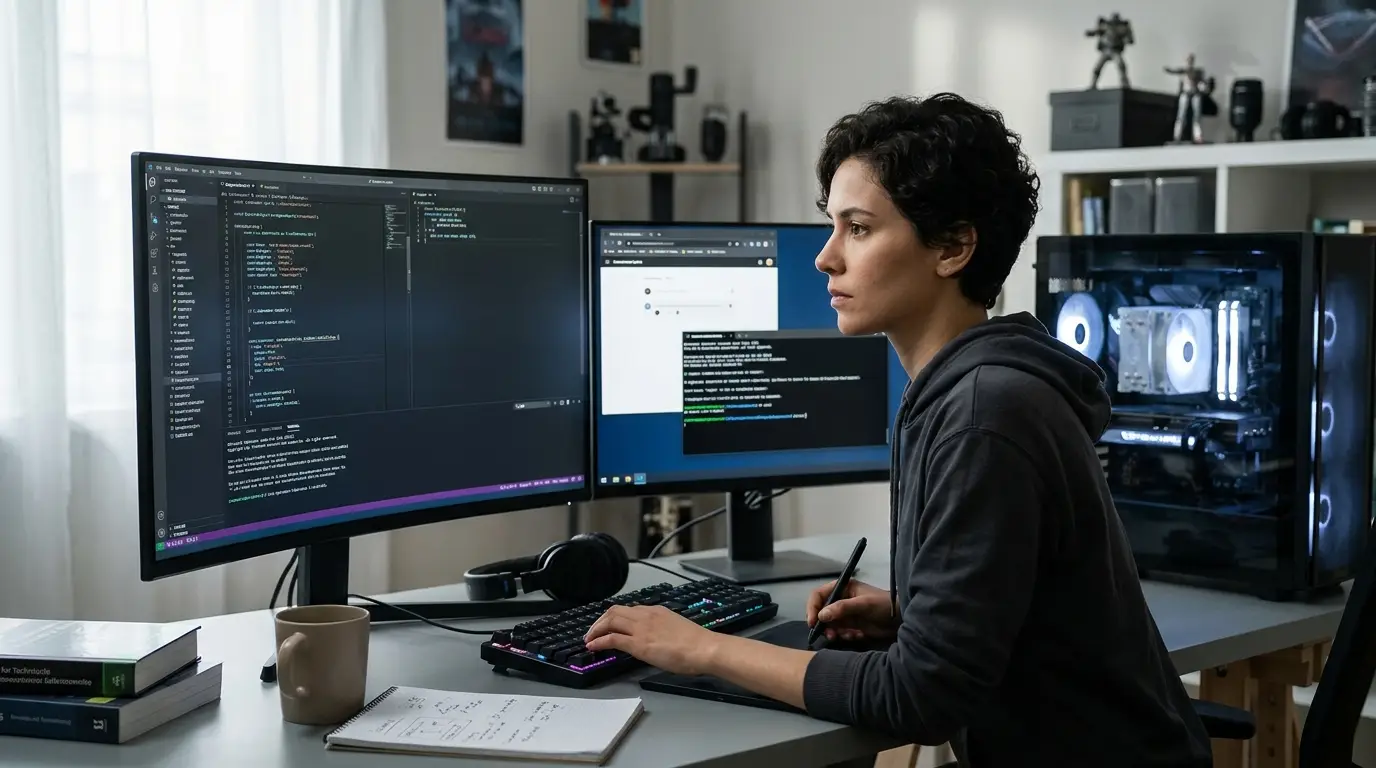
Software engineers are increasingly experimenting with DIY artificial intelligence setups to escape expensive monthly subscriptions and aggressive rate limits. By combining Ollama for local model hosting, the open-source terminal interface OpenCode, and Alibaba's highly capable Qwen coding models, developers can assemble a completely free alternative to premium commercial agents. According to recent hands-on evaluations detailed by ZDNet, this localized stack handles basic utility scripts surprisingly well. Testers successfully used the setup to build a simple Mac application, write a screenshot renaming utility, and code a basic PDF organizer without spending a single dime on API tokens.
Assembling the Offline Pipeline
The primary motivation for building this stack is strict data privacy and absolute cost avoidance. Commercial heavyweights like Claude Code require sending your entire repository to external servers, which is a massive non-starter for highly regulated industries or secretive startups. Running the pipeline locally ensures proprietary code never leaves the physical building. The OpenCode interface provides a sleek terminal experience that mimics the agentic behavior of paid tools, allowing the model to read files, propose diffs, and execute shell commands. When paired with Qwen's specialized coding weights, the initial drafting phase feels remarkably fluid. You can scaffold a new project, generate boilerplate functions, and wire up basic user interfaces with impressive speed and zero network latency.
Hardware Realities and Performance Tradeoffs
| Infrastructure Component | Local Open Source Setup | Premium Cloud Agent |
| Hardware Requirement | Minimum 24GB VRAM consumer GPU | Any standard web browser or lightweight IDE plugin |
| Model Upkeep | Manual weight downloads and environment tuning | Seamless automatic updates managed by the vendor |
| Context Retention | Degrades quickly as VRAM limits are reached | Maintains massive project memory across long sessions |
| Edge Case Reasoning | Prone to infinite loops on obscure syntax errors | Leverages proprietary reasoning layers for deep fixes |
Where the Local Dream Falls Apart
The real test of any coding assistant isn't writing new code from scratch, but figuring out why existing code is failing. This is exactly where the free local stack hits a massive wall. When confronted with complex stack traces, obscure dependency conflicts, or deep logical errors spanning multiple files, open-weight models tend to hallucinate solutions. For example, if a local model fails to resolve a React hook dependency issue, it might endlessly rewrite the same import statements without understanding the underlying component lifecycle. Premium cloud agents leverage massive, proprietary reasoning architectures that can trace execution paths through sprawling enterprise codebases. Until the open-source community develops models with comparable deep-debugging capabilities, local tools will remain excellent for prototyping, but developers will keep their paid subscriptions active for when production environments inevitably break.

Popular news

Nvidia CEO Jensen Huang Admits to an Affair as Company Probes Possible Chinese Espionage

Singapore General Hospital Wins Global Healthcare Award For Antibiotic AI Tool
Nvidia Board Launches Probe Into Foreign Intelligence Reports Targeting CEO

Global Media Leaders Forge AI Action Plan at Beijing Summit

Valve Updates Steam Release Rules to Manage AI Game Surge