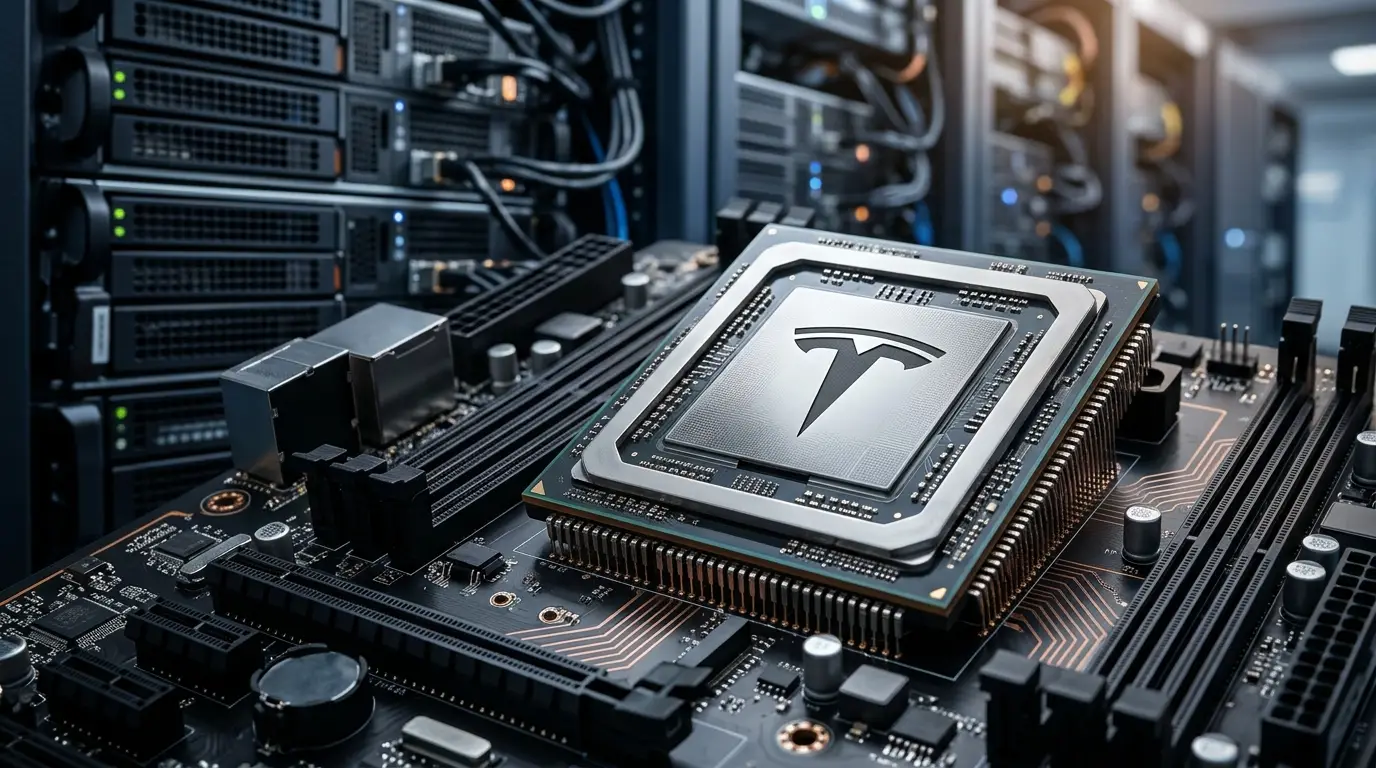
Tesla has officially revealed its next generation artificial intelligence accelerator roadmap, introducing a bold rebranding effort centered on Super Intelligence. The company announced that its upcoming SI6 inference chip will deliver an astonishing eighty times more compute performance compared to previous iterations. This massive leap in processing power marks a significant milestone in the corporate quest to dominate autonomous driving and advanced machine learning workloads globally.
Orbital Computing Ambitions
The strategic shift also includes the highly anticipated revival of the Dojo 3 supercomputer project. Leadership confirmed that development is back on track now that the AI5 chip design has stabilized and entered trial production. This next generation training accelerator will be the first fully in house Tesla supercomputer, completely eliminating reliance on external semiconductor providers.
| Specification Category | Project Detail |
| Accelerator Branding | Super Intelligence SI6 |
| Compute Performance | 80x increase over previous generation |
| Supercomputer Project | Dojo 3 orbital data center initiative |
| Core Hardware | Proprietary AI5 and AI6 silicon |
| Primary Application | Autonomous driving and machine learning |
| Manufacturing Status | AI5 trial production underway |
Beyond terrestrial data centers, the company plans to push the boundaries of orbital computing. The Dojo 3 architecture is being explicitly designed with space based applications in mind. This ambitious move aims to establish orbital data centers capable of processing vast amounts of satellite and autonomous vehicle data without terrestrial latency constraints. Such infrastructure could revolutionize how real time environmental data is processed for global navigation systems.
Proprietary Silicon Advantage
The commitment to proprietary silicon is evident in recent manufacturing updates detailed in official Tesla AI initiatives. Trial production of the AI5 processor has already begun, featuring optimized memory bandwidth and a streamlined architecture designed to maximize efficiency. By controlling the entire hardware and software stack, the engineering teams ensure seamless integration between complex neural networks and the underlying compute infrastructure. This comprehensive approach guarantees that every computational cycle is utilized effectively, paving the way for unprecedented breakthroughs in artificial general intelligence.
Industry experts note that this vertical integration strategy provides a distinct competitive advantage in the rapidly evolving tech sector. The official roadmap demonstrates a clear vision for scaling machine learning training as a potential web service for external developers in the future. As the SI6 and Dojo 3 projects mature, they will undoubtedly reshape the landscape of high performance computing and artificial intelligence development worldwide.

Popular news

Nvidia CEO Jensen Huang Admits to an Affair as Company Probes Possible Chinese Espionage

Singapore General Hospital Wins Global Healthcare Award For Antibiotic AI Tool

Global Media Leaders Forge AI Action Plan at Beijing Summit
Nvidia Board Launches Probe Into Foreign Intelligence Reports Targeting CEO

Developers Test Free Local AI Stack Against Premium Cloud Coding Agents