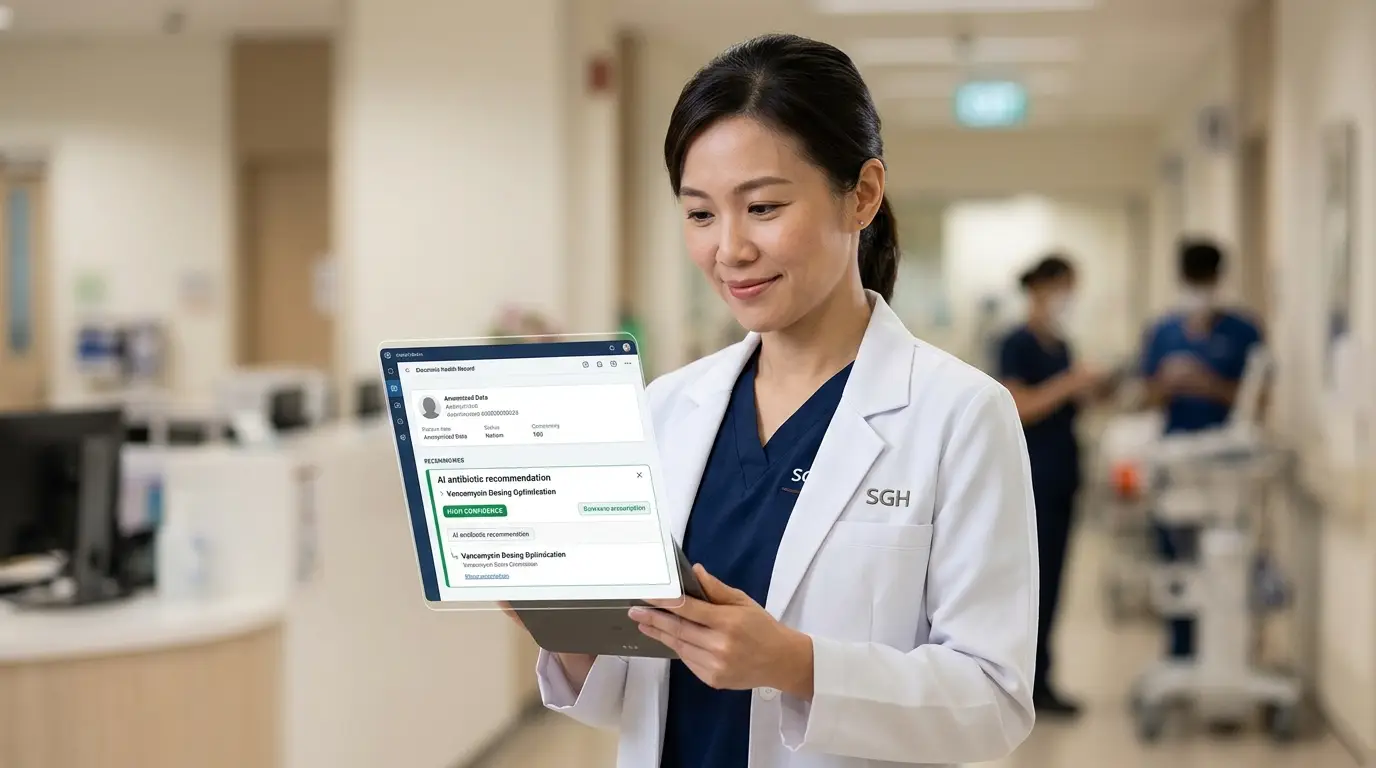
A groundbreaking artificial intelligence system designed to combat the silent pandemic of antimicrobial resistance has just earned major international recognition. Singapore General Hospital recently secured the Silver Award in the Dr Prathap C Reddy Excellence Award for Clinical Quality and Patient Safety at the International Hospital Federation Awards 2026. The winning technology, known as AI2D, assists physicians in determining whether patients suffering from respiratory infections actually require antibiotic treatments.
Tackling a Silent Global Pandemic
The overprescription of antimicrobial drugs is a leading driver of superbugs, a crisis that the World Health Organization ranks among the top ten global public health threats facing humanity. In busy tertiary wards, distinguishing between viral and bacterial pneumonia early on is notoriously difficult. Consequently, doctors often prescribe broad-spectrum antibiotics as a precaution while awaiting lab results. This defensive medicine exposes patients to adverse side effects and accelerates drug resistance.
To solve this, a multidisciplinary team at SGH partnered with DXC Technology and Synapxe to build AI2D. Rather than replacing clinicians, the platform operates quietly in the background of existing electronic health records. It analyzes routinely collected clinical data to provide real-time, actionable insights without requiring medical staff to manually input additional information.
Measurable Impact on Stewardship Programs
Trained on a robust dataset of 18,000 clinician-reviewed patient cases, the platform boasts a 90 percent accuracy rate for lower respiratory tract infections. The operational impact over the past year has been transformative for the hospital's antimicrobial stewardship program. Prior to deployment, pharmacists could only manually review about 30 percent of relevant cases. Today, the algorithm flags 100 percent of pneumonia admissions for human evaluation.
| Clinical Metric | Pre-Implementation Baseline | Post-Deployment Results |
| Case Review Coverage | 30 Percent | 100 Percent |
| Successful Antibiotic Cessation | 15 Percent | 43 Percent |
| Diagnostic Accuracy (LRTIs) | Variable | 90 Percent |
| Manual Data Entry Required | Standard workflow | Zero additional inputs |
Data reflects internal operational improvements for lower respiratory tract infection management.
A Blueprint for Global Health Systems
The innovation stood out in a highly competitive pool, emerging as one of only eight finalists selected from over 750 submissions across 38 different nations during the 49th World Hospital Congress in Seoul. It also secured top honors at the IHF i-to-i Innovation Hub.
Associate Professor Andrea Kwa, who co-led the development, noted that the system turns raw medical data into a force multiplier for clinical judgment. Associate Professor Loo Chian Min, Chairman of the Medical Board, emphasized that this global endorsement proves local innovations can solve universal medical challenges. By safely discontinuing unnecessary prescriptions in nearly half of all flagged cases, the technology preserves the efficacy of life-saving drugs for future generations. As healthcare networks worldwide struggle with staffing shortages, the framework established at Singapore General Hospital offers a highly scalable model for integrating augmented intelligence directly into daily clinical workflows.

Popular news

Nvidia CEO Jensen Huang Admits to an Affair as Company Probes Possible Chinese Espionage

Nvidia Board Launches Probe Into Foreign Intelligence Reports Targeting CEO

Global Media Leaders Forge AI Action Plan at Beijing Summit

Valve Updates Steam Release Rules to Manage AI Game Surge

Opera Brings Local AI to the Browser With New Web Standard