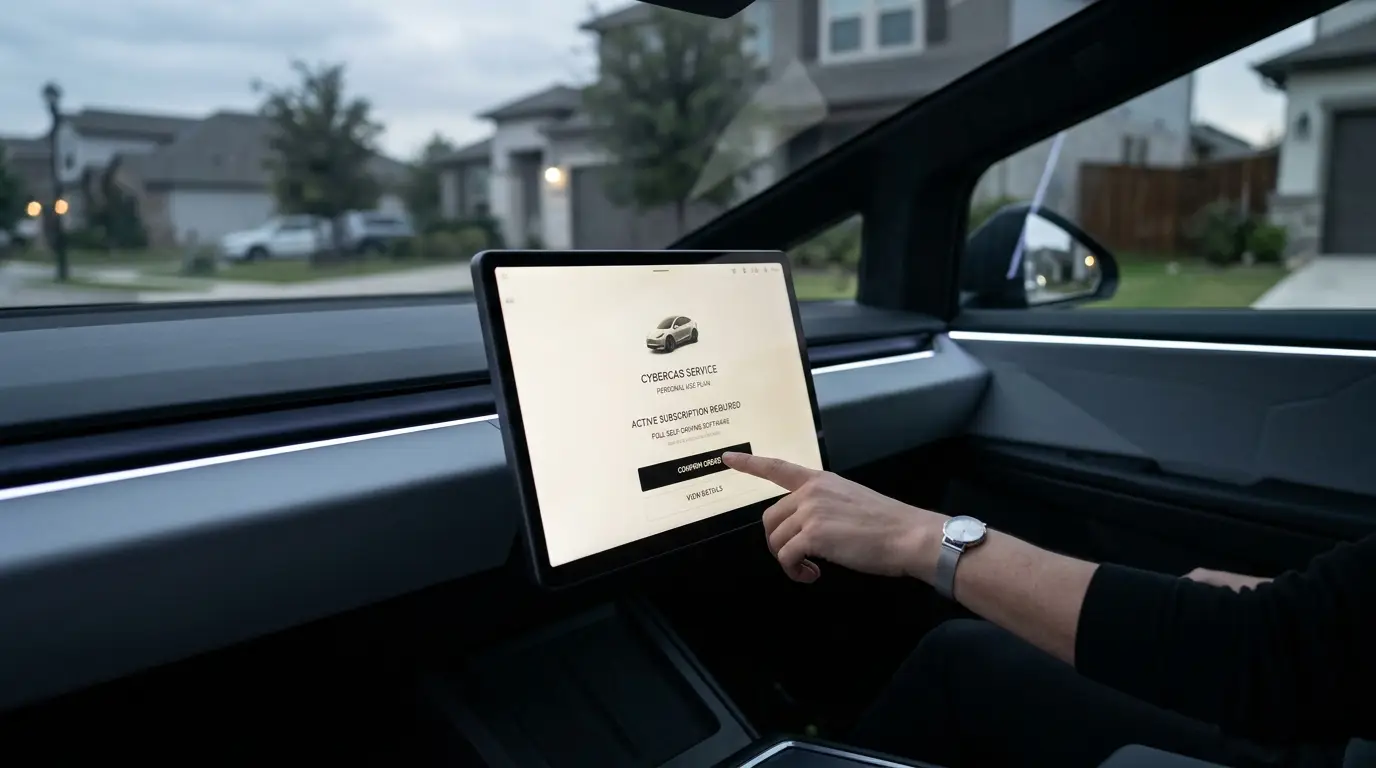
A highly anticipated milestone in the electric vehicle sector has quietly begun, though not exactly in the way consumers expected. According to a detailed breakdown by ExplainX, a select group of buyers in Austin, Texas, are currently receiving invite-only purchase offers for the Cybercab. The headline sticker price sits at an aggressive $29,990, paired with a non-refundable $1,000 deposit and targeted December deliveries.
However, the true cost of ownership lies in the fine print. Because the futuristic pod completely lacks a steering wheel and pedals, manual intervention is physically impossible. Buyers are required to sign a binding agreement for an Autonomy Subscription. Early screenshots from the checkout flow indicate a steep $299 monthly fee, with only the first month included in the purchase. Following immediate backlash, Elon Musk took to social media to suggest the recurring rate should eventually drop to roughly $115 to match existing full self-driving packages, though the official order screen still reflects the higher tier.
Operating a Vehicle on a Monthly Retainer
This pricing model fundamentally shifts car ownership from a one-time capital expenditure to a continuous software rental. Without an active internet connection and a valid subscription, the vehicle is essentially a very expensive paperweight. Federal regulators have spent years grappling with how to legally classify these driverless machines. The National Highway Traffic Safety Administration has historically required special exemptions for vehicles entirely devoid of manual driving controls, creating a complex web of compliance for automakers pushing into unsupervised territories.
Consumers hoping to offset that initial hardware cost with federal green incentives also face steep bureaucratic hurdles. The Internal Revenue Service strictly governs the $7,500 clean vehicle credit, and it remains legally ambiguous whether a geofenced, driverless pod qualifies for the same consumer tax benefits as a traditional commuter sedan.
| Ownership Horizon | Estimated Upfront Capital | Cumulative 5-Year Software Cost | Total Five-Year Exposure |
| Traditional EV Market | $40,000 - $55,000 | $0 (Standard OTA updates) | $40,000 - $55,000 |
| Cybercab High Tier | $30,990 (inc. deposit) | $17,940 | $48,930 |
| Cybercab Target Tier | $30,990 (inc. deposit) | $6,900 | $37,890 |
| Robotaxi Hailing Only | $0 | Varies by mileage | ~$18,000 - $28,000 |
Testing Retail Waters in a Controlled Geofence
Despite the viral excitement surrounding the sub-$30,000 price tag, the broader corporate strategy remains heavily focused on commercial fleets. Executives have repeatedly emphasized that the vast majority of early production units will remain company-owned assets operating within the official Tesla Robotaxi network.
The invite-only retail pilot in Austin is likely a stress test for title transfers, insurance binders, and remote-assist liability rather than a nationwide consumer launch. By restricting initial sales to a tightly controlled operational design domain, the automaker can monitor real-world software uptime and mapping dependencies without risking widespread consumer frustration. For everyday drivers outside of Texas, the dream of affordable personal autonomy remains on hold, proving that the future of driving might not be about owning the car, but merely renting the code that makes it move.

Popular news
OpenAI Unveils ChatGPT Wallet For Autonomous Agent Shopping

Google DeepMind Ships Next Generation Robotics and Genomic AI Models
Anthropic Says Automated Coding Tools Are Dismantling Nvidia Software Moat
US Data Brokers Supply Half Billion Dollars In AI Training Environments To Chinese Labs

AI Uncovers Hidden Heart Signals To Predict Sudden Cardiac Arrest