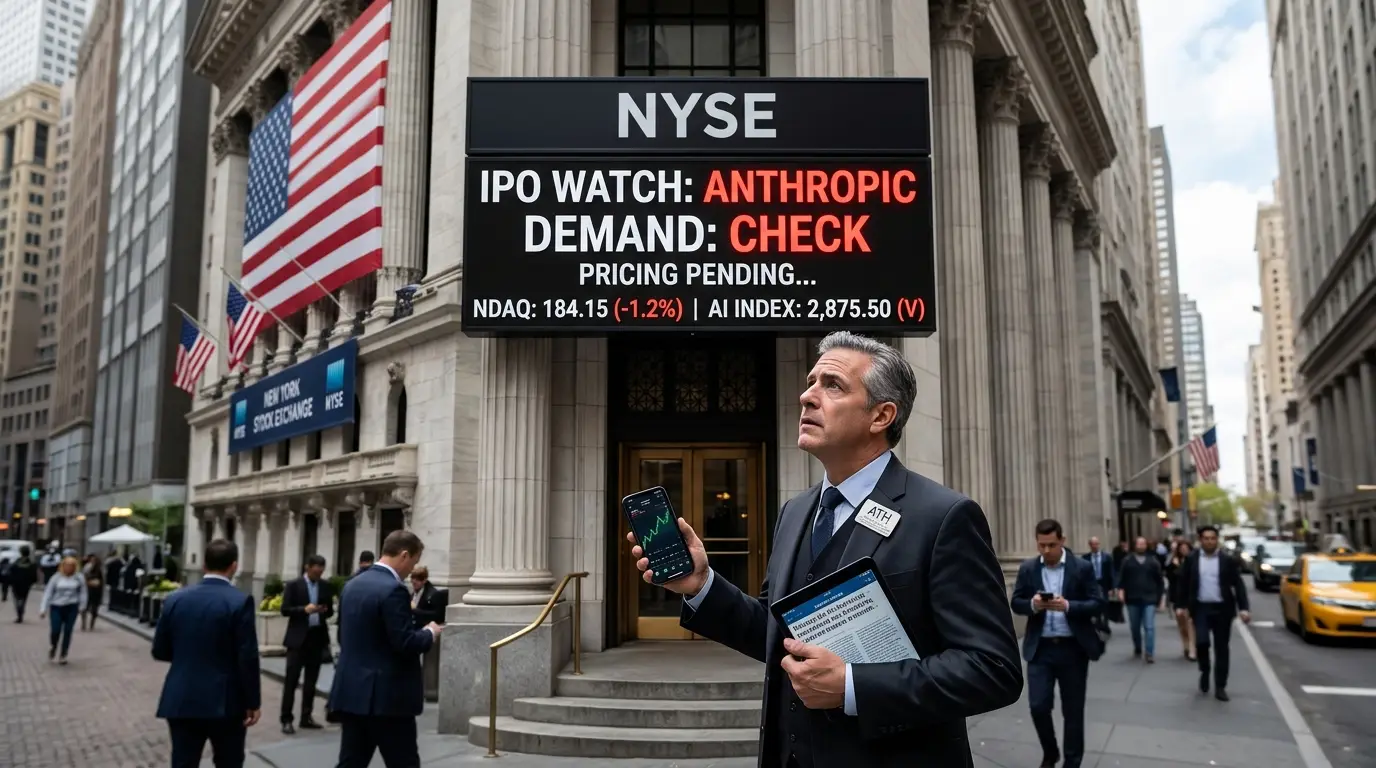
Wall Street is currently dissecting the frenzy surrounding Anthropic's highly anticipated initial public offering, separating media hype from hard financial data. While financial wires buzz with claims that the AI pioneer’s order book is six times oversubscribed, the company’s official prospectus paints a much more grounded picture of its underlying business mechanics.
Separating Market Rumors From Regulatory Facts
The rumor mill suggests that demand for the stock hit six times the available supply by mid-November, a figure sourced by major financial outlets from anonymous bankers familiar with the roadshow. However, during the mandatory SEC quiet period, the company itself cannot legally confirm or deny these multiples. Bankers privately note that while early demand was strong, institutional appetite for the creator of Claude is being heavily scrutinized against the sheer size of the deal.
Furthermore, reports indicate that existing private backers might receive priority allocations, leaving latecomer institutions with smaller slices of the pie than they requested. This dynamic is typical for marquee tech debuts, but it underscores that raw demand multiples do not guarantee long-term stock stability once retail trading begins.
The True Cost Of Training Frontier Models
Beneath the valuation chatter lies a brutal reality about the economics of large language models. According to the company's amended S-1 filing, the financials reveal the astronomical cost of maintaining an AI leadership position. While top-line growth is undeniable, the bottom line reflects the massive compute expenditures required to stay ahead of open-weight competitors.
| Metric | Unverified Market Claims | Verified Regulatory Filings |
| Order Book Demand | 6x Oversubscribed | Not Disclosed |
| Target Price Range | $70 to $78 Per Share | $70 to $78 Per Share |
| Public Float | 825 Million Shares | 825 Million Class A Shares |
| H1 2026 Revenue | N/A | $16.3 Billion |
| H1 2026 Net Loss | N/A | $80.75 Billion |
Pricing The Future Of Generative AI
At the top end of the proposed $78 pricing range, the fully diluted valuation pushes past the trillion-dollar threshold. This places the startup in an elite tier of public companies, competing directly for enterprise AI budgets against legacy software giants.
Investors are essentially betting that the company's enterprise API commitments will eventually offset the staggering accounting charges associated with GPU depreciation and infrastructure buildouts. The roadshow, which swept through New York, Boston, and San Francisco, made it clear to fund managers that while the technology is revolutionary, the path to sustained profitability remains steep.
Ultimately, the opening bell will reveal whether the market believes the premium is justified. Enterprise clients are constantly benchmarking proprietary models against cheaper alternatives, meaning the firm must continually justify its massive infrastructure spend just to defend its current market share.

Popular news

Google DeepMind Ships Next Generation Robotics and Genomic AI Models

Anthropic Says Automated Coding Tools Are Dismantling Nvidia Software Moat
US Data Brokers Supply Half Billion Dollars In AI Training Environments To Chinese Labs

OpenAI Unveils ChatGPT Wallet For Autonomous Agent Shopping

Tesla Cybercab Personal Orders Surface With Mandatory Software Subscription