Meta unveils camera-free AI glasses: what do you lose with Ray‐Ban Meta Audio?
NewsFriday, 25 September 2026 at 22:48
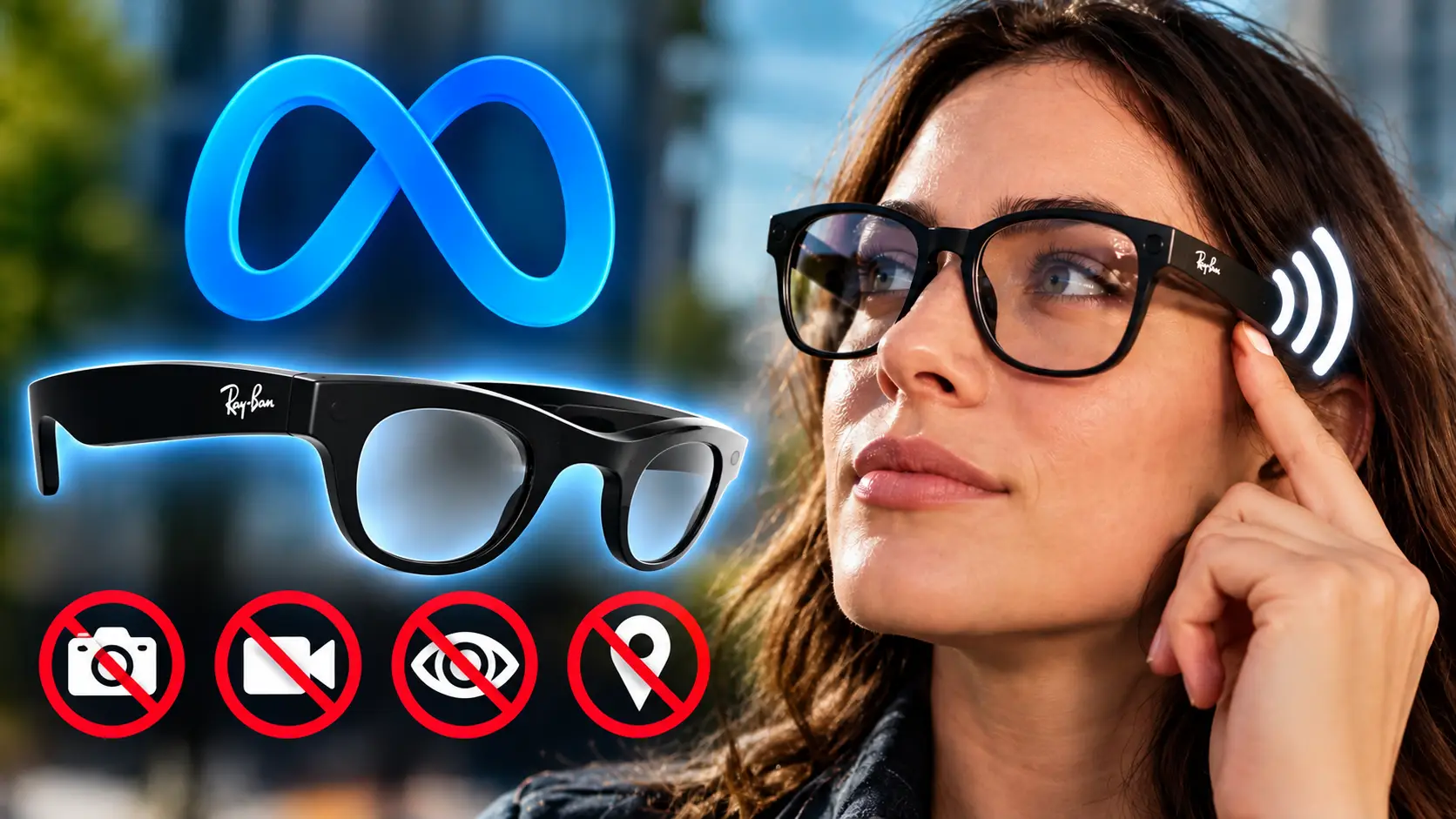
A pair of glasses that talks to you—but can’t see what you see. Meta has made a bold move with Ray-Ban Meta Audio: the new model is built for sound and voice, with no camera onboard. There’s also a Ray-Ban Meta (Gen 3) with a camera. Both debuted on September 23 during Meta Connect. The difference runs deeper than price or frame style: one pair can’t look at your surroundings to answer an AI question, the other can.
According to Meta’s announcement, Audio weighs 43 grams and offers up to twelve hours of battery life. The included case can provide another 48 hours of charge, Meta says. The Dutch Ray-Ban store lists Audio for pre-order from €349, shipping from October 13; Gen 3 starts at €449. Frame styles, prescription lenses, and extras can raise the final price.
What can the camera-free model actually do?
You can listen to music or podcasts, take calls, and talk to Meta AI hands-free. The open speakers let in ambient sound. The Dutch product specs list six microphones, a customizable button, and multiple lens options, including prescription. The first two frame styles are Clubmaster and Burbank.
But there really is no camera. In Ray-Ban’s Dutch comparison, photo/video capture, visual AI, and Live AI are marked unavailable for Audio. You can ask questions you can describe in words; you can’t say “What does this label say?” and expect the glasses to read it. Live, audio-based translation of conversations is supported, according to Ray-Ban. Check your country and app for exact languages and availability.
There’s also a social upside. You don’t have to explain whether the glasses can secretly snap a photo—Audio has no camera. That doesn’t erase every privacy concern: microphones and voice processing still matter. But choosing no camera removes one clear objection. If you want hands-free photos or AI that can look at an object, pick a different model.
What does Gen 3 add for the higher price?
Ray-Ban Meta (Gen 3) includes a 12-megapixel camera and, according to Meta, records video in 3K. You can shoot photos or clips without pulling out your phone. The camera also enables visual queries to Meta AI. Meta cites up to nine hours of battery life per charge—three hours less than Audio. Gen 3 comes in three frame styles: Aviator, Zena, and Wayfarer. The Dutch starting price is €449.
A front-facing light is meant to show bystanders when you’re taking photos or video. In its camera indicator explainer, Meta says the camera shuts off if the indicator is covered or tampered with. That technical safeguard doesn’t replace consent in sensitive situations. AIWereld previously covered the privacy questions around footage from Meta glasses. If your main use is calling and listening, the camera—and the debate around it—is not a minor factor in your purchase.
And Muse, Meta’s new personal AI agent?
Meta plans to bring its AI agent Muse to glasses in the coming months. In its Connect recap, the company describes how Muse can respond on camera-equipped glasses to whatever you’re looking at—like a product on a shelf or a list on a flyer—and then help complete a task. Meta also mentions integrations with retailers, travel platforms, and productivity tools.
This isn’t broadly available yet. Meta talks about a rollout in the coming months and doesn’t provide a full list of countries, languages, subscription terms, or model-specific features. And the camera-free Audio can’t perform visual tasks. An AI agent acting on what you see can also make mistakes: a misread price tag or a wrong appointment could have immediate consequences if you confirm the action.
Which one makes the most sense?
If you mainly want hands-free calls, podcasts, and the occasional voice query, Audio is the obvious pick on paper: lighter, longer quoted battery life, and no camera. If you want to capture footage on the go or use visual AI, go Gen 3. The Dutch entry-level price gap is €100; actual cost depends on frame and lenses.
Buying in the Netherlands? Three checks beat any generic “AI in your glasses” pitch: is your specific frame and lens choice available, does the feature work with your language and account, and do you actually need a camera? Audio is listed as a pre-order in the Dutch store; Gen 3 is available now. Start with the simple question: should your glasses see—or do you mostly want to listen and talk? For more on Meta’s hardware strategy, AIWereld has a deep dive on Meta and its smart glasses.

Popular news

Latest comments
Loading