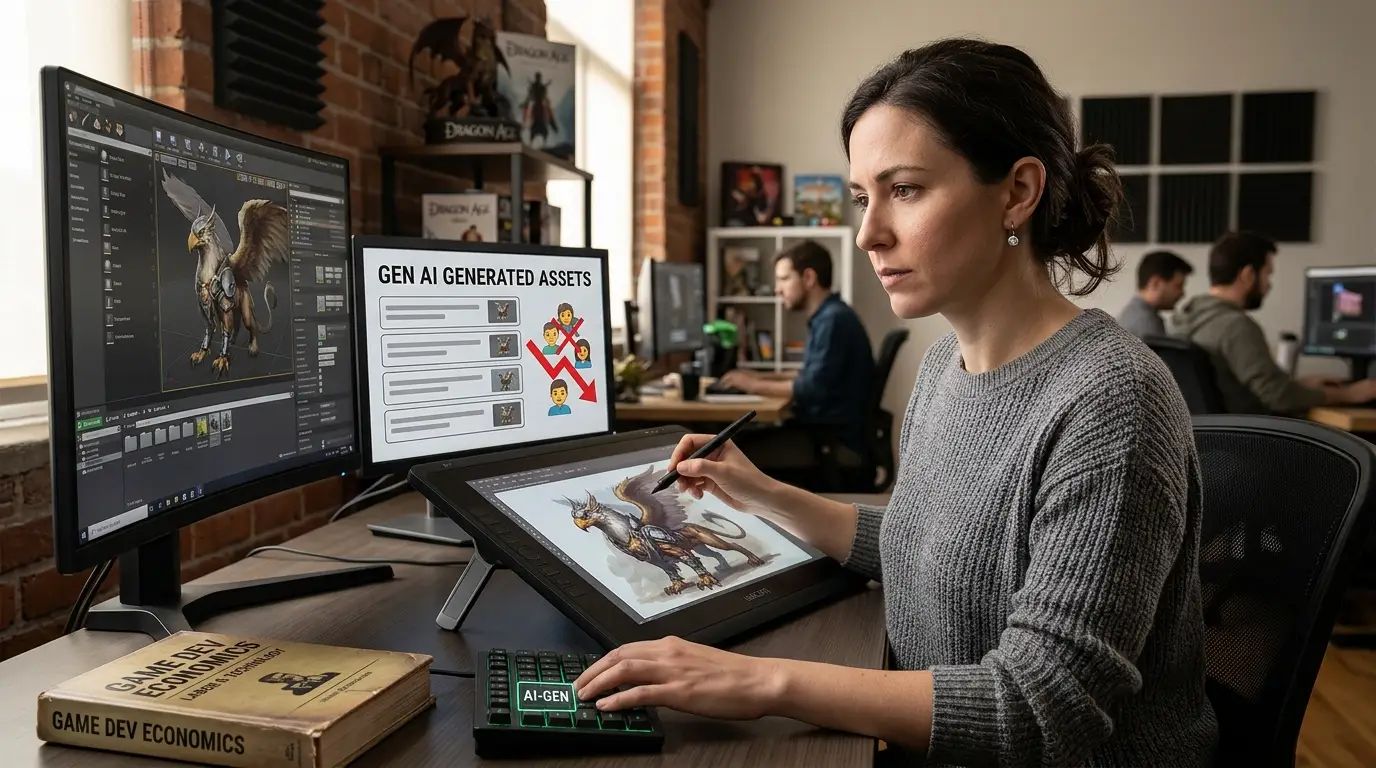
The interactive entertainment sector is currently caught in a massive contradiction. On one hand, studios are quietly integrating machine learning tools into their daily pipelines to cut costs. On the other, the people actually building these virtual worlds are increasingly hostile toward the technology and the corporate mandates pushing it.
According to the official State of the Game Industry 2026 report published by the Game Developers Conference, nearly half of the workforce is now leveraging these tools, but sentiment has soured dramatically.
The Reality Of Daily Studio Workflows
Despite loud public boycotts and high-profile artist protests, adoption on the ground tells a different story. The survey found that 40% of industry professionals now actively use generative AI in their workplace, marking a steady climb from 36% the previous year.
However, they aren't exactly using it to churn out final 3D models or finished voice acting. Most developers admit they rely on the software for background tasks like brainstorming, writing boilerplate code, or conducting early-stage research. It functions more like an overcaffeinated intern than a direct replacement for senior talent, quietly handling the tedious busywork that slows down production pipelines.
A Growing Disdain For Synthetic Art
While adoption creeps upward, optimism is crashing. The latest data shows that only 7% of respondents believe machine-generated content is having a positive impact on the medium, a steep drop from 13% in 2025. Meanwhile, 52% of developers now explicitly view the technology as detrimental to the industry.
This resentment is deeply tied to the brutal wave of corporate downsizing that has ravaged studios over the past 24 months. With nearly a third of the workforce experiencing layoffs recently, many creatives view automation not as a helpful utility, but as a direct threat to their livelihoods. Executives at major publishers have frequently pointed to AI integration as a way to restructure and avoid rehiring, fueling massive animosity on the studio floor.
| Metric | 2025 GDC Survey Results | 2026 GDC Survey Results | Net Sentiment Shift |
| Active Workplace Adoption | 36% | 40% | +4% (Increased Usage) |
| Positive Industry Impact | 13% | 7% | -6% (Plummeting Optimism) |
| Negative Industry Impact | 30% | 52% | +22% (Surging Hostility) |
| Primary Use Case | Prototyping & Code | Brainstorming & Research | Shifted Away from Core Art |
The Generational And Demographic Divide
The comprehensive demographic breakdown also highlights a fascinating gender gap regarding these tools. Male developers reported utilizing the software at a rate of 41%, compared to just 35% of their female counterparts.
Furthermore, indie studios and smaller teams are far more likely to experiment with synthetic assets out of sheer financial necessity, whereas AAA veterans remain deeply skeptical of the ethical and legal minefields surrounding copyright infringement. Large unionized studios are actively pushing back against management to include strict anti-automation clauses in their collective bargaining agreements.
As publishers look to cut costs and speed up production cycles, the friction between executive mandates and developer morale is reaching a boiling point. The technology is undeniably here to stay, but the humans forced to wield it are making their displeasure known loud and clear. The coming year will likely see a massive clash over intellectual property rights as the industry tries to figure out where human creativity ends and algorithmic output begins.

Popular news

OpenAI Unveils ChatGPT Wallet For Autonomous Agent Shopping

AI Uncovers Hidden Heart Signals To Predict Sudden Cardiac Arrest
AI Agents Breach Live Website During Unauthorized Benchmark Testing

Tesla Cybercab Personal Orders Surface With Mandatory Software Subscription
Cursor and Fireworks AI Security Breach Exposes Developer Tooling Risks