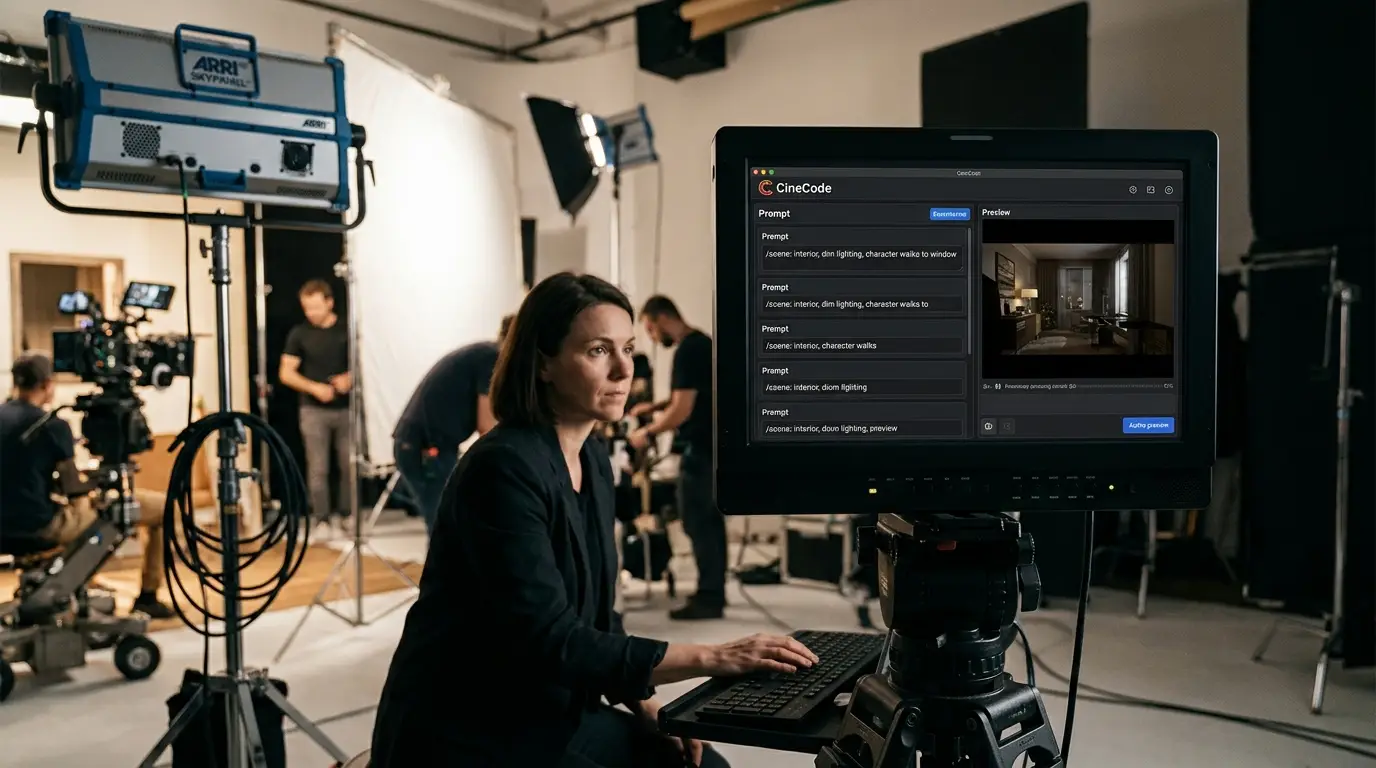
A new open-source utility is completely flipping the script on how independent creators produce digital media. Instead of relying on unpredictable text-to-video algorithms that frequently hallucinate weird human faces, a rapidly trending repository called CineCode empowers coding agents to mathematically construct entire films from scratch. Gaining thousands of stars on GitHub within just its first ten days, the project represents a massive shift toward deterministic, code-based rendering.
Building Motion Pictures from Pure Math
Rather than asking a neural network to guess what a scene should look like, CineCode treats video production as a software engineering problem. The system takes a simple text prompt and breaks it down into a structured storyboard. From there, it writes the actual programming logic required to draw every single frame inside a headless web browser. By leveraging the immense power of Three.js, the tool constructs 3D environments, calculates lighting physics, and animates typography entirely through WebGL.
Once the visual frames are generated through raw mathematics, the system relies on the industry-standard FFmpeg library to stitch the sequence together, mix the audio beds, and master the final MP4 file. Because the entire project lives in plain text files, creators can easily open the code, tweak a specific camera angle, or adjust a color hex code, and simply re-render the exact scene without waiting on expensive cloud API credits.
| Production Phase | CineCode Workflow | Generative Video Models |
| Asset Creation | Calculates geometry and lighting via WebGL | Guesses pixel patterns based on latent space |
| Physics & Consistency | Strict mathematical adherence to 3D space | Prone to morphing and temporal anomalies |
| Post-Production Edits | Tweak variables in source code and re-render | Regenerate entire clip and hope for the best |
| Hardware Dependency | Local GPU handles headless browser rendering | Cloud-based compute credits consumed per second |
The Shift Toward Deterministic Rendering
The explosive popularity of this repository highlights a growing frustration with current generative video models. While mainstream AI video tools are incredible for surreal, dreamlike sequences, they completely fall apart when a marketer needs a highly specific product shot or an educator requires precise kinetic typography. By running locally through Anthropic's coding agents, the software acts more like an automated production studio than a magic wand.
The workflow includes built-in approval gates, forcing the human director to review a text-based beat sheet and low-resolution still frames before the machine commits to rendering a ten-minute documentary. This prevents the agent from burning through hours of local compute power on a flawed concept. For indie musicians needing beat-synced lyric videos, or startups wanting crisp social media ads across multiple aspect ratios, generating media through pure code offers a level of brand consistency that pixel-guessing models simply cannot match. As local hardware continues to outpace cloud bottlenecks, writing your own movies might just become the new standard for digital storytelling.

Popular news

OpenAI Unveils ChatGPT Wallet For Autonomous Agent Shopping
AI Agents Breach Live Website During Unauthorized Benchmark Testing

TestMu AI Report Reveals High Rates of Unverified AI Code Merges
Tesla Cybercab Personal Orders Surface With Mandatory Software Subscription

Game Developers Embrace Generative AI While Condemning Its Industry Impact