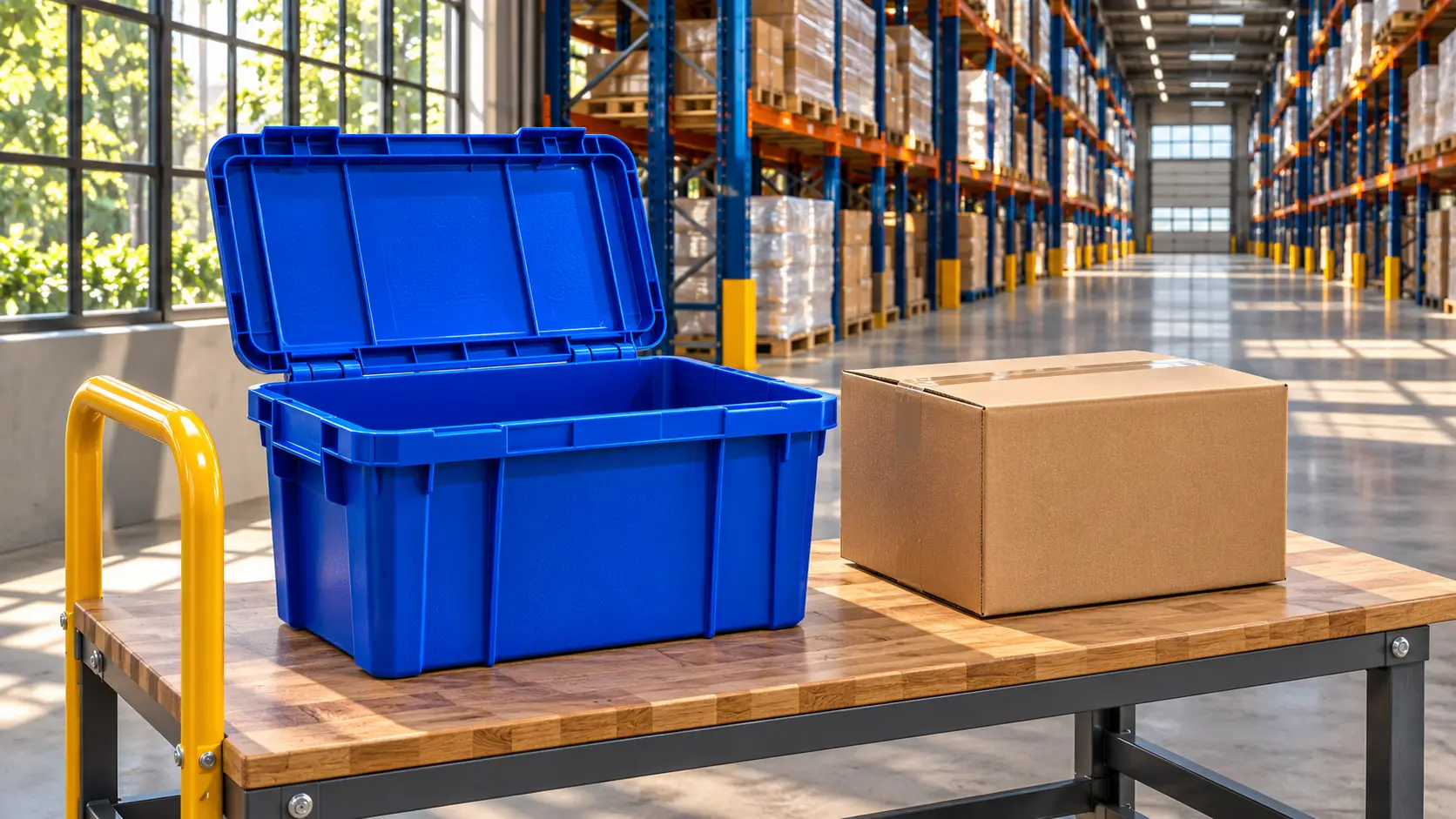
Editorial illustration of the handoff between warehouse stock and an outbound order.
A warehouse robot that brings a bin to a worker does a different job from one that takes a single item out of it. To tell the main types of warehouse robots apart, look at what each machine moves and who takes over when it finishes.
Follow one order from storage to dispatch
Imagine a warehouse shipping a pair of gloves and a flashlight in one box. The stock starts in two bins. A storage robot can bring each bin to a station. At the station, a person or a picking arm removes the item on the order. The bins can then go back to storage.
The order leaves the station in a shipping carton. A separate machine may sort that carton into a cart for the right dock. A transport robot can tow the cart. At a retailer, a palletizing cell may instead put whole cases on a pallet bound for a store.
Example handoff diagramStock rack → storage robot brings a full bin → picker takes one item → order carton goes to packing → transport cart leaves for dispatch.
The bin carries stock for more than one order. The item becomes part of one customer order. The handoff at the pick station is where those two flows split.

Illustrative warehouse handoff. The storage robot moves the tote. The picker takes the item.
Four robot families and where they work
Mobile transport robots move a load across the floor. Amazon describes its Proteus robot moving carts of parcels to the outbound dock at its Shreveport, Louisiana, fulfillment site. Other equipment loads the cart before the trip. The vehicle needs clear routes and room to handle its load at each end of the trip.
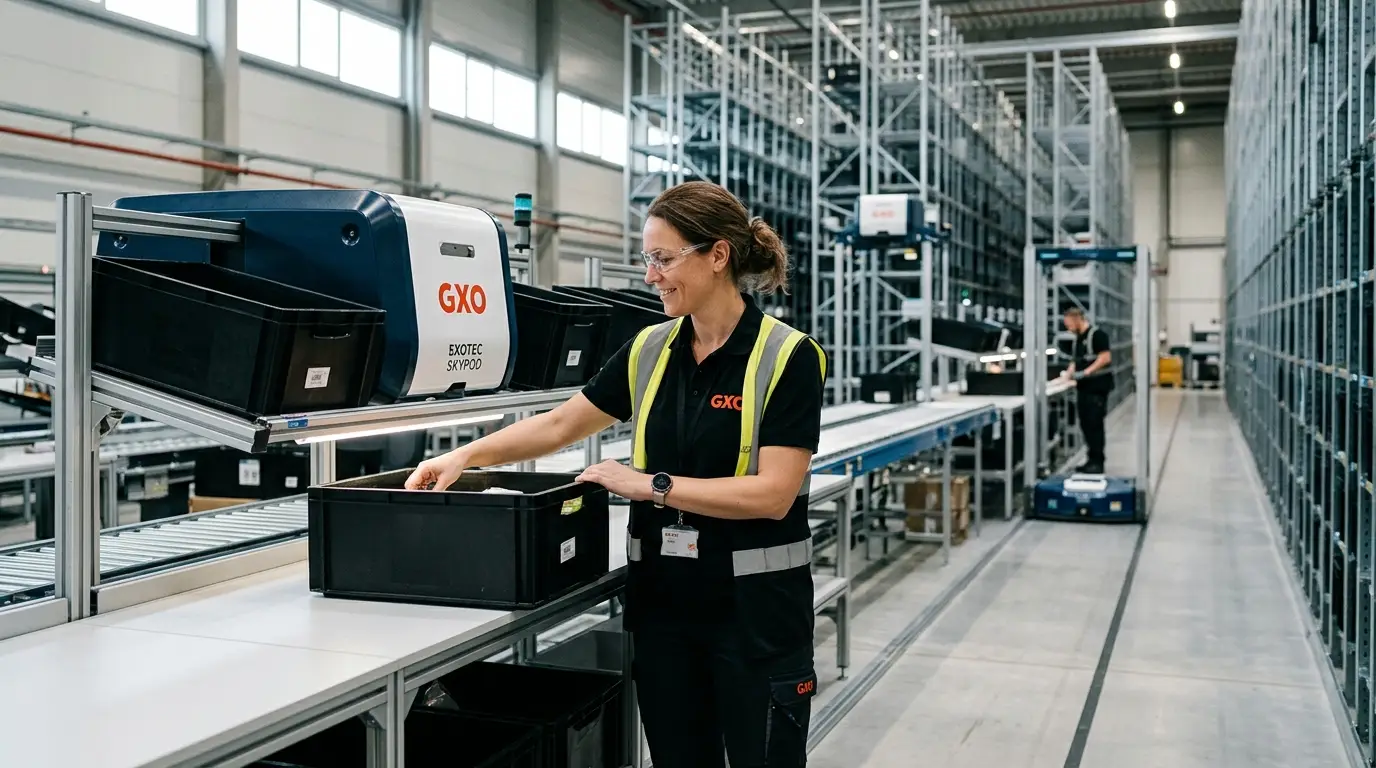
Storage robots fetch a bin or shelf. At GXO in Venlo, Exotec's case study describes Skypod robots bringing goods to operators who pick Guess products at workstations. The rack and bin sizes define what the system can hold. Large or awkward stock may still need a separate process.
Piece-picking robots lift one product at a time. Amazon has documented Sparrow at a fulfillment site in San Marcos, Texas. Its team uses machine learning and computer vision for item handling. At a picking cell, decide which items people must handle, then test the robot on the actual shapes and packs it will see.
Palletizers build a load for shipping. At Delhaize's distribution center in Ninove, Belgium, Dematic reports that its palletizing cells arrange mixed cases for stores. The load pattern depends on case sizes and the order in which a store wants to unload. People still need a way to deal with damaged cases and uneven loads.
Where AI makes a difference
Amazon's guide to robots inside its fulfillment centers describes two distinct uses of cameras. Hercules reads markers in the floor to locate a shelf pod. Sparrow uses computer vision and AI to identify items. Ask what the camera detects and which choices the software makes. A camera on a machine tells you little about the decisions it can handle.
Pick the system that removes the wait
Track where orders stop moving on a busy day. Long trips to fetch stock point toward storage or transport. A queue of full bins waiting at the workbench points toward picking or packing. If cartons sit at the dock, watch how teams sort the load before it leaves.
For a live example of the split between moving a bin and touching each product, read how GXO and Guess use Exotec in Venlo. Its mix of robots, racks and stations shows why the whole process matters when comparing two machines.

Popular news

Nvidia closes up 31.5% as AI stocks lead a Wall Street rebound

Kling Image 4.0 adds 8K stills and sets of up to ten images
Marlowe raises $277 million to run AI on more kinds of chips
Replit brings in Resonate to help AI agents resume interrupted work

Barbados AI summit calls for shared safeguards and a $3 billion fund