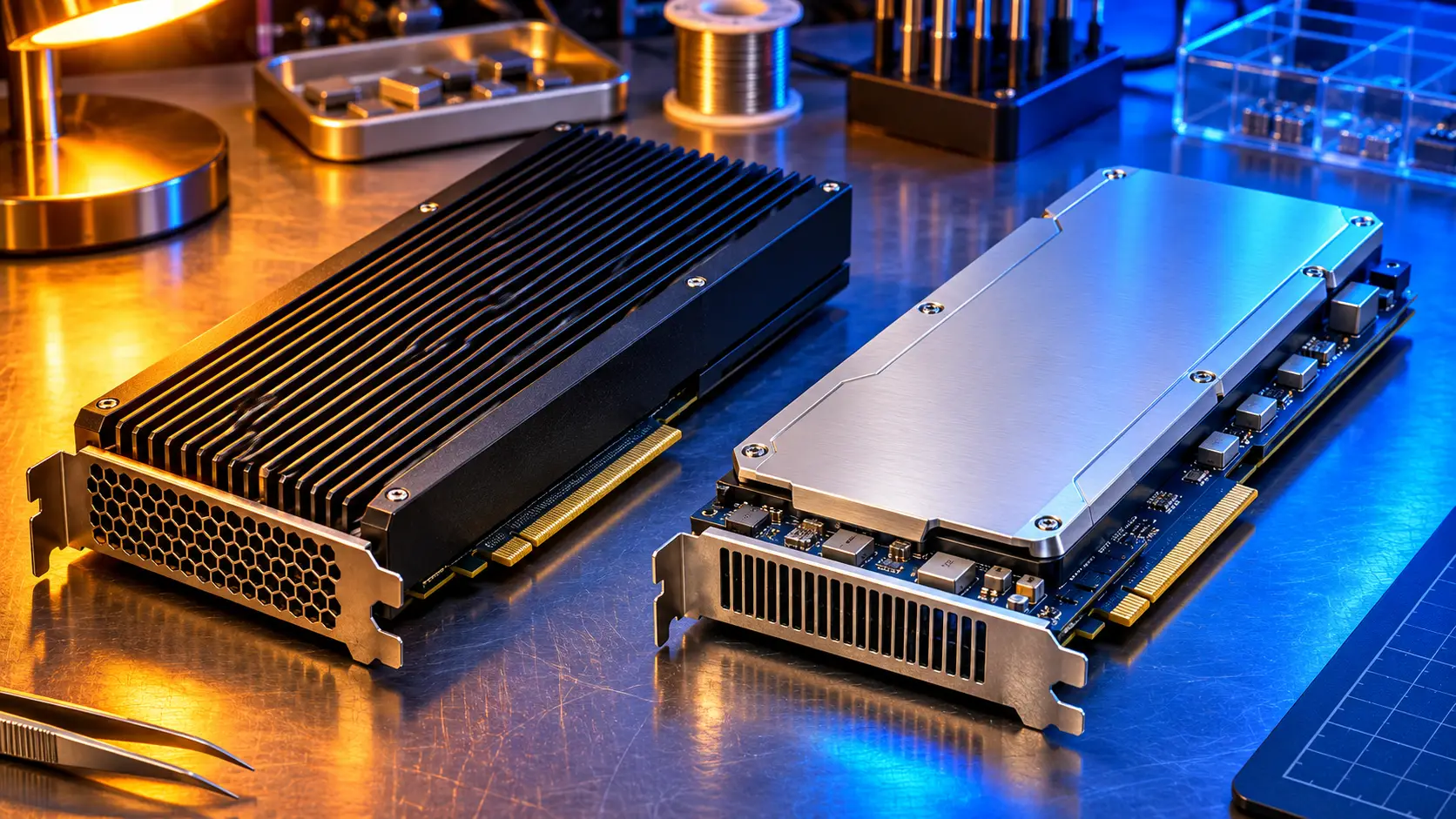
Editorial illustration of different accelerator designs for running AI models.
AI infrastructure startup Marlowe has raised $277 million in seed funding led by Accel. The company said on November 23 that it plans to open its first site in December. It aims to give AI companies more choices about the chips they use to run their models, a process known as inference. Marlowe disclosed the funding and launch plans alongside a separate investment announcement from Accel.
Dan Lewis and Kutta Srinivasan started Marlowe in May 2026. Accel says the company will pick chips that fit each job. It plans to run the servers and set up the links between them.
Different AI tasks put different demands on chips
A voice assistant that needs to respond in a live conversation has a short window to answer. A model that processes a queue of documents overnight has more time. The voice service may give priority to a quick first response. The document service may value how much it can process over a whole shift.
Marlowe’s case is that a cloud provider can make better use of its hardware by planning around those differences. Its team says it will choose chips and tune the rest of the system for each type of work. Software support and the way machines exchange data can affect how much useful work a chip delivers.
Etched and AMD are on the initial roadmap
Etched says it plans to set up its first clusters with Marlowe this year. AMD plans to bring its Helios system in 2027. Marlowe aims to open its first U.S. sites in December. It gave no price list and did not say how much space would be free.
The first sites will test the business case
Buyers need to know which models run on the service. They can also ask how long a job takes at peak times and what it costs. The service has to keep up when more jobs come in or a chip fails.
Marlowe is asking customers to rely on a new provider for that whole system. The first deployments will show which workloads it can serve and how well it can do so at scale. Its seed round funds the buildout while those questions remain open.

Popular news

U.S. senators propose new disclosures for AI funding and risks

Nvidia closes up 31.5% as AI stocks lead a Wall Street rebound

AWS gives HyperPod models one gateway across clusters

Figma shows how a design spec can guide a coding agent

Kling Image 4.0 adds 8K stills and sets of up to ten images