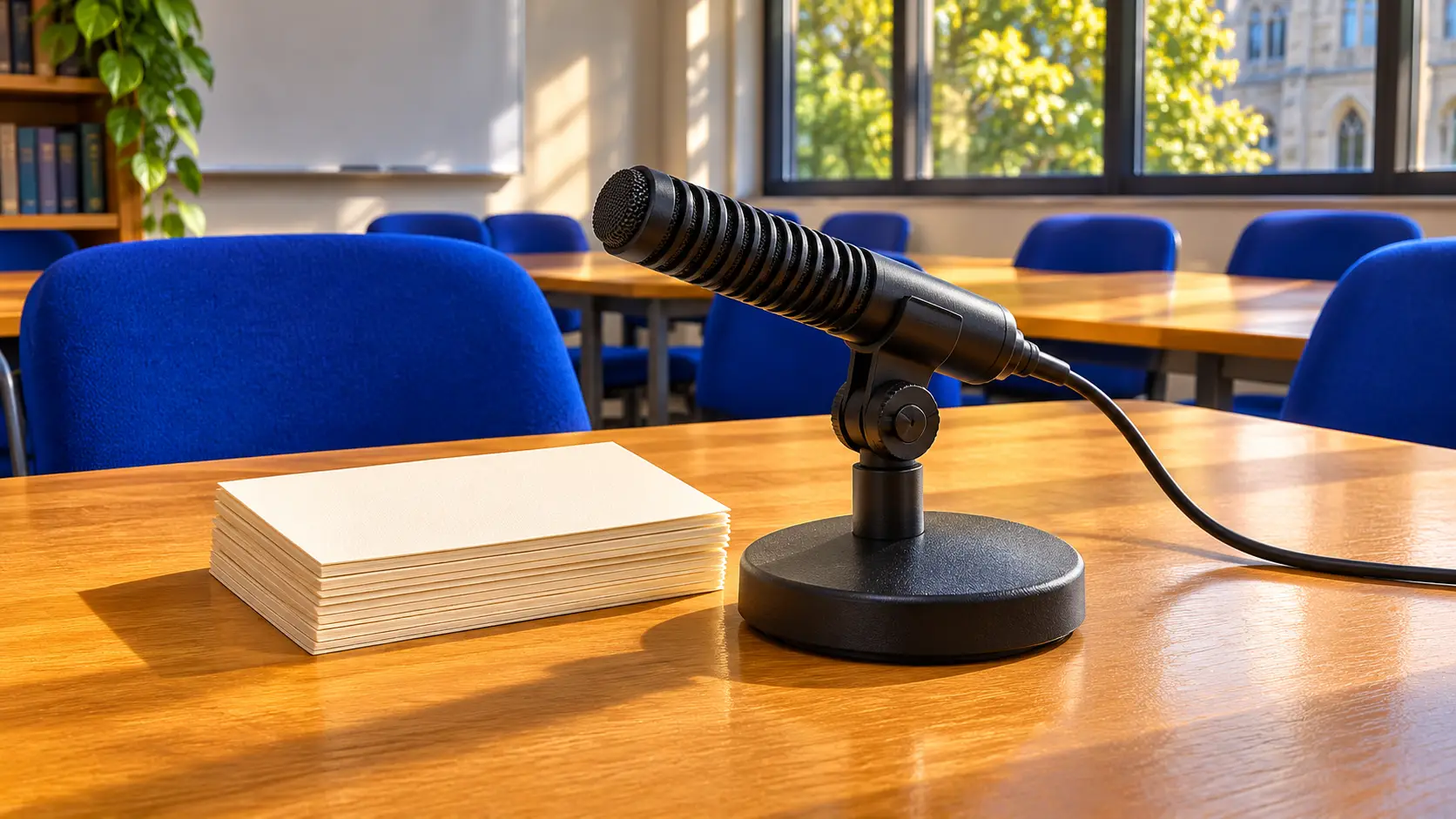
Editorial illustration for the Teachy Mini study on AI tutoring in higher education.
People gave better marks to a robot tutor that could look up course slides and ask questions to help them learn. The robot, called Teachy Mini, got higher scores for how well it acted as a responsible tutor. The study, out Nov. 23, tested 24 people. It left open whether they learned more. Teachy Mini study
Same robot, different teaching plan
The team came from Zurich University of Applied Sciences and Bielefeld University. Half the people in the trial were at a university. The rest had earned their degrees in the past four years. The team split them into two groups at random. Each group went through a lesson in German about research methods.
Each group worked with the same Reachy Mini desktop robot. The two versions used the same OpenAI voice model and could make the same moves. Teachy Mini used the course slides to check facts as it went. It could also ask a learner what they knew at the start and draw on those answers later. The basic robot had a short set of rules and could not look up the slides.
The tests took place in March and April. A visit took 74 minutes on average. That time includes the lesson and the forms and tests that people took before and after it.
How the sessions changed
The team read the chat logs to see what each robot did. Teachy Mini asked more questions that helped a learner work out an answer. It also said what a person got right more often and gave more feedback tied to the lesson. The team changed several things at once, so it could only test the set as a whole. A study that changed one thing at a time could show what led to the rise.
Teachy Mini scored 5.49 on average for responsible tutoring. The basic robot got 4.47. The team found that Teachy Mini still let some wrong answers pass. Six people in its group said it could do more to take their needs into account.
People took a 12-question test before and after the lesson. The main test found no clear gap in how much the two groups learned. The team also found no clear gap in how keen people were to learn or to use the tool. It said a trial of this size could miss a real effect.
What a larger trial could show
Both groups could look at the slides on their own. In the next round, the team says it could give one group just the slides. That would help show how much the robot adds to a lesson. A longer trial could also check what people recall a few days later.
Most people in the trial had some ties to the field they were asked to study. Fourteen of the 24 came from information systems, the same field as the lesson. A test with more people who are new to the topic could show how the tutor works when there is more room to learn.


Popular news
Marlowe raises $277 million to run AI on more kinds of chips
Replit brings in Resonate to help AI agents resume interrupted work
OpenAI adds spending limits to individual AI agent sessions

Amazon signs deal for Decart software to speed up Trainium
Amazon Connect AI now fills forms during live support calls