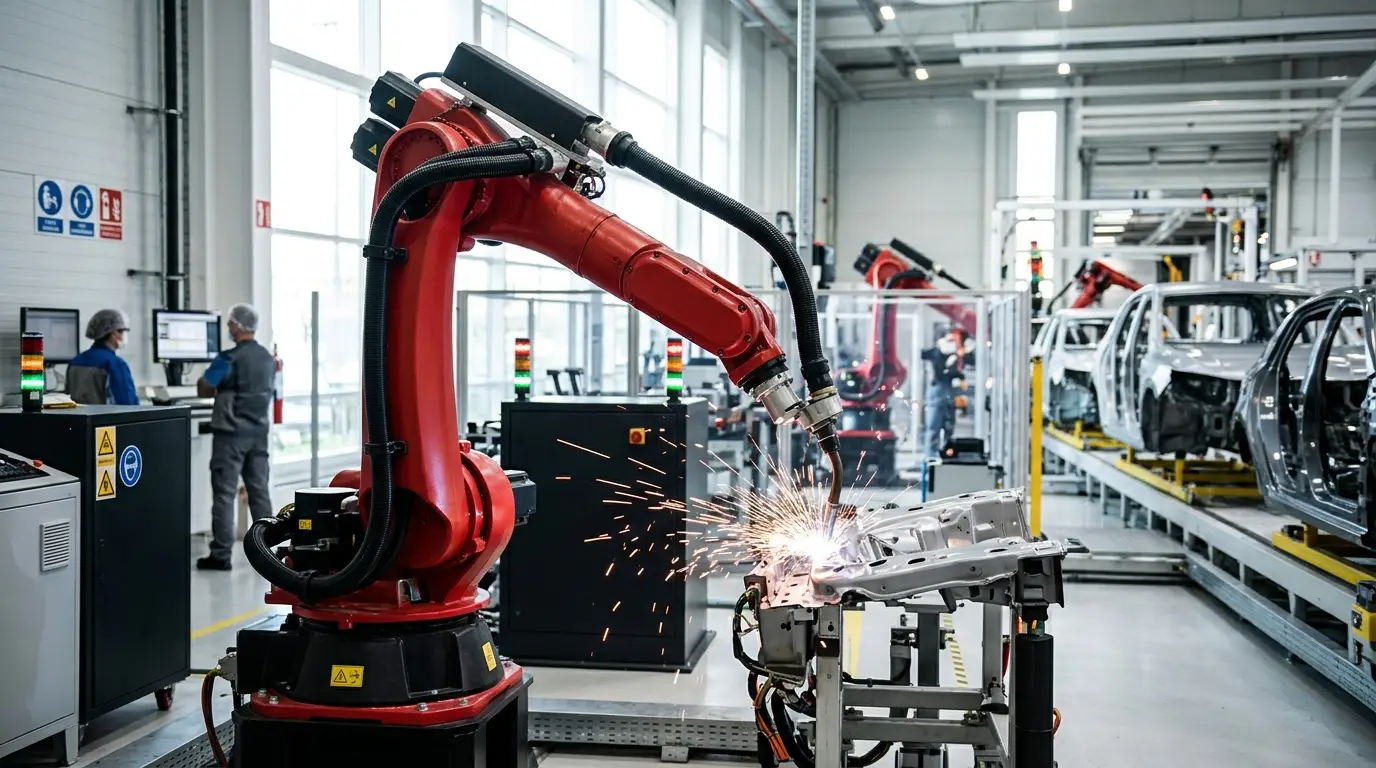
Industrial manufacturing is undergoing a massive structural shift, but the financial rewards are not going where you might expect. According to a recent S&P Global analysis highlighted by AF.net, artificial intelligence is dramatically expanding the addressable market for industrial robotics by making complex automation economically viable. However, the traditional hardware fabricators building the physical machines might see their profit margins lag far behind the enterprise customers deploying the tech and the software vendors writing the code.
Lowering The Barrier To Entry
Historically, programming a robotic arm to handle frequent production changes required expensive, specialized engineering teams. That technical bottleneck is collapsing. Machine learning models are drastically reducing the cost and complexity of deploying automated systems, allowing assembly lines to reconfigure on the fly. For manufacturing end-users, this means they can squeeze significantly higher productivity out of their existing physical footprint without buying new machines.
The macro adoption numbers are already staggering. According to the International Federation of Robotics, global factory installations hit a record 603,000 new units in 2025, pushing the total operational fleet worldwide to roughly 5.1 million machines. Yet, as AI-driven simulation and application engineering improve, factories won't necessarily need to buy more physical units to get more work done. Greater equipment flexibility means existing fleets can absorb new tasks, directly offsetting the demand for net-new hardware orders.
| Economic Impact Factor | Traditional Hardware Model | AI-Integrated Smart Factory |
| Line Reconfiguration Cost | High (requires manual reprogramming) | Minimal (dynamic ML-driven adjustment) |
| Capital Expenditure Focus | Physical arm procurement and cabling | Proprietary software licenses and compute |
| Maintenance Strategy | Reactive or scheduled intervals | Predictive (via digital twin telemetry) |
| Primary Margin Beneficiary | Original Equipment Manufacturer (OEM) | Third-party SaaS and analytics vendors |
| Hardware Replacement Cycle | 7 to 10 years (mechanical wear) | Extended lifespan via software upgrades |
The Software Surplus Capture
The real cash flow is migrating upstream into the software stack. As physical machines become highly efficient, commoditized workhorses, third-party developers providing digital twins, predictive maintenance algorithms, and orchestration layers are capturing the bulk of the economic surplus.
To survive this margin compression, legacy equipment manufacturers cannot just bend metal and ship boxes anymore. Maintaining operating margins in this new era requires them to aggressively pivot. They must build out proprietary software ecosystems and lifecycle services to lock in recurring revenue. If a hardware maker fails to transition into a full-stack automation partner, they risk becoming little more than a low-margin commodity supplier to the very software giants currently optimizing their machines. Ultimately, rising AI adoption will absolutely transform factory output, but it will not automatically translate into higher profitability for the robotics manufacturing sector itself.

Popular news

Nvidia CEO Jensen Huang Admits to an Affair as Company Probes Possible Chinese Espionage

Singapore General Hospital Wins Global Healthcare Award For Antibiotic AI Tool

Nvidia Board Launches Probe Into Foreign Intelligence Reports Targeting CEO

Valve Updates Steam Release Rules to Manage AI Game Surge

Opera Brings Local AI to the Browser With New Web Standard