
When you ask ChatGPT or Claude to help plan your next vacation, behind those carefully curated travel plans are AI data centres doing all the heavy lifting. It is also where most of the AI investment is going right now. Across the world, vast complexes packed with specialised chips, kilometres of cabling, and industrial-scale cooling systems are being erected to build AI infrastructure and these AI data centres have quietly become the most consequential infrastructure of our time.
What exactly is an AI data centre
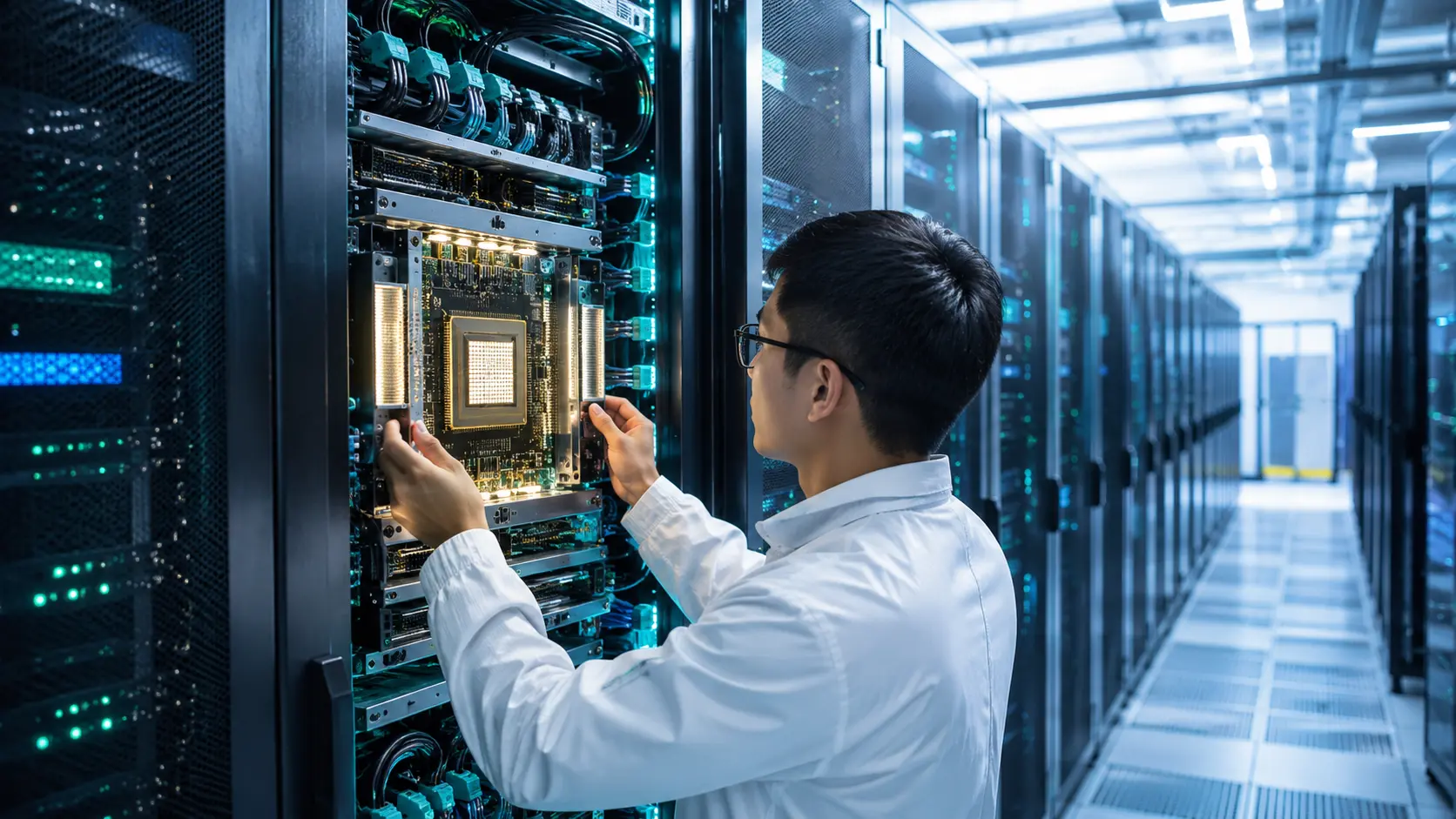
Before we get to the AI data centre, let's first understand about data centres. A data centre, at its core, is a facility that houses servers, storage systems, and networking equipment to process and deliver digital information. An AI data centre is a different beast altogether. The key hardware distinction lies in the chips.
Traditional data centres rely on central processing units (CPUs), general-purpose processors suited to a wide range of tasks. AI workloads, however, run primarily on graphics processing units (GPUs) and purpose-built AI accelerators.
These specialised chips consume two to four times as much energy as regular CPUs, drawing between 250 and 500 watts each. To train a frontier model like GPT-4 or Google's Gemini, tens of thousands of such chips must operate in tandem for weeks or months on end.
Where a conventional data centre might consume between 5 and 10 kilowatts of power per server rack, an AI data centre draws over 60 kilowatts per rack, a reflection of the immense computational demands of training and running large AI models.
Beyond raw computing power, AI data centres require sophisticated networking infrastructure to allow chips to communicate at high speed, enormous storage capacity to handle training datasets, and critically, robust cooling systems to prevent hardware from overheating.
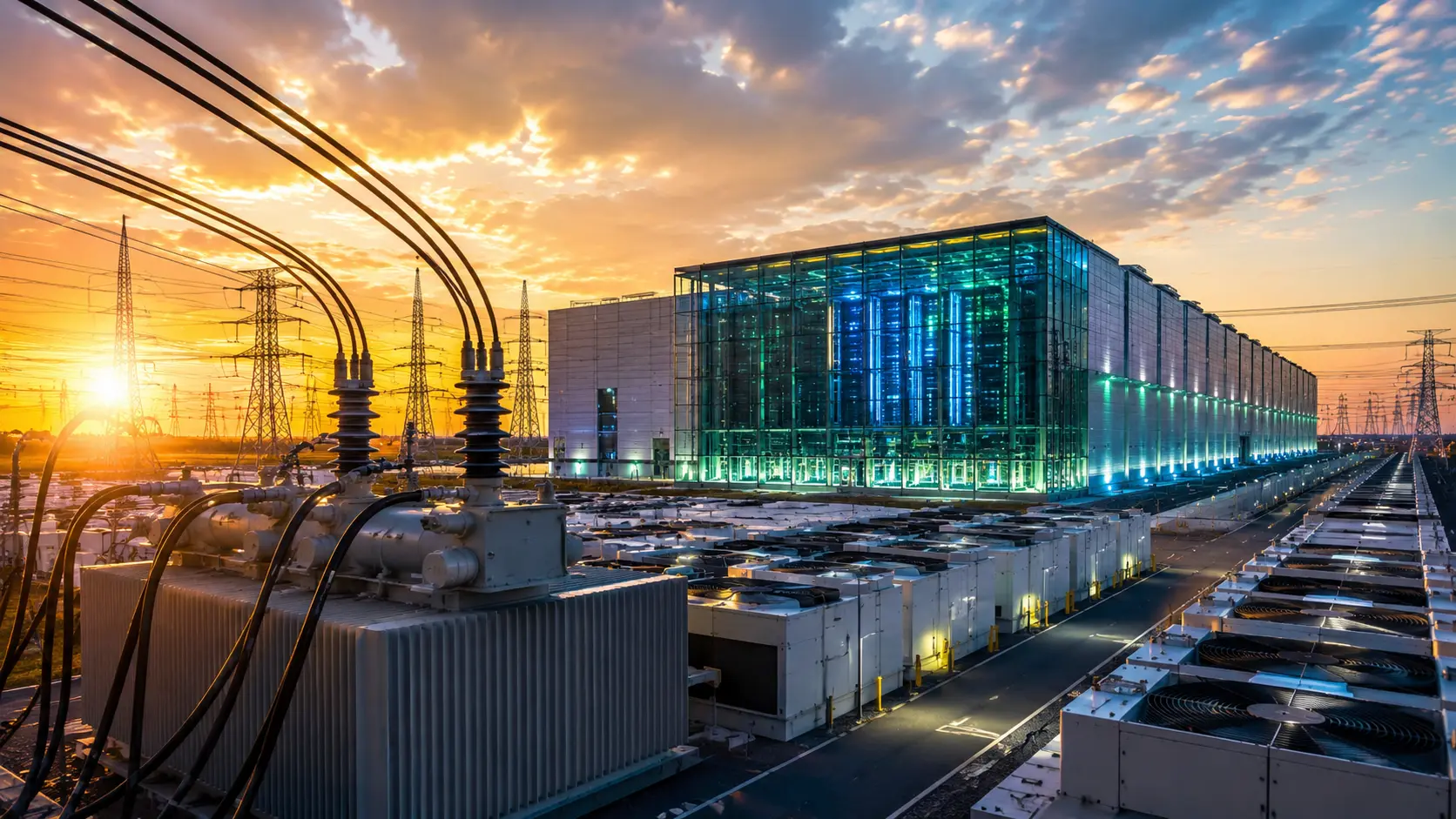
As evaporative cooling, which uses water to dissipate heat, has grown more popular for its energy efficiency, it has introduced a significant trade-off: sharply increased water consumption.
The investment figures involved are staggering. In 2025, announced foreign direct investment in the data centre sector exceeded an estimated $270 billion globally, with data centres accounting for more than one-fifth of all greenfield project values worldwide.
Tech giants have collectively poured hundreds of billions into new facilities. OpenAI, SoftBank, and Oracle announced the Stargate Initiative, a $500 billion private-sector project to build the largest AI infrastructure network in history, beginning with 20 massive data centres in Texas.
Meanwhile, Google committed $100 billion to AI research and infrastructure, Meta pledged up to $65 billion including a single two-gigawatt campus large enough to cover a significant portion of Manhattan, and Microsoft announced $80 billion in AI-enabled data centre investments.
Major tech companies are estimated to spend $650 billion on AI data centres in 2026 alone.
Why do AI data centres matter
AI data centres have become a genuine macroeconomic force. An analysis based on data from the US Bureau of Economic Analysis found that data centres and related high-tech spending accounted for an estimated 80% of the increase in final private domestic demand in the first half of 2025.
Harvard economist Jason Furman observed that investment in information processing equipment and software, much of it tied to AI infrastructure, was responsible for 92% of US GDP growth in that period.
The ripple effects extend well beyond the United States. The data centre surge helped push global foreign direct investment up 14% in 2025 to an estimated $1.6 trillion, with the European Union recording a 56% increase in FDI flows. Nations from France to South Korea are racing to attract data centre investment as a means of establishing strategic positions in the AI economy.
AI Data Centres As National Strategy
AI data centres are increasingly viewed as critical national infrastructure. New AI infrastructure is highly concentrated in North America, Western Europe, and the Asia-Pacific, which together account for more than 90% of projected compute capacity globally.
Control over this infrastructure is seen as central to geopolitical competitiveness. Nations without significant data centre capacity risk being locked out of AI capabilities that will shape defence, healthcare, finance, and governance in the decades ahead.
The scale of this build-out carries a substantial environmental burden that cannot be ignored. The International Energy Agency estimated that AI systems accounted for 15% of total data centre electricity demand in 2024, with the total power demand of AI systems potentially reaching 23 gigawatts by the end of 2025 — approaching the average electricity consumption of the entire United Kingdom.
Water consumption is equally concerning. US data centres directly consumed an estimated 66 billion litres of water in 2023, and training a model such as GPT-3 in Microsoft's US facilities was shown to directly evaporate approximately 700,000 litres of freshwater.
Cornell University researchers projected that by 2030, at the current rate of AI growth, data centres could drain between 731 million and 1,125 million cubic metres of water annually — equivalent to the household water usage of six to ten million Americans.
AI Data Centres: What's Next
As 2026 unfolds, the industry is pivoting from the initial phase of building massive AI training clusters towards deploying infrastructure for real-time AI use — a shift that demands facilities closer to end users, more energy-efficient chip designs, and a sharper focus on execution over sheer scale.
AI data centres are not a niche technology story. They are the physical foundation upon which the AI era is being constructed — and the decisions made about where, how, and at what environmental cost they are built will have consequences that extend far beyond the server room.

Latest comments
Loading