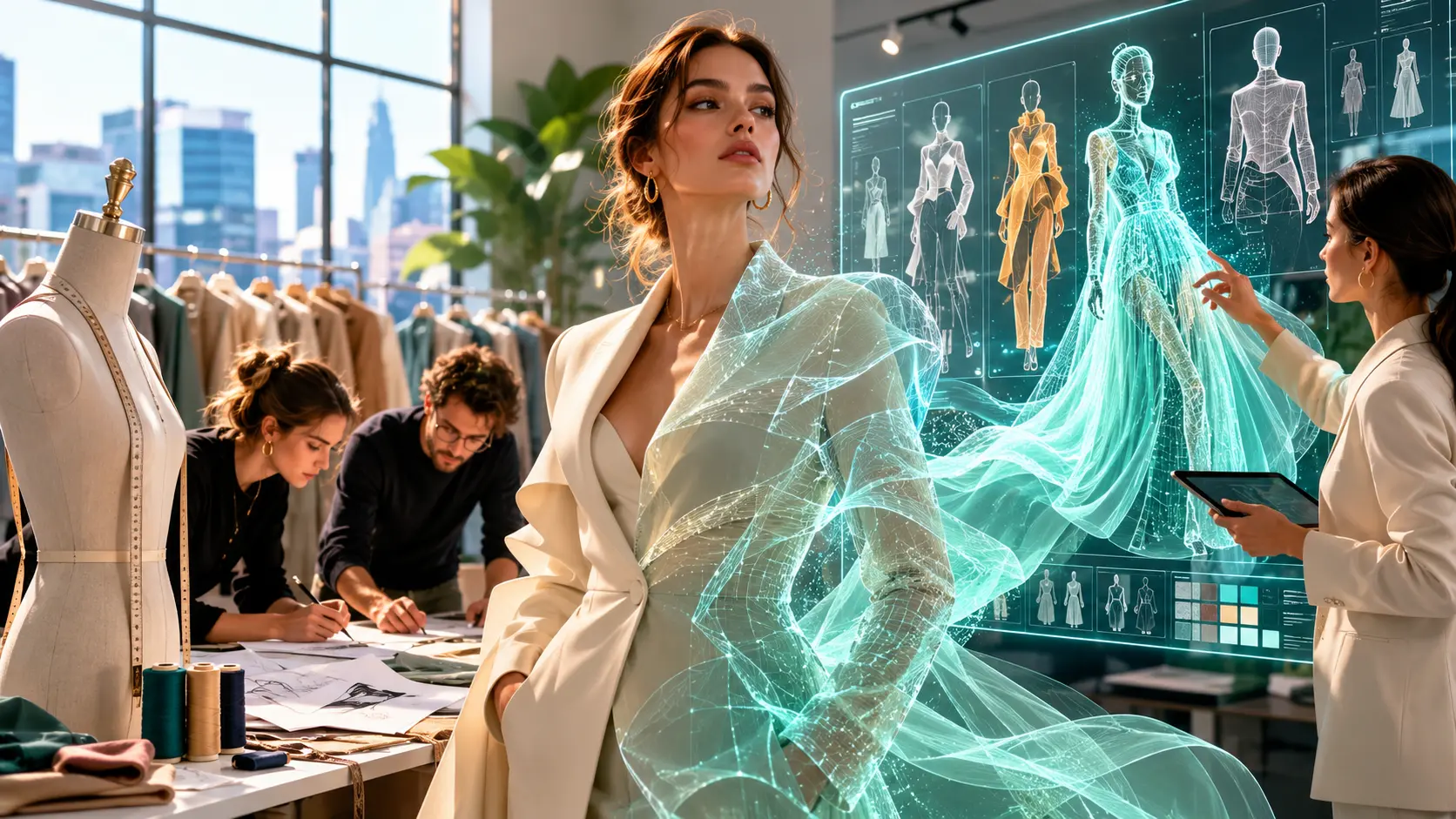
Lalaland AI is a technology company that creates digital fashion models using artificial intelligence. It helps fashion brands showcase garments on virtual models of different sizes, skin tones, and body types.
This lets brands work faster and more efficiently. Lalaland.ai builds AI‑generated, full‑body virtual models so fashion labels can present clothing digitally without physical photoshoots.
Founded in 2019, the company set out to drive diversity, cut costs, and reduce waste across the fashion supply chain. In 2025, Browzwear acquired the company and integrated its tech into Browzwear’s 3D design platform.
That gave lalaland.ai access to a global network of fashion clients and shifted the focus to scalable digital product development.
The question is: can a focused project like Lalaland deliver more than larger commercial models such as ChatGPT, Gemini, or Claude? In this article, we break down what Lalaland aims to do.
Key takeaways
- Lalaland.ai generates diverse virtual models with AI for fashion brands.
- It targets efficiency, lower costs, and less physical production.
- Browzwear’s acquisition sped up integration into digital 3D fashion workflows.
Lalaland’s origin and mission
Lalaland.ai started in Amsterdam with a clear focus on AI‑generated models for online stores. The goal: make e‑commerce more efficient while showing greater variety in how clothing is presented.
Founders and early backing
Lalaland was founded in 2019 in Amsterdam. According to the About page, Michael Musandu and Ugnius Rimsa co‑founded the company.
Born in 1996, Michael Musandu built the company as founder and CEO.
He focuses on using generative AI to create realistic digital models for fashion brands. Ugnius Rimsa helped establish the technical and commercial foundation of the platform.
Lalaland emerged from Amsterdam’s startup ecosystem and received early support from investors like ASIF Ventures. It was also connected to the ACE Incubator network, which supports young tech companies in their first growth phase.
Built for diversity and inclusion
Lalaland.ai creates AI‑generated models that don’t exist in real life but look photorealistic. The company uses neural networks to generate models with different skin tones, body types, and features.
According to I amsterdam, Lalaland builds “photo-realistic, non-existing models” to address fashion’s diversity gap.
The aim is clear:
- More representation in online product imagery
- Lower photoshoot costs
- Faster content production
By using digital models, online stores can show garments on different body types without scheduling constant new shoots. Lalaland positions itself as a tech company that pairs inclusivity with practical e‑commerce solutions.
AI‑generated models reshape online fashion
AI is rapidly changing online fashion retail. With ai-generated models and virtual try-on tools, brands are reinventing how they showcase, sell, and personalize products.
E-commerce advantages
Webshops increasingly use virtual models to show clothing on varied body types. Instead of one default model, shoppers can see multiple sizes, ages, and skin tones.
That makes visuals more realistic and useful. According to a profile on Lalaland.ai in Amsterdam, the company develops photorealistic models that don’t actually exist.
These models help brands display diversity without staging multiple photoshoots—cutting costs for photography, studio rentals, and logistics.
Brands don’t need separate campaigns for every size or audience. Better visuals can also reduce returns.
In the Netherlands, fashion return rates hover around 44%, driving extra costs and waste. When customers can better gauge fit, they make more accurate choices.
Key benefits for webshops:
- Lower production costs
- Faster collection launches
- More inclusive product display
- Potentially fewer returns
How virtual try-on fits in
Virtual try-on moves from standard models to personalized views. Shoppers select their size and instantly see an adjusted digital model.
Some platforms offer filters for height, weight, and body shape. More advanced systems let users upload a selfie and basic details.
The system then builds a digital avatar that closely resembles the customer. Lalaland.ai focuses on generating realistic bodies and faces using neural networks.
According to a description on Techvisor about Lalaland.ai, this technology helps brands deliver personalized shopping experiences. Implementation requires integration with existing e‑commerce systems.
Brands link models to their product database so garments render correctly on the chosen body type. This takes less time than traditional shoots and lets brands respond faster to trends.
Social impact and trade-offs
AI-generated models also shift representation in fashion. They show a range of sizes, body types, and skin tones without relying on limited model pools.
That can deliver a more realistic view of customers. Seeing someone who looks like you can influence buying behavior and self-image.
The tech also raises questions. Virtual models can replace some work done by human models and photographers.
Digital models may reduce waste too. Fewer returns and fewer physical photoshoots mean less transport and less discarded apparel.
The broader impact depends on how brands apply the technology. Transparency and responsible use remain essential with virtual try-on and digital models.
Inside the tech: how the models are made
Lalaland builds its virtual models with a mix of AI and advanced imaging. The system replaces a traditional photoshoot with digital creation and post‑production.
How it works
Lalaland.ai relies on AI‑generated models trained via neural networks. These networks learn from large datasets of fashion images, body types, and poses.
They detect patterns in shape, posture, and lighting. Based on that training, the system generates new, photorealistic people.
Brands choose attributes like size, skin tone, and body shape. By using virtual fashion models across body types and skin tones, clothing can be shown on diverse models at speed.
The process generally follows three steps:
- Upload garment images
- Select model attributes
- Automatic rendering of the final image
The AI adjusts light, shadow, and drape so garments fall naturally. That shortens production time and lowers costs for webshops.
Why ghost mannequin still matters
Alongside AI, ghost mannequin photography plays a key role. In this technique, garments are photographed on a mannequin, which is then removed digitally.
The piece appears to follow an invisible body. Lalaland.ai can use these images as the basis for its digital models.
The software then places the garment on a virtual body—preserving real fabric details.
Many retailers already use this approach. With tools like Lalaland’s Genesis Meta Model Creator, they combine existing product shots with digital models.
This reduces the need for physical shoots. Brands keep control over style, sizing, and presentation—while moving faster.
Partnerships powering growth
Lalaland.ai scaled through strong partnerships with leading fashion names. It works with established brands and tech partners to embed AI directly into design workflows.
Work with major fashion brands
Lalaland.ai has partnered with international brands to use virtual models for e‑commerce and marketing. A notable example is Levi Strauss & Co., which used AI to show more diverse online models.
Levi’s announced the move in its post on the partnership between LS&Co. and Lalaland.ai. This approach helps brands display clothing on different body types, ages, and skin tones.
It boosts shopper recognition while reducing physical photoshoots. In 2025, Browzwear fully acquired the company.
According to Browzwear acquires Lalaland.ai, the move strengthens AI’s role in digital product creation. Lalaland.ai’s technology is now directly connected to 3D design workflows.
Founder Michael Musandu said the integration enables scale via Browzwear’s existing customer base—shifting from standalone use cases to end‑to‑end workflow integration.
Industry response
The fashion industry zeroed in on two themes: inclusivity and efficiency. Lalaland.ai positions virtual models as a way to show realistic diversity without physical production.
According to Lalaland.ai’s LinkedIn profile, the company focuses on AI‑driven workflows and digital twins—matching the wider move to digital product development.
Trade media describe Lalaland as a pioneer in AI models. Wikipedia lists it as an Amsterdam‑founded tech company developing AI‑generated models since 2019.
Reactions remain largely pragmatic and use‑case driven. Brands prioritize cost savings, faster launches, and control over assets.
Inclusivity matters—but efficiency often carries more weight in decision‑making.
Browzwear acquisition: what changed
Browzwear fully acquired Lalaland.ai to connect AI‑generated models directly to its 3D design software. The deal deepens technical integration and changes how brands deploy virtual models in digital workflows.
In July 2025, Browzwear announced the full acquisition of Lalaland. Financial details were not disclosed.
Browzwear is known for digital product creation software in fashion. With lalaland.ai, it adds expertise in hyper‑realistic, AI‑generated virtual models.
The integration focuses on combining 3D apparel designs with AI models in one flow. Designers can present digital garments on diverse body types without physical shoots.
Lalaland.ai’s teams—including AI scientists and engineers—joined Browzwear’s R&D, aiming to accelerate accurate digital bodies and automated image production.
The emphasis: a leaner workflow from design to digital visualization, with fewer steps and fewer physical samples.
What users and the market can expect
For existing Browzwear users, the acquisition means integrated virtual models inside the same software—no more external tools for model visualization.
Lalaland.ai, founded in 2019 in Amsterdam, became known for customizable AI avatars for fashion brands.
Brands can show garments across different skin tones, body types, and ages—supporting inclusive marketing without extra production spend.
Market‑wise, expect a continued shift to digital samples and online presentations. Fewer physical shoots lower costs and shorten lead times.
Sustainability and cost impact
Lalaland.ai links inclusive tech to measurable savings. By using virtual models strategically, it tackles both high return rates and rising production costs.
Fewer returns, less waste
Fashion faces high return rates. In the Netherlands, apparel returns are around 44%, driving waste and extra transport.
Lalaland.ai addresses this with AI-generated models that reflect varied sizes, ages, and skin tones—helping shoppers see garments on bodies closer to their own.
That reduces misbuys. Fewer returns mean less transport, less packaging, and fewer destroyed items.
The company’s approach also targets waste reduction. Every avoided return saves emissions and eases pressure on logistics.
Brands using 3D tools like Browzwear can amplify the effect—testing digital samples first to cut physical prototypes.
Cutting costs across fashion teams
Multi‑model photoshoots are expensive. Brands pay for studios, photographers, and multiple models per size and collection.
This repeats several times a year. With Lalaland.ai’s virtual models, much of that work becomes digital.
Teams can generate new images quickly without extra shoots—lowering direct costs and shrinking time‑to‑market.
Brands also save on return processing. Fewer returns mean less inspection, repackaging, and write‑offs for damaged items.
Energy use matters too. Research on the environmental impact of AI shows these systems consume energy, but efficient infrastructure and targeted use can limit that footprint.
When AI-generated models reduce physical production and transport, the net result can be lower operating costs and less waste.
What’s next for virtual models in fashion
Virtual models are changing how brands showcase and sell apparel—driven by technology, cost control, and customer experience.
Innovation to watch
Lalaland.ai is building realistic AI‑generated models spanning different sizes, ages, and skin tones. Using neural networks, it creates non‑existing people for online retail.
This makes it possible to show garments on multiple body types instantly—no extra shoots required—saving time and production costs.
Expect deeper personalization. Shoppers may soon create avatars from their own measurements to see true‑to‑fit visuals.
Transparency matters too. There are plans for labeling that indicates whether a garment is shown on a human or an AI model.
Digital influencers are also on the rise. The growth of AI influencers in 2026 shows brands are using virtual faces in campaigns and social media. Recently, for instance, an influencer at the Wimbledon tennis tournament turned out to be virtual—the twist? She doesn’t exist at all.
How it stacks up against alternatives
Traditional shoots with human models remain the norm at many brands, offering real emotion and body language.
But they’re costly and complex to plan. AI‑generated models offer a different playbook:
- Lower production costs
- Faster content creation
- Easy adaptation across sizes and audiences
Some agencies are already testing remote modeling with digital avatars.
There’s criticism too. Since launching in 2019, Lalaland drew attention—and concern that virtual models could replace real ones. You can also turn to the more familiar AI models (pun intended).
Many brands choose a hybrid approach—mixing human and AI‑generated models to control costs while keeping authenticity.
Frequently Asked Questions
Lalaland AI focuses on creating digital models for fashion brands. The platform supports uploading 3D garments, customizing models, and exporting images for commercial use.
How does the platform work, and what are the first steps?
Lalaland operates as a digital model platform for fashion companies. According to Lalaland on Crunchbase, it uses AI to generate models in various sizes and skin tones.
A user creates an account and logs in, then uploads a 3D garment design.
Next, the user selects a digital model or customizes attributes such as size and skin tone. The system then generates product images with the chosen model.
What content can you generate, and which export formats are supported?
The platform generates realistic images of garments on digital models. These visuals are commonly used for online stores, product pages, and marketing assets.
Lalaland is known as an AI‑powered digital model studio for fashion designers. It primarily produces commercial visual content.
Exports are typically in standard image formats like JPEG or PNG. Some workflows also support high‑resolution files for print or campaigns.
How is output quality managed, and what settings can you control?
Quality depends on the uploaded 3D file and chosen settings. Accurate fit and correct textures deliver better results.
Users can adjust model attributes—such as body shape, size, and skin tone.
Lalaland positions itself as a platform that supports model diversity. This flexibility helps brands create imagery that fits their audience.
What data is stored, what about privacy, and how do you delete your data?
The platform stores account details and uploaded designs within the user environment. This is required to manage projects and regenerate images.
For practical questions on accounts and settings, the company refers to its own Troubleshooting & FAQs from Lalaland.ai, which also includes account management guidelines.
Users can terminate their account via settings. Upon deletion, linked data is processed according to the prevailing policy.
What does it cost, what plans exist, and which features vary by plan?
Lalaland operated a B2B model targeting fashion brands and e‑commerce companies. Pricing typically depended on usage, volume, and required features.
Public information indicates a focus on professional users in fashion—pointing to custom pricing and commercial contracts rather than a standard free tier.
Features may vary by plan, such as the number of generated images, access to specific model options, and support levels.
What usage rights and licenses apply to generated content for commercial use?
Lalaland developed digital models as an alternative to traditional photoshoots.
In commercial contexts, brands typically receive rights to use generated images for marketing and sales.
Exact license terms depend on the signed agreement.
Companies should always review the specific terms in their contract
to avoid misunderstandings about commercial use and distribution.

Latest comments
Loading