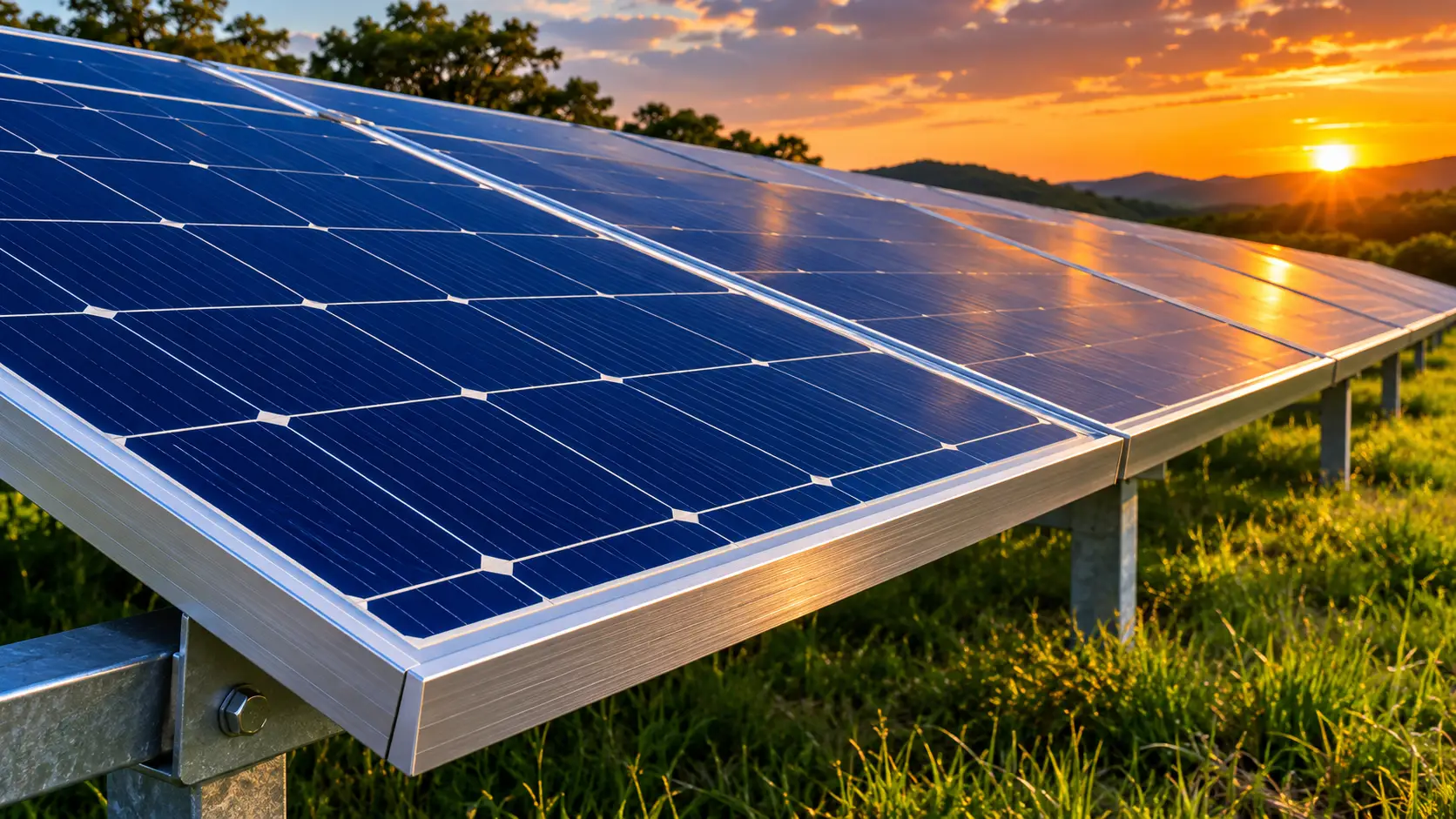
Editorial illustration of utility-scale solar power generation.
A data center can buy as much clean electricity as it uses over a year and still draw grid power on a calm night. A power purchase agreement, or PPA, tells you what the buyer signed for. To check an energy claim, you also need to know when and where the power was made.
Who signed the deal and where the power goes
Start with the seller, the buyer and the plant. Check the term of the deal, the first date the plant can sell power and where the seller must deliver it. If a press release gives the new wind or solar farm’s nameplate size in megawatts, look for the amount of energy the buyer will buy over time.
Under a physical PPA, as the U.S. Environmental Protection Agency describes it, the buyer receives power or takes title to it. A project can sit on the buyer’s site or send power to the buyer through a grid the two share. The buyer still needs a way to get power when the plant produces less than the site draws.
Virtual deals settle on a price
Under a financial or virtual PPA, the plant sells its electricity to the grid. The buyer and seller settle the gap between the market price and a price they set in the deal. The data center keeps buying the power it uses from its own supplier. If the two markets have different prices, the cash from the deal may only cover part of a change in the site’s bill.
Many contracts also assign renewable energy certificates, or RECs. These records track the attributes of the power, such as which renewable plant made it. Check who owns the certificates and who retires them. That tells you who can use them to back a clean-energy claim. The plant’s name on a press release leaves that question open.
Two hours tell two different stories
Take a simple case with one solar farm and one data center on the same grid. The site uses 40 megawatt-hours at noon and 40 after dark. The solar farm makes 80 at noon and zero after dark. Assume the buyer can count all 80 megawatt-hours and has no storage to shift them.
Noon. The farm makes twice what the site uses. The two match on 40 megawatt-hours at that hour. Another 40 come from the farm while the buyer has no more demand in this example.
After dark. The site uses another 40 megawatt-hours. The solar farm makes zero. The two hours add up to 80 megawatt-hours on each side. Match the power hour by hour and the farm covers only 40 of the 80 the site used.

How Google reports the gap
Google describes a goal to match its demand with carbon-free power on each local grid, every hour. In its 2026 Environmental Report, it put the global 2025 hourly match across its data centers and offices at 65%. That is a result across many sites and hours. A reader who wants to check one grid can look at the report’s regional breakdown.
For a new deal, ask if the claim covers all hours, a year’s purchases or one plant’s output. Find the grid and look for periods when the site has to draw from other sources. Those hours help explain why some data centers have turned to gas power, even as the companies invest in clean energy.
If a headline uses power deal for several kinds of agreement, use the power-deal checklist to identify the product and who signed for it.

Popular news

Good Morning AI | Anthropic slips, Claude reviews code and Tidal sets a cutoff

AI stocks slide again as Nvidia falls and Ambarella sinks 20.6%

GTA 6 on PC at 10 FPS? Inside the AI-Assisted Race to Port It

Tencent opens the AI models behind WeChat’s product search
Google’s Humanity’s First Exam Tests AI Reliability