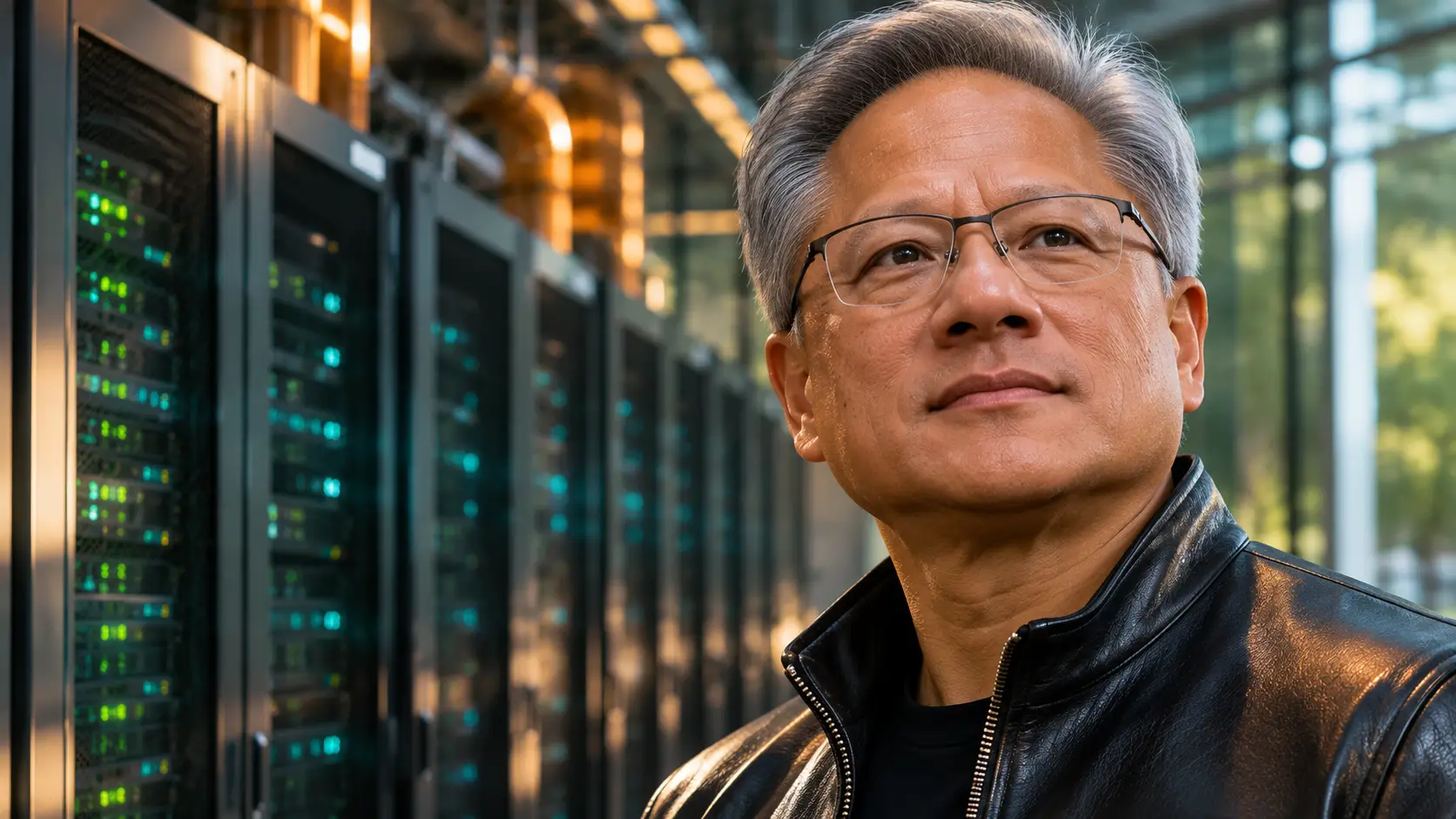
Jensen Huang is back at Nvidia, and the company’s shares have surged following his return. Nvidia announced his reinstatement as president, CEO and director on November 23, eleven days after his resignation. Its SEC filing dates the board action to November 22.
Nvidia shares traded at $164.55, up 31.08% from Friday’s close, at 11:53 a.m. Eastern Standard Time on November 23, according to Stock Analysis. This is an intraday snapshot; Monday’s trading session was still open.
The comeback resolves who leads Nvidia. It leaves a separate question open: whether the company’s investigation and strengthened oversight will address the concerns surrounding his departure.
A leadership decision with an investigation still open
In Nvidia’s announcement, the board says its unanimous decision followed discussions with Huang and input from senior US government officials. Its assessment that reinstatement poses no national security risk is the board’s stated conclusion. The independent investigation into reports of a foreign intelligence effort targeting Huang continues.
Harvey Jones remains chair. Colette Kress continues as CFO after serving as interim CEO. A separate National Security and Export Control Oversight Committee, announced November 17, oversees those risks. Nvidia is also searching for a new chief compliance officer.
These arrangements serve different purposes. Directors can decide whom they want running the company while investigators continue gathering evidence. A leadership appointment does not settle an allegation, and an open inquiry does not establish wrongdoing.
Why the stock reaction matters
The rally suggests investors placed substantial value on restoring familiar leadership. It cannot tell us precisely how much they attribute to Huang’s strategy, relationships, government support or the end of an uncertain succession process.
A share price reflects what buyers and sellers will pay for an ownership claim. When that price rises, the market value of the company rises too. Nvidia does not receive the increase as new cash from those ordinary stock-market trades.
That distinction matters for the AI buildout. Financing, customer demand and confidence can interact, but a stronger share price does not itself deliver another server rack, connect electricity or complete software testing.
The AI infrastructure business behind Nvidia’s valuation
Nvidia’s quarterly results, released November 17, reported $115.8 billion in revenue for Q3 fiscal 2027, which ended October 25, 2026. Data Center contributed $107.6 billion: approximately 92.9% of company revenue, calculated from those rounded figures. This measures Nvidia’s sales mix, not its share of the global AI market. Our earnings report explains the results and Rubin rollout.
The engineering dependencies are broader still. A useful AI service needs processors, memory, networking and software that work together. Nvidia’s CUDA platform provides tools and libraries for running applications on its GPUs. Our Nvidia AI guide maps these connections.
Consider an illustrative company expanding an AI customer-support service. Its existing servers keep running when a supplier changes CEOs. For its next expansion, however, it needs dependable capacity, delivery dates and a software environment its team can operate.
Familiar leadership may improve confidence in the supplier’s direction. The purchasing decision still needs evidence: can the planned system handle the workload, at the required speed and cost, when it is needed?
That is where Nvidia’s multi-year coordination matters. Its November 17 supply-chain announcement described manufacturing commitments extending into 2028 and 2029. Those plans were announced during Huang’s absence. The company’s work continued, and the additional capacity remains something partners must deliver.
Huang’s return gives Nvidia a familiar decision-maker. Customers can now watch how that leadership translates into execution, while shareholders and regulators await evidence from the continuing inquiries. The comeback changes the leadership picture immediately; its lasting business consequences will take longer to establish.
Follow AI World Today on Spotify or Apple Podcasts.

Popular news
Tencent releases Hy4 weights with new terms for large AI hosts
AWS gives HyperPod models one gateway across clusters

U.S. senators propose new disclosures for AI funding and risks

Cognition launches Devin Bots to manage multiple coding sessions
LocalAI adds a native Windows server for running models on a PC