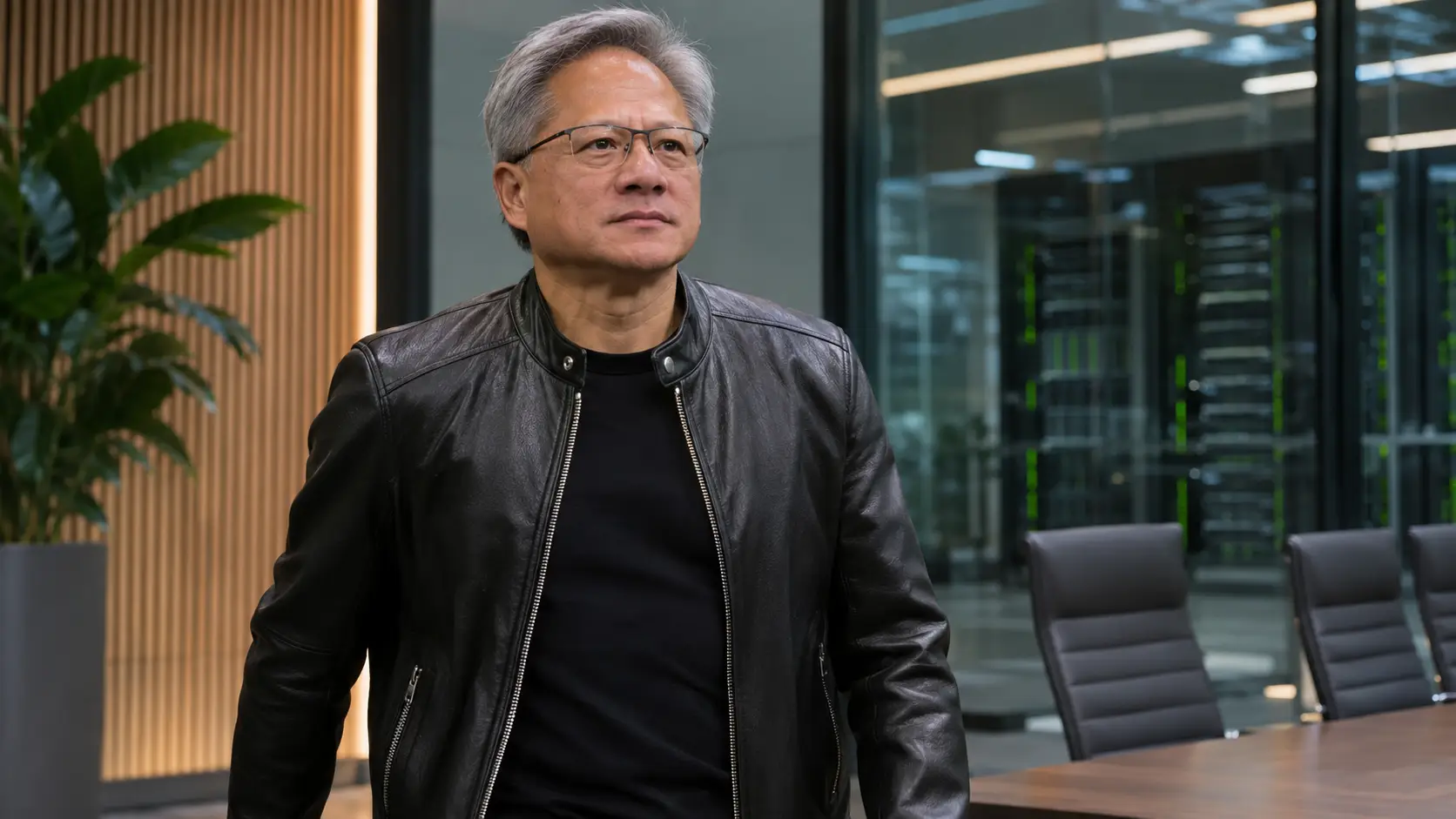
Jensen Huang is back as Nvidia's chief executive just 11 days after his resignation, sending shares of the AI chipmaker soaring by approximately 33% on Monday. The company's board unanimously approved his reinstatement after consulting senior US government officials, even as an investigation into a suspected foreign intelligence operation involving Huang continues.
Nvidia confirmed on November 23 that Huang had immediately resumed his positions as president, CEO and board director. The decision reverses one of the most dramatic leadership changes in the company's history.
According to Nvidia's official announcement, directors held a series of meetings with Huang before concluding that they were satisfied with his candor and ability to lead the company.
The board also received input from senior levels of the US government. Based on those discussions, directors said they were confident that Huang's return posed no national security risk.
Nvidia shares surge as investors welcome Huang's return
Investors responded enthusiastically to the announcement. Nvidia shares climbed approximately 33% in Monday's trading, according to Reuters, potentially adding around $900 billion to the company's market capitalization.
The extraordinary market reaction highlights the importance investors place on Huang's leadership.
Huang co-founded Nvidia in 1993 and transformed it from a graphics-chip manufacturer into a central supplier of the computing hardware powering artificial intelligence.
Its graphics processing units are widely used to train and run advanced AI models. Major technology companies depend on Nvidia's hardware and software ecosystem to expand their AI infrastructure.
His sudden departure on November 12 therefore raised questions about the company's leadership at a particularly important moment for the AI industry.
Nvidia's board initially appointed Chief Financial Officer Colette Kress as interim CEO and began searching for a permanent replacement.
Less than two weeks later, that search has effectively ended.
Harvey C. Jones, who became board chair following Huang's departure, will remain in that position. Kress will return to concentrating on her responsibilities as chief financial officer.
Why did Jensen Huang leave Nvidia?
Huang resigned on November 12 amid controversy over his personal conduct and concerns about a possible foreign intelligence operation targeting him.
According to reporting by Reuters and the Associated Press, the controversy included revelations about extramarital relationships and allegations involving a woman suspected of having links to Chinese intelligence.
The allegations raised questions about potential national security vulnerabilities, particularly given Nvidia's strategic importance to the United States and its restrictions on advanced chip exports to China.
The distinction is important: Nvidia's decision to reinstate Huang does not mean that all questions surrounding the matter have been resolved.
The company's board said it consulted senior US government officials before approving his return. However, its public announcement does not identify those officials or disclose the evidence behind their assessment.
The board's conclusion that Huang poses no national security risk is therefore a statement of its current assessment, not the outcome of a completed independent investigation.
Huang's return also follows substantial pressure from investors, technology industry figures and political leaders who supported his reinstatement.
Investigation continues despite CEO reinstatement
Nvidia has confirmed that its independent investigation into the suspected foreign intelligence effort will continue.
A special committee consisting entirely of independent directors is overseeing the inquiry, with support from external legal counsel.
Huang has agreed to cooperate with the investigation.
The company has also established a separate National Security and Export Control Committee to oversee compliance with trade restrictions and assess potential national security risks.
This committee will consult legal advisers and specialists with relevant national security expertise.
Nvidia is additionally creating a new Chief Compliance Officer position. The executive will oversee compliance across the company and report to the board's Nominating and Corporate Governance Committee.
These measures are particularly relevant because Nvidia operates at the intersection of artificial intelligence, advanced semiconductor manufacturing and US-China technology competition.
Washington restricts exports of certain advanced AI chips and related technologies, making regulatory compliance an essential part of Nvidia's global business.
Nvidia also says it will continue cooperating with ongoing government investigations and inquiries.
Huang returns as Nvidia's AI business reaches new heights
Huang's reinstatement comes shortly after Nvidia reported another exceptionally strong quarter.
The company announced fiscal third-quarter revenue of $115.8 billion on November 17, an increase of 103% compared with the previous year.
Data center revenue reached $107.6 billion, up 110% year over year, reflecting continued spending on AI computing infrastructure.
Those figures help explain why the leadership controversy has attracted so much attention beyond Nvidia itself.
The company is a major supplier to the global AI industry, and its technology underpins infrastructure investments by some of the world's largest businesses.
Huang's relationships with customers, suppliers, investors and government officials have played a significant role in building that position.
For shareholders, his reinstatement restores familiar leadership at a time when Nvidia is expanding rapidly. For regulators, the company's national security and compliance obligations remain under scrutiny.
In his statement, Huang thanked Nvidia's board, employees, shareholders and executive leadership for their support during his absence.
He also expressed appreciation for Kress, who led the company as interim CEO, and Jones, who will continue chairing the board.
His return restores the company's long-serving leader, but Nvidia now faces the challenge of demonstrating that its strengthened oversight can address the concerns that led to his departure.
The independent investigation remains open, and the company has not announced when it expects the findings to be released.

Popular news

Tencent releases Hy4 weights with new terms for large AI hosts

Claude computer use reaches Team and Enterprise in beta

Proposed Claude-assisted Riemann proof passes independent checks
AWS gives HyperPod models one gateway across clusters

Cognition launches Devin Bots to manage multiple coding sessions