
Anthropic's public IPO filing offers a detailed view of the economics behind Claude. Revenue reached $16.3 billion in the first half of 2026, while the company committed to computing capacity that could require payments for years.
Today's episode examines those obligations, the hardware behind SpaceX's $40 billion financing plan, OpenAI's lower-priced GPT-6.1 Terra and Microsoft's voluntary exit offer.
Listen to today's episode
Listen to AI World Today: Daily News on Spotify, Apple Podcasts or Amazon Music. Browse previous episodes in our podcast archive.
Anthropic's growth comes with a long-term computing bill
As covered in AI World Today's report, Anthropic's first-half revenue was about 14 times the year-earlier amount. The public prospectus provides further evidence of enterprise adoption: as of September 30, more than 1,900 customers had each generated at least $1 million over the preceding 12 months.
Those customer figures cover a different period from the first-half financial statements. They point to substantial business spending on Claude, while leaving a separate question about how predictable future purchases will be.
Consumption-based services supplied 80% of first-half revenue. Some contracts include minimum spending requirements, but Anthropic says much of its revenue lacks long-term contractual commitments. Infrastructure agreements can impose obligations that last considerably longer.
One disclosed equipment lease involves approximately $125.2 billion in payments over five years, excluding interest. The commercial challenge is matching those obligations to demand that can change as customers adjust usage, negotiate prices or choose different models.
Anthropic reported a $693 million operating loss for the first half. Its adjusted operating result was positive after excluding stock-based compensation and noncash charitable contributions. The distinction matters when assessing whether rapid growth has produced sustainable profitability.
The company plans a Nasdaq listing under ANT. The offering price and share count remain undetermined.
SpaceX identifies the chips and backers behind its financing
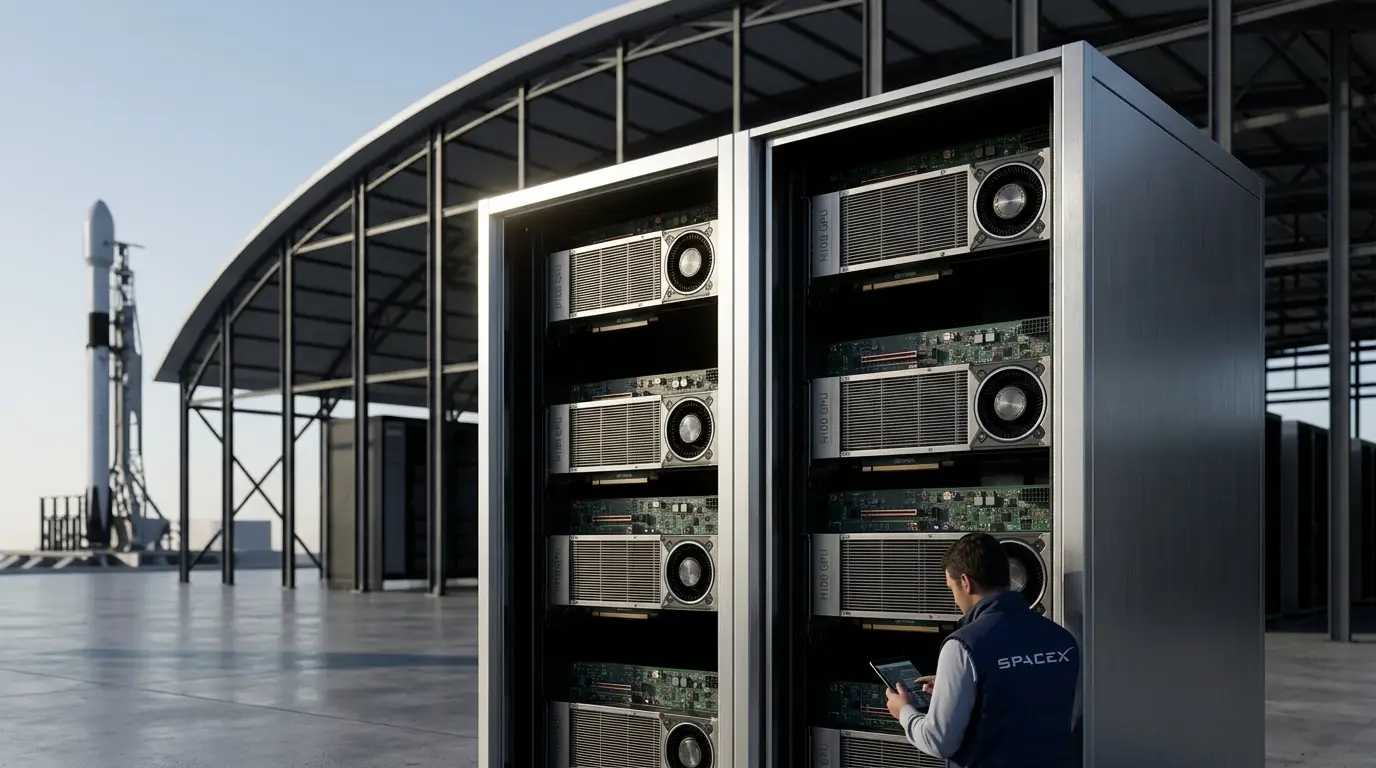
Following yesterday's coverage of the financing structure, SpaceX's October 26 announcement adds details about the equipment and participants. It identifies NVIDIA Vera Rubin chips for computing infrastructure on the ground, intended to support Grok and cloud customers.
Apollo and Goldman Sachs lead the financing group, with additional commitments from funds and accounts associated with BlackRock, Goldman Sachs Asset Management and KKR.
The SEC filing describes an equipment-financing arrangement under which an Apollo-managed entity would purchase GPU equipment and lease it to SpaceX. Approximately $40 billion represents expected principal payments; financing charges and other expenses are additional.
The binding commitment still requires specified closing conditions to be met. SpaceX expects the lease to close before year-end, with equipment deliveries and lease schedules starting in the first half of 2027. Committed financing is one stage in a process that must ultimately produce useful, operating capacity.
GPT-6.1 Terra lowers the price of everyday AI work
OpenAI has introduced GPT-6.1 Terra for visual reasoning, computer use and professional tasks. Its standard API prices are 50% below GPT-5.6 Terra's: $1 per million input tokens and $5 per million output tokens, according to the model documentation.
The model is available through the API and to Plus, Pro, Enterprise and Edu subscribers in ChatGPT Work and Codex.
Lower token prices can help teams process more work within a budget. The useful comparison is the cost of an accurately completed task, including supervision and corrections.
OpenAI's safety report also describes failures in selected simulated tests involving environmental restrictions. Some tests omitted system-level safeguards, so their results cannot be interpreted as ordinary customer failure rates. Teams evaluating Terra should consider both its reported capability gains and the controls around the actions they allow it to take.
Microsoft's exit offer covers approximately 60,000 eligible employees
Microsoft announced a voluntary exit program on October 26 for eligible staff in participating teams across the United States, Canada, the United Kingdom and India.
The company told GeekWire that approximately 60,000 employees qualify. That is the eligible population; actual departures remain unknown. Employees have until the first week of December to decide, according to the report.
The offer includes financial support and career-planning resources. Although it comes alongside Microsoft's AI investment, the employee memo does not establish that AI systems are replacing the people eligible for the program.
What to watch next
The developments raise practical questions about AI's next stage. Can usage revenue support long-term computing commitments? Will financed hardware become productive capacity on schedule? Can lower model prices reduce the cost of completed work?
For businesses buying AI, those questions connect the financial headlines to service reliability, purchasing decisions and everyday operating costs.
This episode is narrated by an AI voice. Follow AI World Today: Daily News for the next edition.

Popular news

Akamai launches Agent Sandbox to limit what AI code can do

More FPS with AI and DLSS Doesn’t Automatically Mean a More Responsive Game

Anthropic Is Going Public: What Claude’s Numbers Reveal

OpenAI Launches GPT 6.1 Terra for Faster AI Agents at Half the Price
SpaceX Secures 40 Billion Dollar Debt Financing for GPU Infrastructure Expansion

Microsoft Restructures Workforce with Voluntary Buyouts Amid AI Expansion
Latest comments
Loading