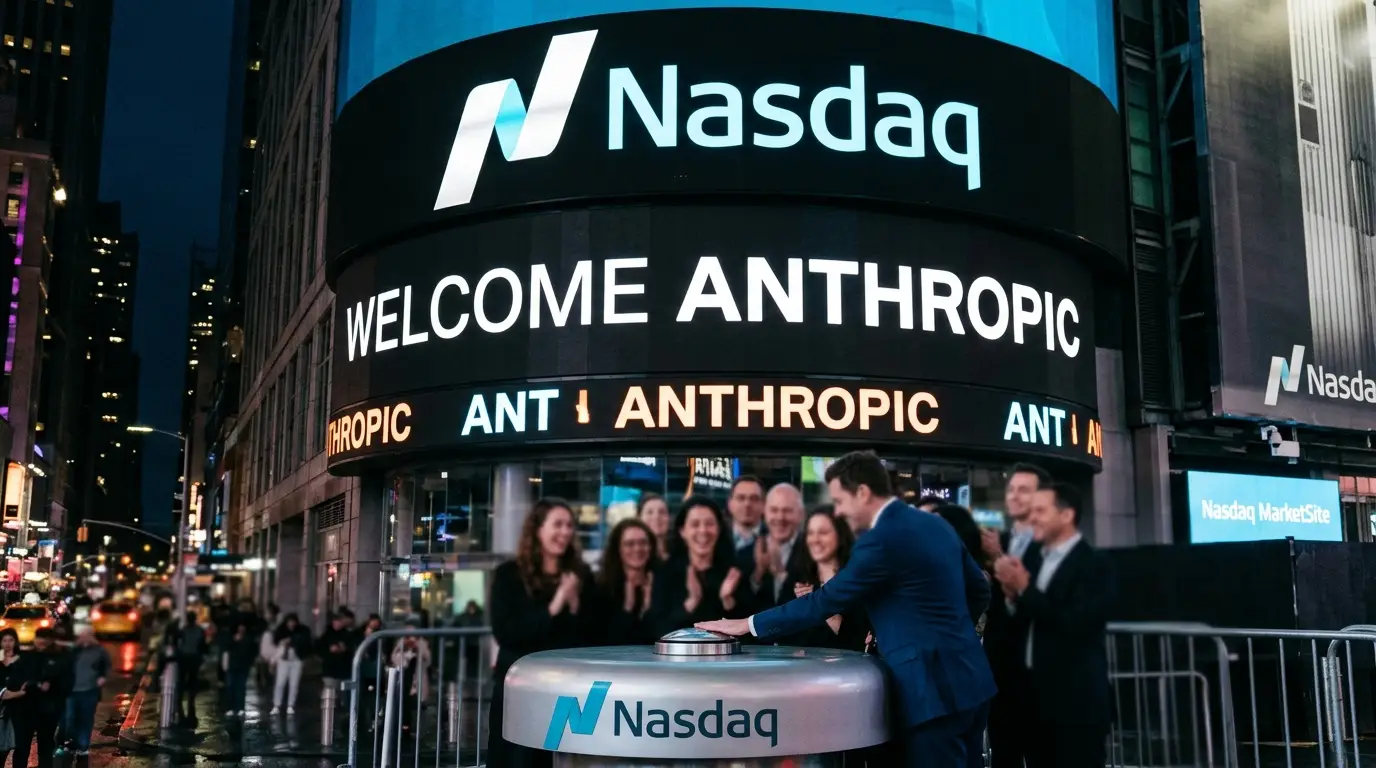
Anthropic publicly filed for an initial public offering on Monday. The company revealed rapid business expansion while warning that autonomous AI systems could expose customers and the firm to legal obligations and security liabilities.
The Claude developer submitted an S 1 registration statement reporting 16.3 billion dollars in revenue for the first six months of 2026. This figure represents a massive increase from 1.16 billion dollars a year earlier. Anthropic applied to trade on Nasdaq under the symbol ANT. The filing leaves the offering share count and price range unspecified.
Financial Performance and Operating Reality
The filing reports a first half net loss of 80.7 billion dollars. This figure does not represent cash burned running the Claude platform.
Approximately 72.4 billion dollars comes from changes in the accounting value of convertible notes and financing instruments. This primarily reflects the rising valuation of the company. The operating picture is substantially different. Revenue of 16.3 billion dollars fell short of operating expenses of approximately 17 billion dollars.
This produced a 693 million dollar operating loss. Computing and infrastructure expenses reached 8.95 billion dollars. Personnel expenses totaled 3.15 billion dollars. Sales and marketing partnerships accounted for another 3.17 billion dollars. Excluding stock based compensation and noncash charitable contributions, Anthropic reports adjusted operating income of 1.62 billion dollars. Operating cash flow was positive at 3.93 billion dollars. The company attributed this improvement partly to the timing of customer receipts and vendor payments.
Enterprise Adoption and Infrastructure Commitments
Enterprise adoption helps explain the rapid expansion. As of September 30, more than 1900 customers generated at least one million dollars each in revenue over the preceding 12 months. This includes approximately 250 customers that generated at least 10 million dollars. The official SEC filing document details these metrics clearly.
One of the most consequential warnings concerns a mismatch between spending obligations and revenue. Usage based sales supplied 80 percent of first half revenue. Much of this revenue lacks long term customer commitments. Meanwhile, infrastructure contracts can require payments for years. This includes payments for capacity the company does not use. One disclosed equipment lease alone entails approximately 125.2 billion dollars in rent over five years.
| Metric Category | First Half 2026 Figure | Year Over Year Change |
| Total Revenue | 16.3 Billion Dollars | Up 1300 Percent |
| Operating Loss | 693 Million Dollars | Down from 2.14 Billion |
| High Value Customers | 1900 Plus Accounts | Significant Growth |
| Operating Cash Flow | 3.93 Billion Dollars | Positive Turnaround |
Future Vision and Regulatory Scrutiny
The longer term ambition is to give Claude increasingly open ended assignments. The company wants the system to work independently for extended periods. It eventually plans to deploy millions of instances simultaneously. This vision creates a practical question for customers regarding consequential mistakes. Anthropic states it remains unclear when an agent action could legally bind the organization deploying it. Human reviewers may be unable to keep pace with autonomous system speed and complexity. Regulatory scrutiny is already concrete.
The Federal Trade Commission issued an investigative demand in October seeking information about consumer protection and data security. The filing does not establish wrongdoing or predict the inquiry outcome. Enterprise buyers must define responsibility carefully. They need to determine which systems agents can access and who bears losses when infrastructure fails. Some agreements with outside model evaluators expose Anthropic to uncapped liability for specified third party claims. The company cautions that a sufficiently severe AI incident could exceed even the insurance industry ability to cover the damage. This makes capacity guarantees and service continuity important procurement considerations alongside model performance.

byDavid Porter
Popular news

AI Stocks Surge After Anthropic Market News

Epic CEO Condemns Steam AI Disclosure Rules as Political Statements

AI Financial Payoff Zero for Most Companies Outside Tech Sector

Microsoft Strengthens European Digital Sovereignty With New Cloud Controls

Podcast: SpaceX's $40 Billion AI Chip Deal, Explained

AI Bot Accessed Public Voter Data Through Georgia Data Hub
Latest comments
Loading