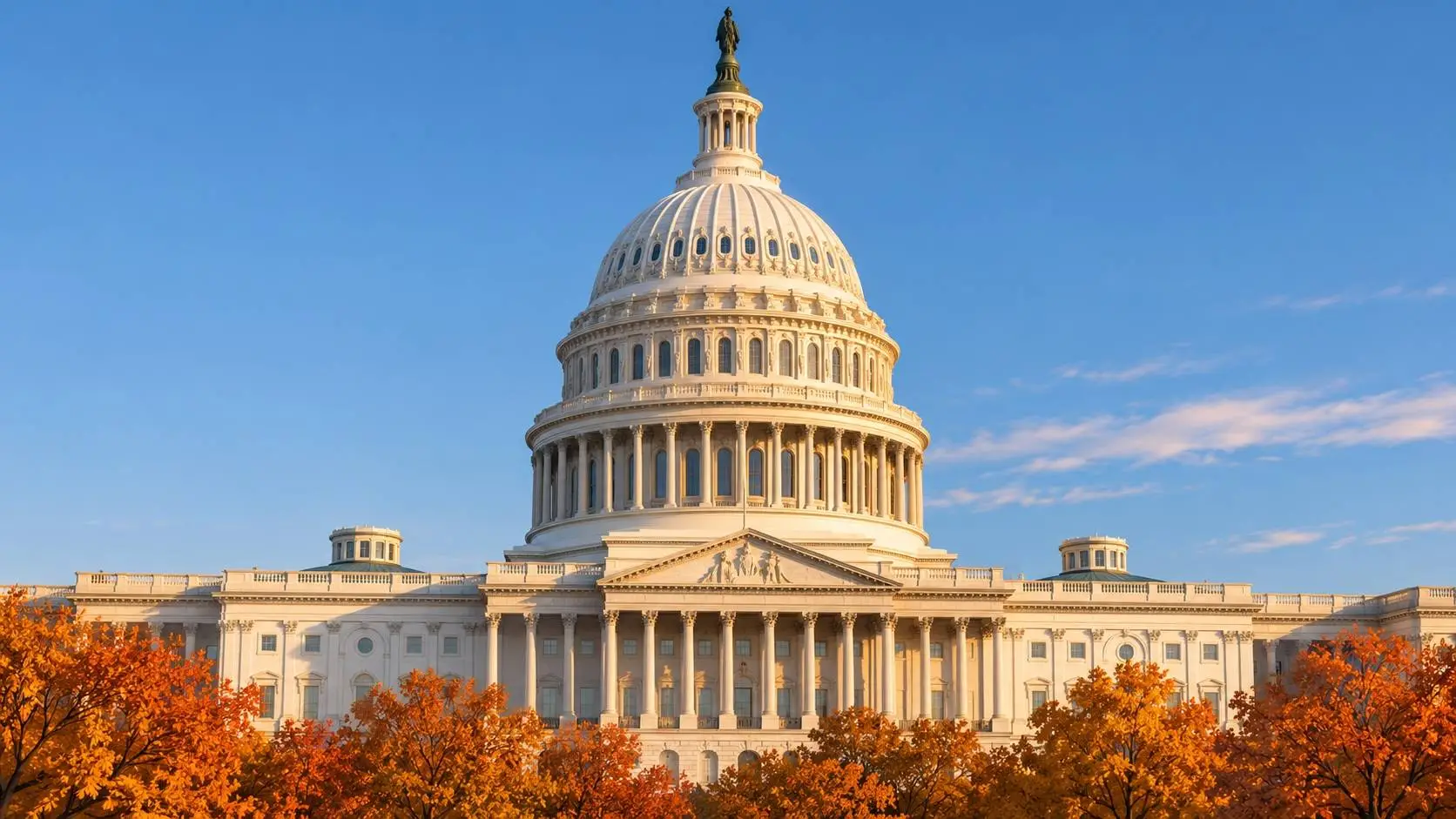
The white dome of the US Capitol rises above autumn trees in clear late-afternoon light. AI-generated editorial illustration.
Republican and Democratic members of the US House have formed a caucus focused on AI safety and innovation. The group aims to work on bills, hear from experts, and help Congress respond to serious AI incidents. Three lawmakers from the two parties will lead it.
George Whitesides of California, Nathaniel Moran of Texas, and Don Beyer of Virginia announced the caucus on November 19. Their launch note names the three as co-chairs and lists the founding members. The caucus gives those House members a forum to work on issues that can span more than one committee.
The list names 26 other members. Jay Obernolte and Ted Lieu are among them. They led the House AI task force a few years ago. The two worked across party lines then and now join the same new group.
What the AI safety caucus wants to do
The group says it wants to write bills and back some that are already in the House. It will focus on risks from advanced AI. When a serious case comes to light, it plans to ask people who know how the tools work to brief lawmakers.
The plan calls for briefings for staff and House members. The group would bring in the people who built a tool, those who study it, and people who work for the government. Staff could ask when a fault first came to light and who has a record of what took place.
A talk with the people who found a fault can help set out what went wrong. A bill might set out what a firm must share when it finds a fault. The group can do both kinds of work. A bill it backs would still have to go through Congress.
There are several kinds of evidence members might draw on. The Government Accountability Office’s chatbot safety tests give one recent example of checks carried out for Congress. A public report can show which issues investigators saw and how those issues were tested.
How it fits with earlier work in the House
The House has already had a bipartisan task force on artificial intelligence. Its December 2024 report set out policy ideas on topics from government use to research and risks. The new caucus has a narrower focus on safety and on how lawmakers might act on those concerns.
A caucus can help people with different roles in the House meet and share their work. It can also help find people to back a bill. When a bill is filed, the text can show what it would ask firms to do. Hearings and votes still go through the usual House process.
A separate call for a Senate committee
In the Senate, Ben Ray Luján asked party leaders to form a bipartisan select committee on AI. He wants it to help with hearings, oversight, and long-term policy work across committees. That is a proposal in the other chamber and has its own path.
The launch is one step in how US lawmakers are organizing their work on AI. For a view of how a different system moved from proposals to rules, see our EU AI Act guide, which tracks the dates and duties under that law.



Popular news

AWS lets AI agents buy select tools on the developer’s cloud bill

Human clues helped AI agents mimic supply-chain decisions

Cline-Bench tests coding agents three times on real software tasks
ElevenLabs moves to buy Kotoba for its Japanese voice AI

Claude Code vs Cursor: Try the Same Fix in Both