Taylor Swift files trademarks for her voice and image as AI deepfakes push identity into legal gray zone
NewsTuesday, 28 April 2026 at 16:47
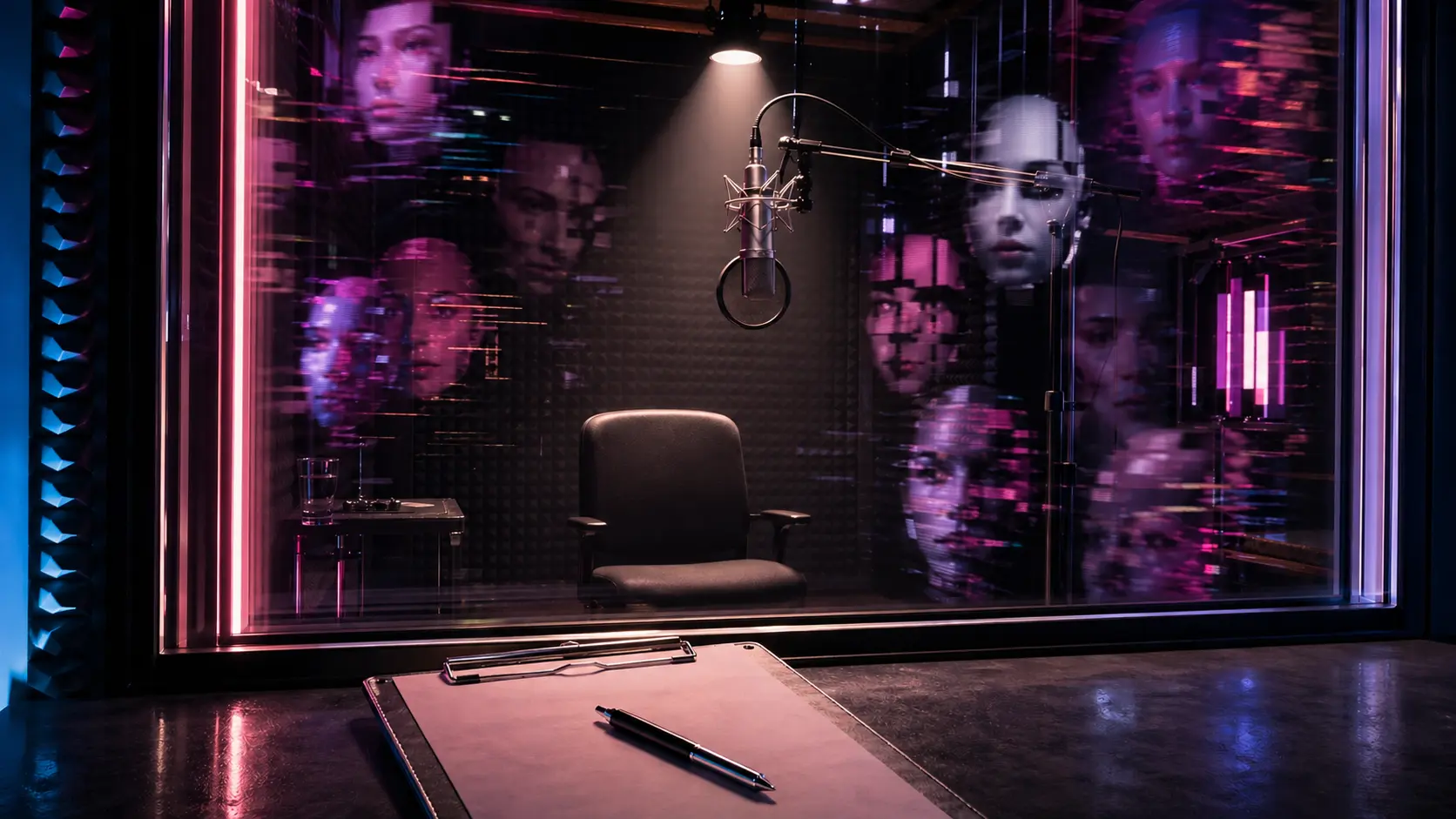
Taylor Swift is moving to formalize control over her voice and likeness, filing new trademark applications that reflect a growing concern among high-profile figures about how generative AI can replicate identity at scale.
The filings, submitted by her company TAS Rights Management, are not just brand extensions. They represent an early attempt to close a widening legal gap as AI systems make it easier to mimic voices, images, and public personas without consent.
A legal response to AI-driven imitation
According to reporting by Variety, Swift’s team filed three trademark applications. Two focus on sound trademarks, covering phrases such as “Hey, it’s Taylor Swift” and “Hey, it’s Taylor.” The third targets a specific visual identity, describing a recognizable Eras Tour stage image in detail, including her pink guitar, iridescent bodysuit, and stage setting.
This approach is notable. Rather than trying to broadly control her voice in all contexts, Swift is anchoring protection to distinct, recognizable expressions that can be legally tested under existing trademark standards.
That distinction matters. Trademark law hinges on whether something is identifiable and “confusingly similar” when imitated. By defining specific phrases and visuals, the filings create clearer enforcement pathways.
A pattern emerging among public figures
Swift is not acting in isolation. Matthew McConaughey recently pursued a similar strategy, trademarking his well-known “All right, all right, all right” catchphrase and taking steps to control unauthorized uses of his voice and image.
McConaughey framed the issue directly: the goal is to ensure that any use of his likeness or voice happens with explicit approval and attribution. That principle is becoming increasingly relevant as AI-generated content blurs the line between original and synthetic media.
The pattern is clear. Public figures are beginning to treat identity not just as reputation, but as protectable intellectual property in an AI environment.
The gap between copyright and AI capability
The legal tension behind these moves is structural.
Historically, artists relied on copyright to protect recordings. But AI systems can now generate new audio that mimics a voice without copying an existing track, sidestepping traditional copyright frameworks.
Intellectual property attorney Josh Gerben noted that attempting to trademark a spoken voice in this way is largely untested in court. That uncertainty is precisely why these filings matter. They are early attempts to define how far existing law can stretch before new regulation becomes necessary.
If successful, trademark protection could allow challenges not only against exact copies, but also against outputs that are close enough to cause confusion, a key threshold in trademark disputes.
Why this matters beyond entertainment
While the trigger is celebrity misuse, the implications extend far wider.
AI-generated impersonation is no longer limited to entertainment. It is entering:
- fraud scenarios, where executives are mimicked via voice cloning
- political messaging, where endorsements or statements can be fabricated
- brand risk, where identity misuse can damage trust at scale
Swift herself has already been a target. Her likeness has appeared in unauthorized AI-generated images, including explicit deepfakes. In 2024, false AI-generated images circulated online suggesting political endorsements she never made.
For decision-makers, this shifts AI from a productivity tool to a governance and risk issue.
Enforcement will define the next phase
Filing trademarks is the first step. The harder question is enforcement.
AI-generated content can be created anonymously and distributed globally within minutes. Even with legal protection, identifying violations and taking action at scale will require:
- platform cooperation
- improved detection systems
- faster legal response mechanisms
This places increasing responsibility on intermediaries such as social platforms and content hosts, not just on individuals.
What to watch next
Swift’s filings are likely an early signal rather than an isolated move. Several developments are now in play:
- more public figures formalizing control over voice and likeness
- legal challenges that test how trademark law applies to AI-generated imitation
- growing pressure on platforms to manage synthetic identity misuse
- potential regulatory efforts to define identity rights in the AI era
The underlying shift is structural. As AI reduces the cost of imitation to near zero, authentic identity becomes both more valuable and more vulnerable.
Swift’s move does not solve that tension. But it begins to define how control over identity might be enforced in practice.

Popular news

Anthropic Secures Thirty Two Billion Dollar Queensland Data Centre Deal for Claude
Zuckerberg Rejects AI Slowdown Calls Amid Industry Safety Debate

Crusoe Secures Nearly Four Billion Dollars to Scale Factory Built AI Data Centers
Amazon Secures Generac Stake in Massive Eight Billion Dollar Generator Pact

Spain Registers First End-to-End Autonomous AI Data Breach

MIT and Suffolk Unveil How AI is Reshaping Construction Productivity
Latest comments
Loading