Singapore lifts growth outlook on global AI boom
NewsTuesday, 11 August 2026 at 07:13
Updated at Tuesday, 11 August 2026 at 07:14
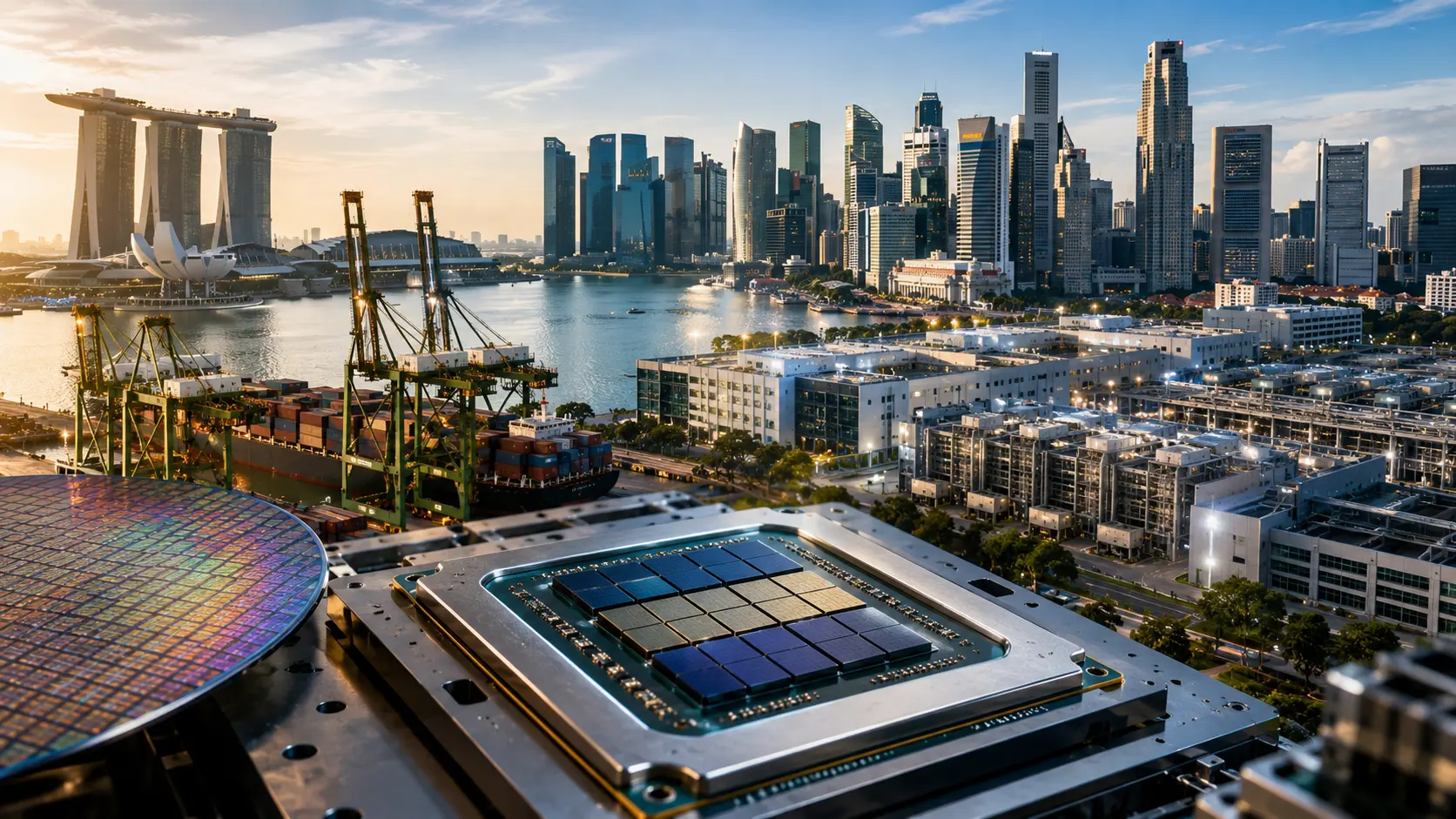
Singapore has raised its 2026 growth outlook on the back of relentless global investment in artificial intelligence.
The government now expects the economy to expand by 4.5% to 5.5% this year, up from an earlier, lower forecast, Reuters reports.
The upgrade follows a strong second quarter. GDP grew 5.9% year over year, bringing first-half 2026 growth to 6.1%.
Surging demand for electronics, semiconductors, and other AI-infrastructure components is powering the city-state—proof that the AI race is reshaping economies far beyond Big Tech in the United States.
AI wave supercharges Singapore’s export engine
Singapore doesn’t fabricate every marquee AI processor, but it is a crucial node in the broader tech manufacturing chain.
The country hosts semiconductor fabs, assembly firms, makers of specialized equipment, and a heavyweight logistics sector. Many global tech companies also run their Southeast Asia operations out of Singapore.
Building AI data centers takes far more than the latest chips from Nvidia, AMD, or the clouds. It requires memory, storage, networking, power systems, and cooling.
As AI infrastructure scales worldwide, demand rises for a wide range of products and services made in or traded through Singapore.
Accordingly, the government also raised its forecast for non-oil domestic exports, now expecting 14% to 16% growth.
Q2 surprise: economy up 5.9%
Second-quarter growth of 5.9% beat expectations. For the first six months, the economy expanded 6.1%.
That resilience stands out given Singapore’s exposure to global trade turbulence. Middle East tensions and energy supply disruptions still loom as risks.
The AI boom is offsetting some of that uncertainty, the government says, with companies pouring billions into chips, servers, and data centers.
Construction and capital flows are also adding momentum. Next-gen infrastructure needs buildings, power, and specialized business services.
Singapore is benefiting not just from electronics sales, but from its role as a financial and logistics hub.
From AI models to real-world growth
AI headlines tend to fixate on new chatbots and models. Singapore’s numbers show how the tech spills into the broader economy.
Every new AI service demands physical investment. Models must be trained, stored, and kept available for users.
That pushes tech companies to buy:
- AI processors and memory chips
- Servers and networking gear
- Electricity and cooling capacity
- Data center land and buildings
- Fiber connections
- Software and security services
The demand then ripples outward. A chip plant orders tools and materials. A data center hires builders and energy experts. Banks and funds finance the projects.
That’s why a small city-state can capture outsized gains from investments largely announced by U.S. and Chinese tech giants.
Singapore aims to stay an AI powerhouse
Singapore has long positioned itself as Southeast Asia’s tech hub, offering a stable business climate, strong digital infrastructure, and access to fast-growing regional markets.
Companies base regional headquarters, cloud infrastructure, and R&D in the country.
At the same time, the government has previously curbed new data center builds over energy intensity. Space is tight, and much of the country’s power is imported.
New projects must therefore use electricity and water more efficiently. The aim: enable growth without giving data centers unlimited access to scarce capacity.
That’s a key contrast with larger countries that have more land. Singapore competes on efficiency, reliability, and specialized expertise.
Not every AI bet delivers lasting growth
The central bank and economists warn that today’s momentum comes with risks.
Part of the investment surge assumes businesses and consumers will pay more for AI services. If demand scales up more slowly, tech companies could dial back plans for chips and data centers.
That would hit countries and sectors now riding the construction boom.
There’s also the risk of overordering. The chip industry is known for sharp cycles of shortage and glut.
Singapore remains tied to global trade, too. New export curbs, geopolitical tensions, or disruptions on key shipping lanes could quickly sap growth.
A higher forecast, in other words, is no guarantee the current pace will last for years.
Faster growth can fuel higher prices
Strong growth isn’t all upside. When companies scale quickly, demand for labor, real estate, and electricity can jump.
That can push up wages and prices. Singapore’s inflation was 1.6 percent in June, but the central bank is bracing for renewed price pressures.
Rising energy costs are a separate risk. AI data centers consume vast amounts of power, while conflicts and disruptions can lift global energy prices.
Singapore’s government has announced an additional support package of 900 million Singapore dollars for households and businesses facing higher energy bills.
It’s a tricky balance: the same AI investments driving growth can also strain power systems and stoke prices.
Read also


AI is now a macroeconomic force
The new growth forecast shows AI is no longer just a tech-sector topic.
Investments are now large enough to move national exports, construction activity, and economic outlooks. Singapore—thanks to its chip industry and trading hub status—makes the point clearly.
That matters for Europe as well. Countries don’t need a homegrown ChatGPT rival to benefit from the AI economy. Chip equipment, energy infrastructure, data centers, cooling, and specialized business services can all create value.
The question is how durable the investment wave will be. If AI services generate solid revenue, the infrastructure could keep expanding for years. If expectations prove too lofty, export-driven economies are exposed to a correction.
For now, Singapore is betting on the first scenario. The city-state expects the global AI boom to keep supporting growth into the second half of 2026.

Popular news

Latest comments
Loading