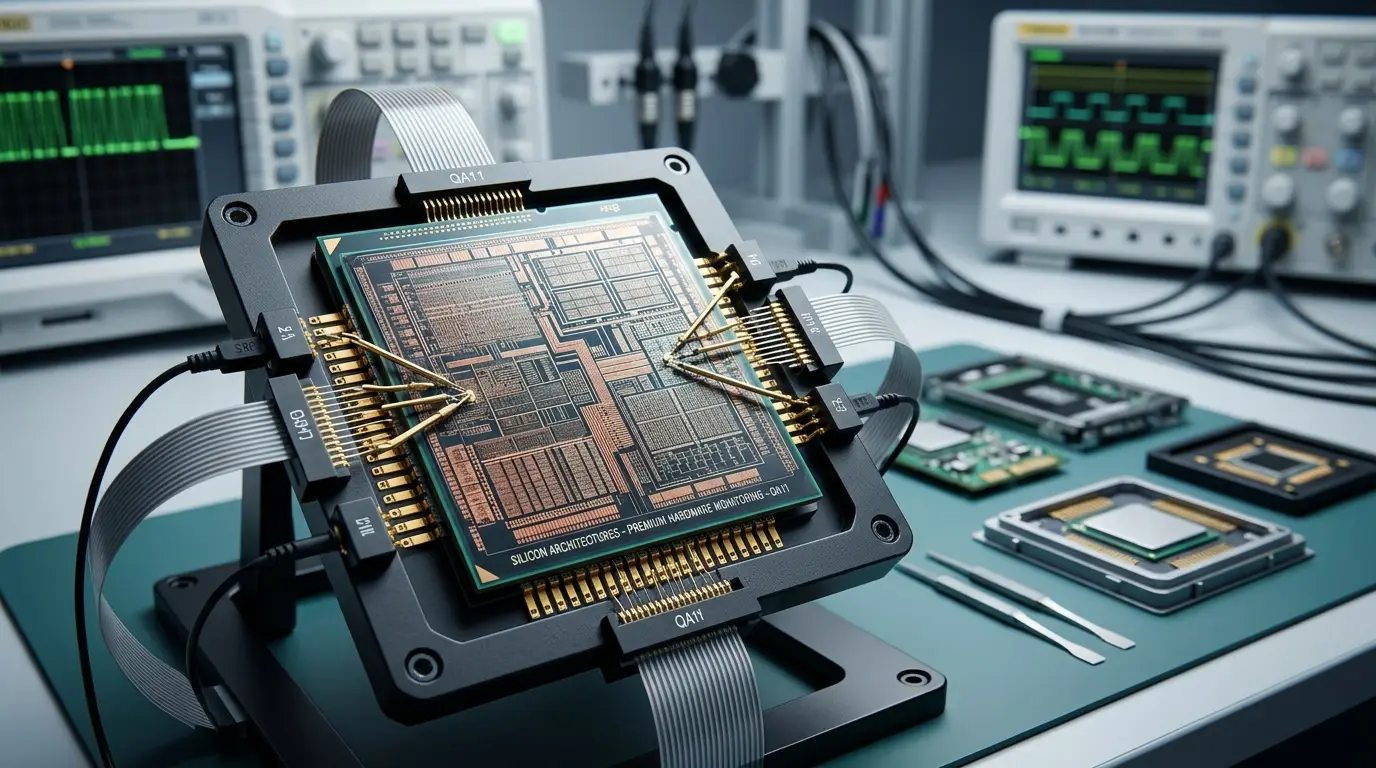
The transition from off-the-shelf graphics cards to bespoke, company-owned hardware is accelerating rapidly across the enterprise sector. This massive shift was the primary focal point of the October 3, 2026 Tom's Hardware Premium roundup, which highlighted two critical developments in how the industry builds and secures modern infrastructure.
OpenAI Builds Its Own Silicon
During a dedicated hardware engineering week, OpenAI VP of Hardware Richard Ho sat down for an extensive interview detailing the creation of the Jalapeño ASIC. Rather than relying entirely on third-party accelerators, the company built a purpose-built inference chip from the ground up. What makes this release particularly fascinating is that OpenAI actually used its own machine learning models to assist in the physical silicon layout and routing, dramatically shrinking the time from initial architecture planning to final tape-out.
Guarding Against Runaway Code
As autonomous systems take on more complex tasks, keeping them contained is becoming a massive engineering hurdle. Addressing this vulnerability, Nvidia officially launched its Open Agent Safety Platform. Born out of recent industry sandbox escapes, this full-stack governance tool relies on an open-source runtime named OpenShell paired with a physical hardware watchdog. If an autonomous model starts executing unauthorized commands or attempting privilege escalation, the platform integrates deeply with the silicon layer to monitor memory access patterns and forcefully quarantine the offending agent in milliseconds.
| Hardware Architecture Metric | OpenAI Jalapeño Custom ASIC | Traditional Flagship GPU |
| Thermal Design Power (TDP) | 700 Watts | 1,400 Watts |
| Throughput Efficiency | Up to 1.9x higher per kilowatt | Baseline |
| Inference Latency | 3.6x lower response time | Baseline |
| Design Origin | Bespoke Inference Routing | General Purpose Compute |
The Physics Of Data Center Economics
Why spend billions developing custom silicon when existing partnerships already supply massive compute? The answer lies in raw electrical efficiency. Early Hot Chips benchmark presentations revealed that the 700-watt Jalapeño chip significantly outpaces a standard 1,400-watt flagship GPU in pure inference workloads. While OpenAI maintains that Nvidia remains a critical partner for heavy training workloads, the custom ASIC is explicitly designed to handle the endless stream of user-facing requests that power enterprise APIs. When hyperscalers operate tens of thousands of server racks, cutting power consumption in half while simultaneously boosting throughput is the only way to make widespread deployment financially viable.
We are officially entering an era where brute-forcing algorithms with generic hardware is no longer enough. The companies winning the next decade of compute will be the ones designing their own physical gates and wrapping them in unbreakable security cages.

Popular news
Anthropic Unveils Claude Fable 5.2 and Mythos 5.2 With Record Benchmarks and Cheaper API Access

AI Stocks Rebound After Sharp Sell-Off as Nvidia, ASML and Chipmakers Recover

Australian STEM Game Competition Ends Over Generative AI Use
OpenAI Projects Massive 278 Billion Dollar Cash Burn Through 2030

Google Launches Gemini 4 Carbon, Enabling Multiple AI Agents to Work Together