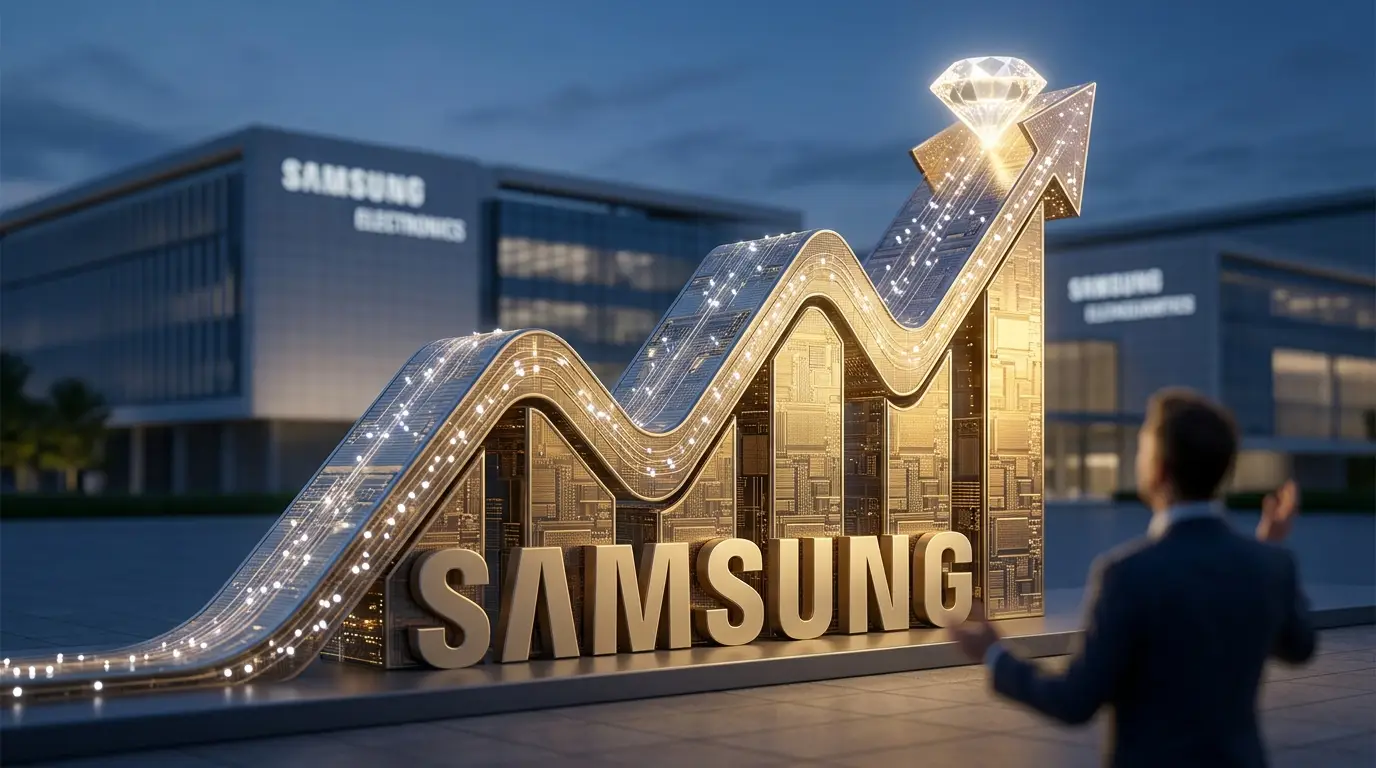
Samsung Electronics reported a record operating profit of 107.4 trillion won for the third quarter of 2026. This massive financial milestone was fueled by surging global demand for computer memory chips used in artificial intelligence systems. The South Korean technology giant confirmed these figures in its latest official earnings release.
The semiconductor division served as the primary engine for this unprecedented growth. It accounted for 99.2 percent of the total operating profit during this three month period. High bandwidth memory products designed for advanced AI and high performance computing systems saw rapid adoption rates across global data centers. Traditional memory markets also contributed through stabilized pricing and renewed enterprise purchasing.
Market Reaction and Capital Expenditure
Investors reacted with caution despite the strong headline numbers. Company shares experienced a slight decline following the Thursday announcement. Market analysts pointed to aggressive capital expenditure plans as the main reason for this tempered market response. Samsung intends to reinvest heavily into next generation manufacturing facilities and advanced packaging technologies to maintain its competitive edge in the AI hardware sector.
The company is actively scaling production of its latest memory architectures to meet client specifications. Samsung's HBM4 technology now delivers up to 3,300 GB/s of bandwidth. This represents a significant performance leap required by modern large language models and complex neural networks running in enterprise environments. Enterprise clients are increasingly prioritizing memory bandwidth over raw processing speed when designing new server racks.
| Financial Metric | Q3 2026 Value | Primary Growth Driver |
| Total Operating Profit | 107.4 trillion won | AI memory chip sales volume |
| Semiconductor Division Share | 99.2% of total profit | High bandwidth memory demand |
| Consolidated Revenue | 195.25 trillion won | Server and data storage upgrades |
| Net Profit | 75.14 trillion won | Improved DRAM market pricing |
Broader Industry Implications
This financial performance reflects a wider trend across the global technology sector. The Semiconductor Industry Association recently highlighted that artificial intelligence has become the defining driver of semiconductor demand worldwide. Data centers are undergoing massive infrastructure upgrades to support generative AI workloads and autonomous computing tasks.
Memory manufacturers are currently operating in a highly favorable market environment. Supply constraints for advanced packaging and high capacity memory modules continue to support premium pricing structures. Samsung plans to leverage this momentum to secure long term supply contracts with major global cloud service providers.
The transition toward AI centric hardware represents a permanent shift in semiconductor manufacturing priorities. Companies that successfully scale high bandwidth memory production will dominate the next decade of global technology infrastructure. Samsung's current financial results indicate it is well positioned to capture this rapidly expanding market share.

Popular news

Gemini 4 Carbon leads today's AI news as ChatGPT adds API credits

Apple Creator Studio Update Adds MotionVFX and Artificial Intelligence Features
MIT Researchers Observe AI Agents Playing Without Assigned Tasks

Meta Tests AI Pet Journaling App in the Philippines
Nvidia and Oracle Expand Cloud Infrastructure to Fix Idle GPU Problems

Dartmouth Provost Resigns Over Undisclosed Artificial Intelligence Use
Latest comments
Loading