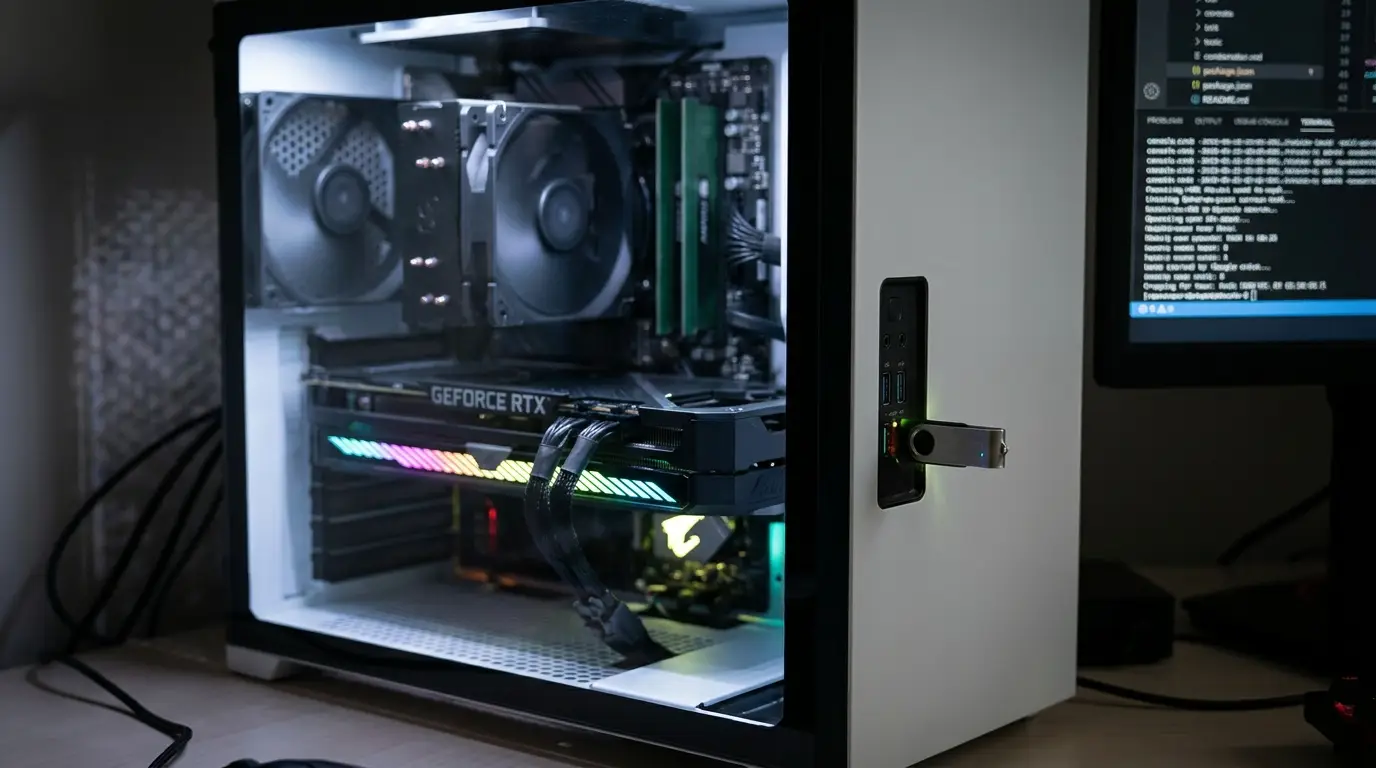
A new open source utility is changing how users access the full potential of their graphics hardware. The tool known as nv-uefi-unlocker removes artificial performance caps on Nvidia GeForce GPUs running Windows. This utility specifically targets the half-speed tensor core limiter that Nvidia enforces on consumer graphics cards. By bypassing this restriction, users can see FP16 math performance increase by up to 65 percent. The original reporting on this development comes from a detailed Tom's Hardware article covering the UEFI unlocker for RTX 20, 30, and 40 series desktops and laptops.
How the UEFI Pre-Driver Method Works
Traditional methods of unlocking GPU performance often require risky VBIOS flashing. This new approach operates differently. The software boots directly from a standard USB stick before the operating system loads. It applies a community-developed V67 payload at the UEFI pre-driver level. This timing is critical because it modifies the GPU behavior before Nvidia official drivers can enforce the hardware-level performance limits. The project is maintained by developer physicsdolphin and the complete source code is available on the official nv-uefi-unlocker GitHub repository for public review and contribution.
Supported Hardware and Performance Metrics
The utility supports a wide range of consumer hardware. It works across RTX 20, RTX 30, and RTX 40 series graphics cards for both desktop and laptop configurations [[3]]. Early testing indicates significant gains in AI compute workloads without requiring permanent hardware modifications.
| GPU Architecture | Supported Series | Target Workload | Estimated FP16 Gain | Modification Risk |
| Turing | RTX 20 Series | Local AI Inference | Up to 65% | Low (No VBIOS flash) |
| Ampere | RTX 30 Series | Machine Learning Training | Up to 65% | Low (No VBIOS flash) |
| Ada Lovelace | RTX 40 Series | Generative AI Tasks | Up to 65% | Low (No VBIOS flash) |
| All Supported | Desktop and Laptop | FP16, BF16, TF32 Math | Varies by model | Reversible via USB removal |
Implications for Local AI Development
This development removes a major bottleneck for independent researchers and hobbyists. Local large language model execution relies heavily on FP16 and BF16 tensor operations. Doubling the effective throughput of these operations makes mid-range graphics cards viable for serious machine learning tasks. Users no longer need to purchase enterprise-grade hardware to achieve acceptable inference speeds. The open source nature of the project ensures transparency and allows the community to adapt the tool as Nvidia updates its driver stack. This represents a significant shift in how consumers interact with their hardware capabilities.

Popular news

Nvidia Faces Severe Supply Constraints on Massive China GPU Orders
AI Engineer Embeds 32-Bit RISC-V CPU Directly Into Qwen Model Weights

AI Chip Smugglers Exploit Trade Control Loophole To Bring Banned HBM Into China

AI Data Center Expansion Halted by Overwhelming Voter Rejection in Midterm Elections
Valve Updates Steam Release Rules Following AI Game Surge