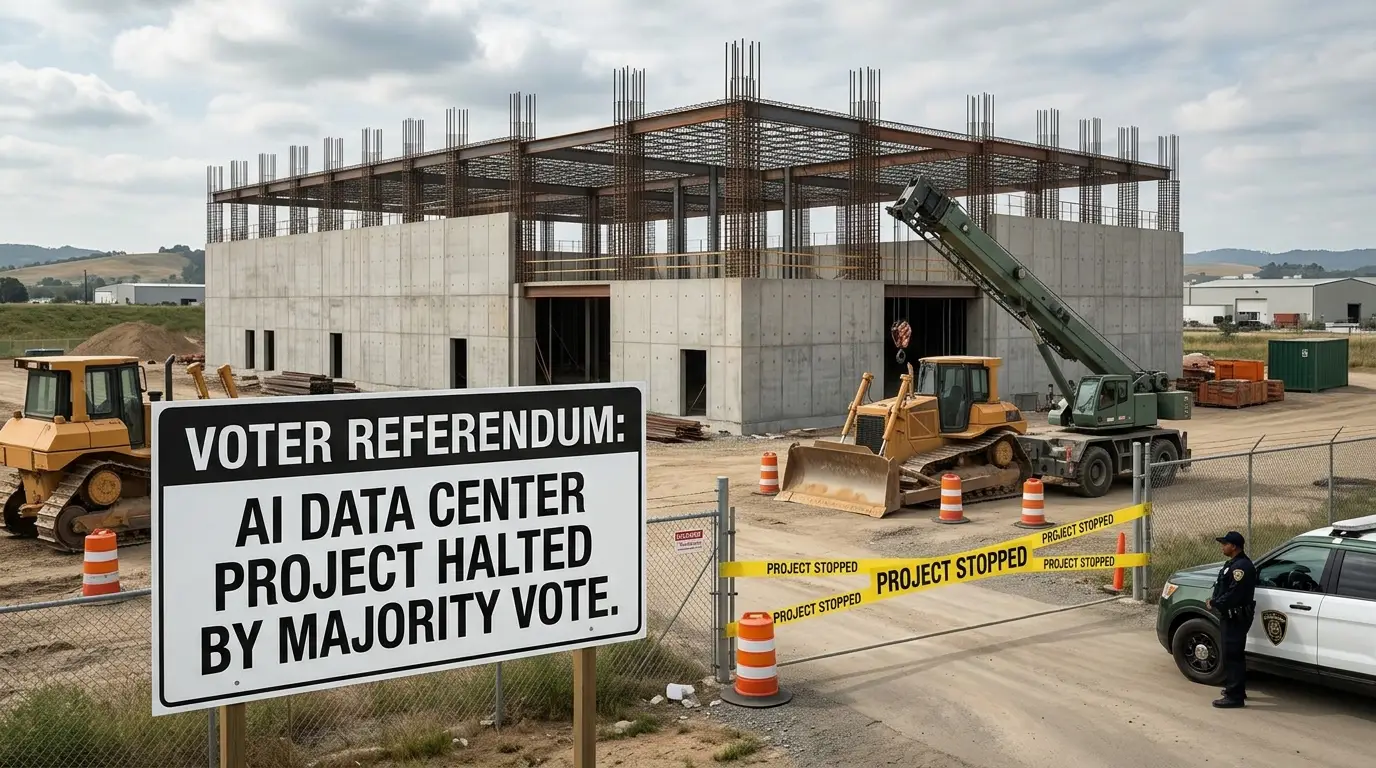
American voters delivered a decisive message to the technology sector during the recent midterm elections by overwhelmingly rejecting the rapid expansion of artificial intelligence data centers. Communities across the country placed 45 distinct measures on the ballot to address the unchecked growth of these massive facilities. The results showed a stunning consensus with 44 communities voting to restrict or ban data center development while only a single locality approved such projects.
This sweeping rebuke highlights a growing disconnect between corporate tech ambitions and local community priorities. Residents are no longer willing to accept vague promises of economic growth in exchange for permanent alterations to their local environment.
| State or Jurisdiction | Measure Type | Election Outcome | Primary Voter Concern |
| California Counties | Development Moratorium | Restriction Approved | Water scarcity and power grid overload |
| Kansas Communities | Outright Construction Ban | Restriction Approved | Rural preservation and noise pollution |
| Ohio Townships | Zoning and Size Limits | Restriction Approved | Industrial rezoning and land use conflicts |
| Maine Municipalities | Resource Use Referendum | Restriction Approved | Renewable energy diversion and environmental strain |
The primary catalyst for this voter backlash stems from severe environmental and infrastructural concerns. AI data centers require immense amounts of electricity and water to operate and cool their servers. According to a recent report from the United States Department of Energy, total data center electricity usage climbed dramatically from 58 terawatt hours in 2014 to 176 terawatt hours in 2023. This exponential growth strains local power grids and threatens residential energy stability.
Voters in states like California, Illinois, Maine, and Texas explicitly cited these resource demands as unacceptable risks to their neighborhoods. Local officials noted that existing infrastructure simply cannot support the massive load required by next generation computing facilities.
The tech industry now faces a complex regulatory environment as local governments assert their authority over land use and resource allocation. The Bipartisan Policy Center recently highlighted that community opposition is fundamentally reshaping how infrastructure projects are evaluated nationwide. Companies can no longer rely on blanket approvals or state level preemption to bypass local scrutiny. Future developments will require unprecedented transparency and tangible community benefits to gain public trust. Tech firms must engage with residents early in the planning process to address valid concerns about noise, light pollution, and resource consumption.
This electoral shift marks a permanent change in how Americans view technological progress. Citizens are demanding sustainable practices that align with their local environmental goals rather than accepting external corporate mandates. The message from the ballot box is clear and any future data center proposals must prioritize community well being over unchecked corporate expansion. Local democracies have proven they possess the power to dictate the pace and scale of industrial development within their borders. This new reality demands a fundamental redesign of how technology companies approach community integration and environmental stewardship.