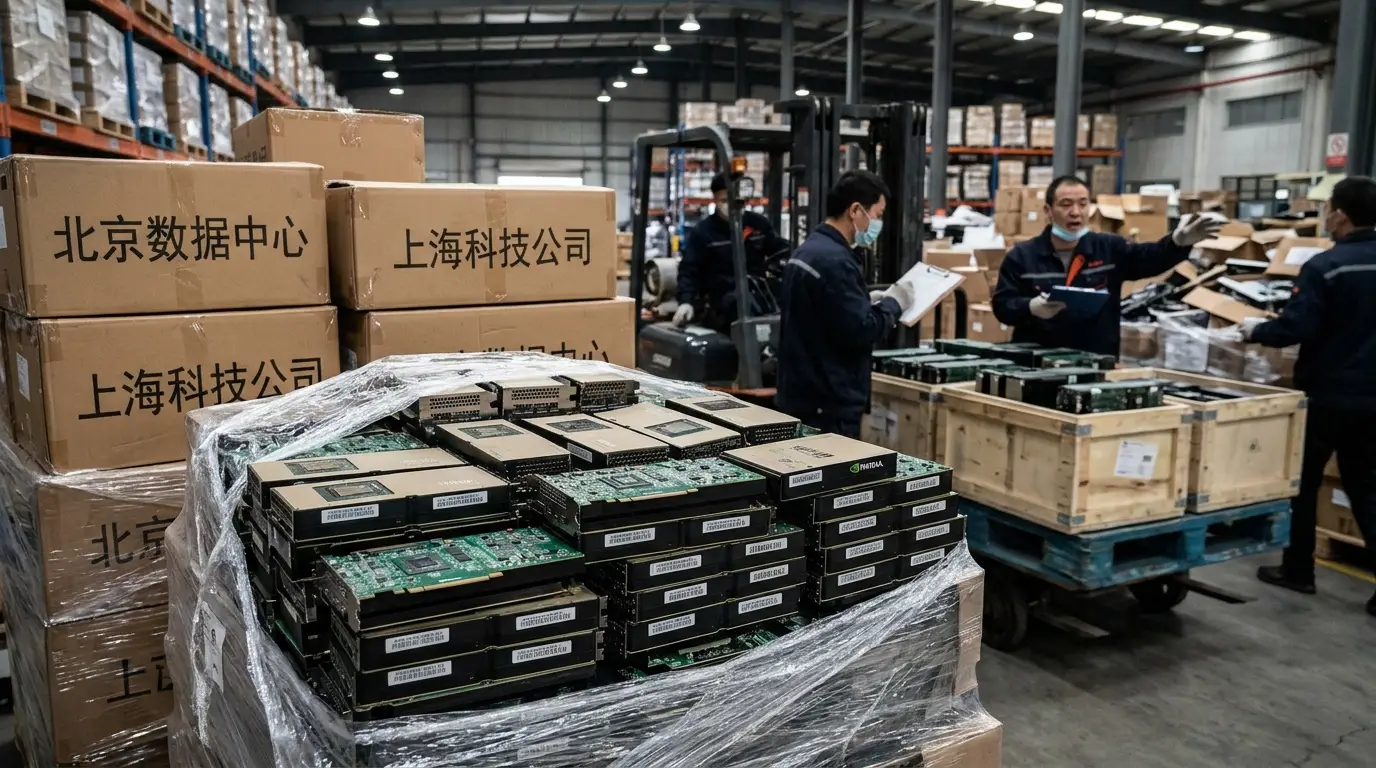
Chinese technology giants have placed massive orders for artificial intelligence hardware to support their expanding cloud and machine learning operations. Companies including Alibaba and Tencent and ByteDance reportedly ordered approximately 6 million units of the Nvidia RTX Pro 5500 graphics processing unit. This massive demand represents a potential market value exceeding 70 billion dollars according to recent industry reports. Supply chain data indicates that Nvidia will only be able to fulfill roughly 1 percent of this total volume over the next four months.
The severe bottleneck stems from global production limitations rather than regulatory barriers. The RTX Pro 5500 is specifically designed to comply with current United States trade restrictions while delivering substantial computational power as confirmed by hardware market analysts. Manufacturing capacity simply cannot match the rapid growth in artificial intelligence infrastructure requirements despite the hardware being fully compliant for international export.
Market Allocation And Production Realities
| Operational Metric | Current Industry Baseline | Projected 2027 Threshold | Supply Chain Impact |
| Semiconductor Fabrication Lead Time | 18 months | 36 months | Severe Delay |
| Enterprise Allocation Priority | Standard Queue | Restricted Tier | High Bottleneck |
| Domestic Alternative Adoption | Minimal | Accelerated | Market Shift |
| Model Optimization Focus | Raw Performance | Quantization Efficiency | Resource Maximization |
Nvidia continues to prioritize its key global partnerships across the globe. The company must balance these massive regional requests with existing long term commitments to North American and European data center operators. This allocation strategy ensures stable revenue streams but leaves emerging markets facing extended wait times for critical computing hardware.
Strategic Implications For Buyers
Technology firms in China are now forced to adapt their deployment timelines significantly. Many organizations will need to optimize their existing hardware fleets rather than relying on immediate new acquisitions. Software engineers are increasingly focusing on model efficiency and quantization techniques to maximize the output of available resources.
The situation also accelerates domestic semiconductor development initiatives. Local manufacturers are receiving increased investment to bridge the computational gap. Industry analysts expect this supply deficit to persist well into the following year. New fabrication facilities require significant time and capital to reach full operational capacity. Buyers must secure necessary components immediately if their current systems are failing or if they rely on their machines for critical daily work. The shift toward artificial intelligence is permanently altering the global hardware landscape.

Popular news

AI Engineer Embeds 32-Bit RISC-V CPU Directly Into Qwen Model Weights

AI Chip Smugglers Exploit Trade Control Loophole To Bring Banned HBM Into China

AI Data Center Expansion Halted by Overwhelming Voter Rejection in Midterm Elections

Google Search Access Tied to AI Adoption in Schools