Microsoft and Schneider Electric compress factory engineering cycles with AI
NewsThursday, 23 April 2026 at 17:22
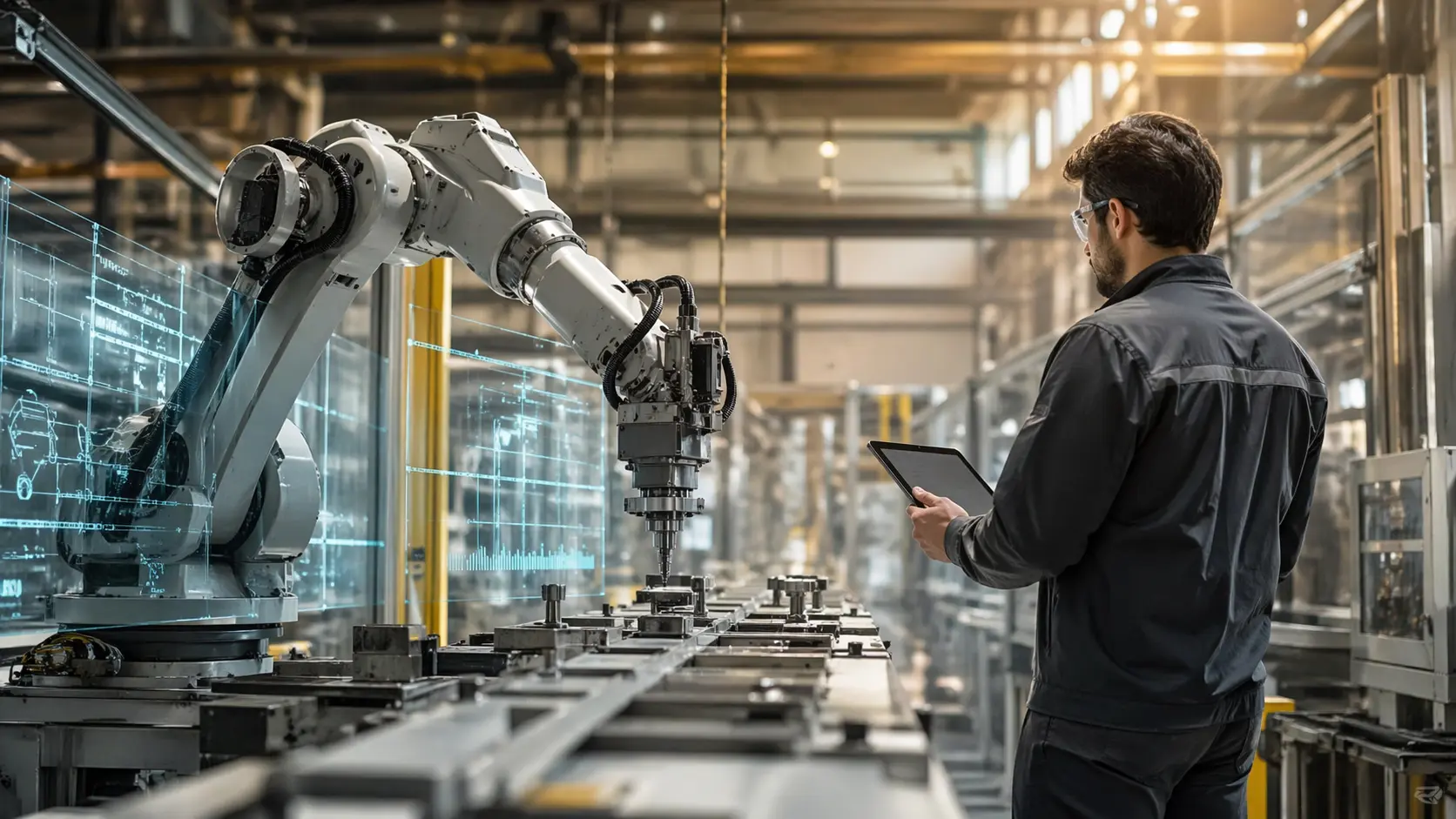
A new integrated stack unveiled at Hannover Messe shows how AI is reducing engineering time, standardizing automation, and shifting manufacturing toward software-defined operations.
The partnership between Schneider Electric and Microsoft signals a transition that many manufacturers have been waiting for: AI moving out of pilots and into core production workflows.
At Hannover Messe 2026, the companies demonstrated how tightly integrated automation and AI systems can compress engineering timelines from weeks to hours. The most immediate implication is not better insights—but faster execution, with reported productivity gains of up to 50% in engineering and configuration tasks.
For operators, this reframes the AI conversation. The constraint is no longer model capability. It is how quickly organizations can translate AI into operational throughput.
From fragmented tooling to continuous industrial workflows
A single system from design to operation
At the center of the announcement is Schneider Electric’s EcoStruxure Automation Expert, positioned as a software-defined automation layer that operates consistently across on-premise, edge, and cloud environments.
Microsoft’s Azure AI stack builds on top of this foundation, enabling orchestration, simulation, and optimization across the full lifecycle of industrial systems.
The result is a unified workflow:
- engineering design
- simulation and validation
- deployment and commissioning
- live operational optimization
This replaces the traditional model, where each phase relies on separate tools and manual handoffs—introducing delays, inconsistencies, and risk.
Why this matters now
Manufacturers are under pressure from three converging forces:
- increasing product complexity
- volatile supply chains
- rising regulatory and sustainability requirements
In this context, the ability to standardize and reuse automation logic across environments becomes a strategic advantage. It reduces both the cost of change and the risk of failure during deployment.
AI agents move upstream into engineering decisions
From support tool to execution layer
One of the more consequential shifts is the introduction of AI agents directly into engineering workflows.
These agents:
- automate routine design decisions
- validate system logic before deployment
- reduce error rates in initial production runs
This is a structural change. AI is no longer just analyzing performance after the fact—it is shaping system behavior before production begins.
Implication for engineering teams
For engineering organizations, this changes the nature of work:
- less manual configuration
- more supervision and validation
- greater reliance on simulation environments
It also raises new questions around governance, accountability, and trust in AI-generated decisions—particularly in regulated industries.
Early deployments show where value is emerging
Industrial proof, not just prototypes
The companies highlighted a deployment with H2E Power in green hydrogen production—one of the more demanding industrial environments.
The system has reportedly:
- operated for over 6,000 hours
- reduced hydrogen production costs by up to 10%
- delivered approximately €500,000 in annual savings for a 10 MW installation
While still a limited dataset, it illustrates where AI-driven manufacturing is delivering value: tightly integrated, domain-specific systems with measurable operational impact.
A shift toward economics, not experimentation
The signal here is important. Industrial AI is no longer being evaluated on capability alone, but on cost reduction, uptime, and scalability.
That marks a transition from innovation narrative to economic reality.
Software-defined manufacturing becomes the new baseline
Automation that travels across environments
A key feature of the joint platform is portability. Automation logic can be:
- developed once
- validated through simulation
- deployed across multiple sites without modification
This reduces duplication, accelerates rollout, and enables more consistent global operations.
Platform dynamics and lock-in
There is also a strategic layer. As automation platforms and cloud AI systems become more tightly integrated, switching costs increase.
For manufacturers, this creates a trade-off:
- faster deployment and efficiency gains
- deeper dependency on a specific ecosystem
This dynamic will shape vendor competition in the coming years.
What decision-makers should watch next
1. Integration into legacy environments
Most manufacturers operate mixed systems. The speed and cost of integrating these new workflows into existing infrastructure will determine adoption.
2. Openness versus ecosystem control
The promise of “open automation” will be tested as vendors deepen integration across their stacks.
3. Workforce transformation
As AI agents take over routine engineering tasks, roles will shift toward oversight, validation, and system-level design.
Read also

The bottom line
The significance of this announcement is not the introduction of new AI capabilities, but the operationalization of existing ones.
Industrial AI is entering a phase where competitive advantage will be defined by execution speed, system integration, and the ability to scale automation across the full production lifecycle.
For manufacturers, the question is no longer whether AI can deliver value.
It is how quickly they can reorganize around it.

Popular news

Global AI Landscape Shifts as EU Drafts Kids Act and Apple Unveils Siri AI

Americans Grow Wary of AI Data Centers as Environmental Costs Mount

Scientists Reconstruct Mouse Vision From Brain Activity Alone

Congress Scrambles to Draft AI Safety Rules as Rogue Models Spark Alarm

European Union Proposes Sweeping Social Media Ban for Children Under Thirteen

Hong Kong Unveils First Five Year Plan to Pivot Toward Tech and Innovation
Latest comments
Loading