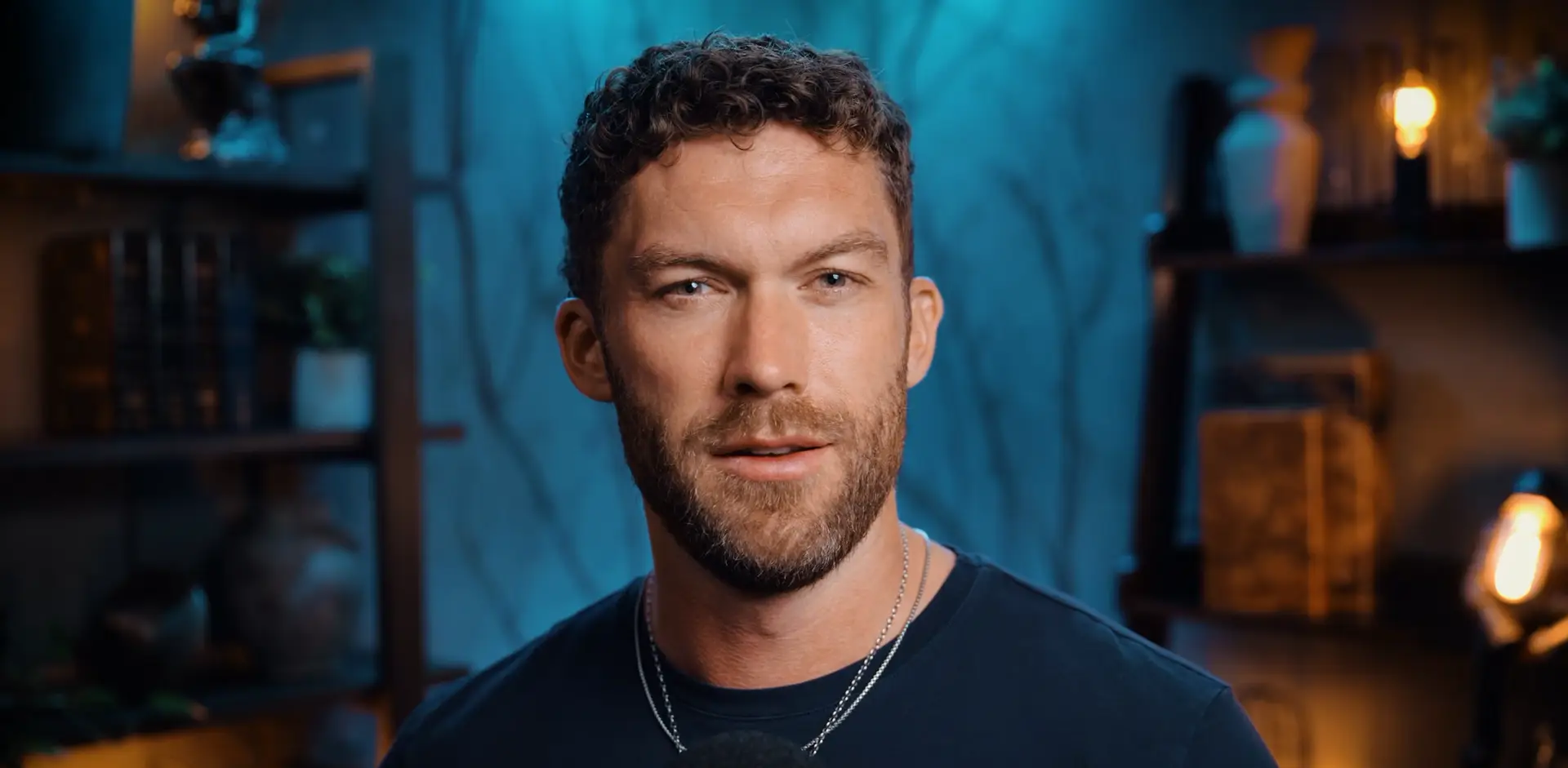
British podcaster Chris Williamson has accused ElevenLabs of copying his voice without permission. In a new video, the host of Modern Wisdom says the AI voice “Archer” even mimics his distinctive way of speaking. According to the video, ElevenLabs told him the voice was performed by a different voice actor and that a technical comparison found no strong match.
Williamson says Archer has since disappeared from the platform. But that still leaves one question unanswered: how was the voice created? His account highlights a growing problem for creators who make a living with their voices: what happens when listeners recognize them saying words they never spoke?
In the video, the podcaster also plays a video made with AI tools. Its audio is almost indistinguishable from Williamson’s real voice, and the resemblance is striking. That is precisely the problem with deepfakes.
A friend thought he was the narrator
Williamson says he first noticed the resemblance when a friend sent him a YouTube video about the disappearance of flight MH370 and asked whether he had narrated it. He had not, but he heard more than just a generic British accent.
He points to the way certain words are pronounced, along with subtle quirks he picked up growing up in northeast England. That combination made the narrator instantly recognizable to him. Later, he says, he heard similar audio in ads for products he does not endorse.
ElevenLabs offers software that turns written text into spoken audio. Users can choose from available voices or, subject to the company’s terms, clone their own.
ElevenLabs says a different voice actor was involved
According to correspondence Williamson cites in his video, ElevenLabs offered a different explanation. The company reportedly said it had worked with a voice actor to create Archer. It also said it was investigating whether the actor had acted deceptively, but had found no evidence of that at the time.
ElevenLabs also pointed to a technical voice comparison. The response Williamson quoted gave the result as 0.28, while setting a score above 0.7 as the threshold for a strong match.
Those figures are not percentages. The video does not provide enough information to independently assess how the test was conducted or what its results mean. And Williamson recognizing his own voice does not, by itself, prove that ElevenLabs used his recordings.
Archer’s removal does not explain where the voice came from, either. Williamson says he does not know why the company took it down. The move should not be treated as an admission that his accusation is correct.
More is at stake than compensation
Williamson says what matters most is having control over what people hear him say. Compensation, he argues, would not resolve his objection.
For a podcaster, a recognizable voice can also amount to an implied endorsement. If people think they hear a trusted host in an ad, they may assume that person supports the product—even if their name never appears.
Williamson also fears that repeated exposure to such audio could undermine trust in his real work. That is his concern, not an effect demonstrated by research in the video. But it helps explain why he describes the issue as an attack on his identity.
His account also highlights how difficult it can be to establish what happened. Williamson has an audience, business contacts and access to legal help, yet he still cannot determine how the disputed voice was made. That makes his story relevant to people with fewer ways to get a complaint noticed by a tech company.
Read also

Consent is the line AI voices must not cross
ElevenLabs’ usage policy prohibits cloning or imitating a living person’s voice without explicit, informed consent or other valid authorization. Deceptive ads and falsely implying an endorsement are also prohibited.
For its Professional Voice Cloning feature, the company also says users may clone only their own voice. A verification process is intended to confirm that the voice belongs to the user. That product rule, on its own, does not establish how Archer was created.
The debate over protection is not new. On July 31, 2024, the U.S. Copyright Office recommended new federal legislation to tackle unauthorized digital replicas, pointing to gaps in existing protections for voices and likenesses. That recommendation is not a ruling on Williamson’s complaint.
At the same time, a digital voice can give people back a measure of control. Baroness Jane Campbell, for example, used an AI version of her own voice in the UK Parliament. In Williamson’s case, the question remains: who can determine where a disputed AI voice came from when the creator and the platform offer different explanations?
Popular news
EU Leaders Meet in Dublin to Decide Who Pays for Europe’s AI Computing Power
Google DeepMind’s AlphaGenome 2 predicts what DNA variants do in specific cells
Anthropic Bankers Push IPO Pricing Above Initial Range to Reach 1.5 Trillion Valuation
Anthropic Says Automated Coding Tools Are Dismantling Nvidia Software Moat

US Data Brokers Supply Half Billion Dollars In AI Training Environments To Chinese Labs