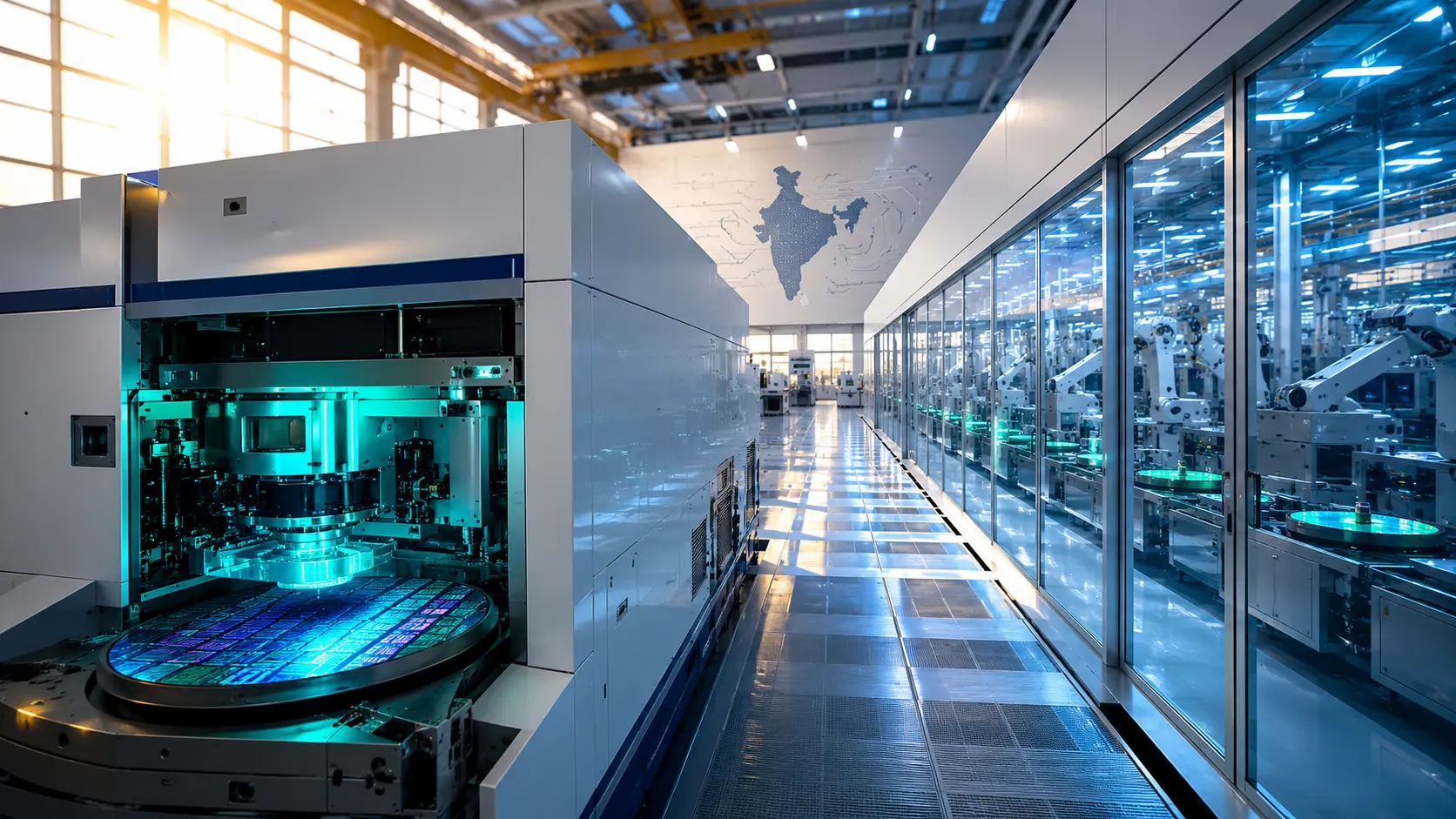
Dutch chip giant ASML will supply advanced lithography machines to Tata Electronics’ new semiconductor plant in India, taking a direct role in building the country’s first commercial 300mm fab in Dholera, Gujarat. According to Reuters and Tata Electronics, ASML is not only delivering equipment but also helping with operations, workforce training, and development of the local chip supply chain.
The partnership is a major step in India’s push to build its own semiconductor industry. It also strengthens ASML’s strategic position in the global AI chip stack at a time of rising geopolitical tension over chips, China, and tech sovereignty.
India races to reduce reliance on China and Taiwan
India has poured billions of dollars into building a domestic semiconductor sector. Tata Electronics’ Dholera fab alone represents an investment of roughly $11 billion. Reuters and Economic Times report the facility will target chips for AI systems, smartphones, automotive, and industrial use.
New Delhi views semiconductors as a strategic industry. Around the world, countries are trying to curb dependence on Taiwan and China due to geopolitical risks and fragile supply chains. The pandemic-era chip crunch only intensified the urgency to add regional manufacturing capacity.
India is positioning itself as an alternative production hub alongside Taiwan, South Korea, and China.
Why ASML is the linchpin
ASML is one of the most critical players in the chip industry. The Veldhoven-based company builds the lithography machines required to manufacture chips. Without these systems, modern semiconductors simply can’t be produced.
ASML’s EUV technology is pivotal for advanced AI chips from companies like NVIDIA, AMD, and Apple. While Tata’s fab is expected to start with mature nodes between 28nm and 110nm, ASML remains essential to the plant’s operational backbone.
Tata Electronics says ASML will provide a “holistic suite of lithography tools and solutions” for the fab. The collaboration also includes:
- training local talent;
- building research infrastructure;
- support for production processes;
- establishing a resilient supply chain.
It’s a sign ASML now delivers more than machines. The company is evolving into a geopolitical tech partner for nations building domestic chip industries.
AI supercharges the global chip race
The Tata–ASML deal lands as demand for AI chips explodes. Large AI models need massive compute and specialized semiconductors.
Governments are scrambling to secure their place in the chip value chain. The United States is investing tens of billions via the CHIPS Act. Europe is chasing strategic autonomy with the European Chips Act. India is now rolling out its own national chip strategy.
For ASML, that opens new growth beyond traditional markets like Taiwan, South Korea, and China—while diversifying geopolitical risk. With tighter export controls on China, chipmakers are actively seeking alternative growth markets.
Tata builds out an AI-to-silicon ecosystem
ASML is just one piece of a broader Tata Electronics plan to stand up a full semiconductor ecosystem in India. The company is partnering with several international players, including Taiwan’s Powerchip Semiconductor Manufacturing Corporation (PSMC).
Tata says the fab is targeting a monthly capacity of about 50,000 wafers. Its chips will serve global customers across:
- automotive;
- mobile devices;
- industrial automation;
- AI infrastructure.
The goal: move beyond assembly and establish India as a full-fledged production hub in the global AI economy.
Read also
Geopolitics moves to the foreground
The deal underscores how deeply chip technology is now entwined with geopolitics. ASML sits in a unique position at the center of the global contest for tech dominance, especially between the United States and China.
Washington has long pressed allies to restrict exports of advanced chip tech to China, making partnerships with countries like India increasingly strategic.
The presence of Indian Prime Minister Narendra Modi alongside Dutch government representatives at the signing signals this is more than a commercial agreement—it’s economic and geopolitical alignment.

Latest comments
Loading