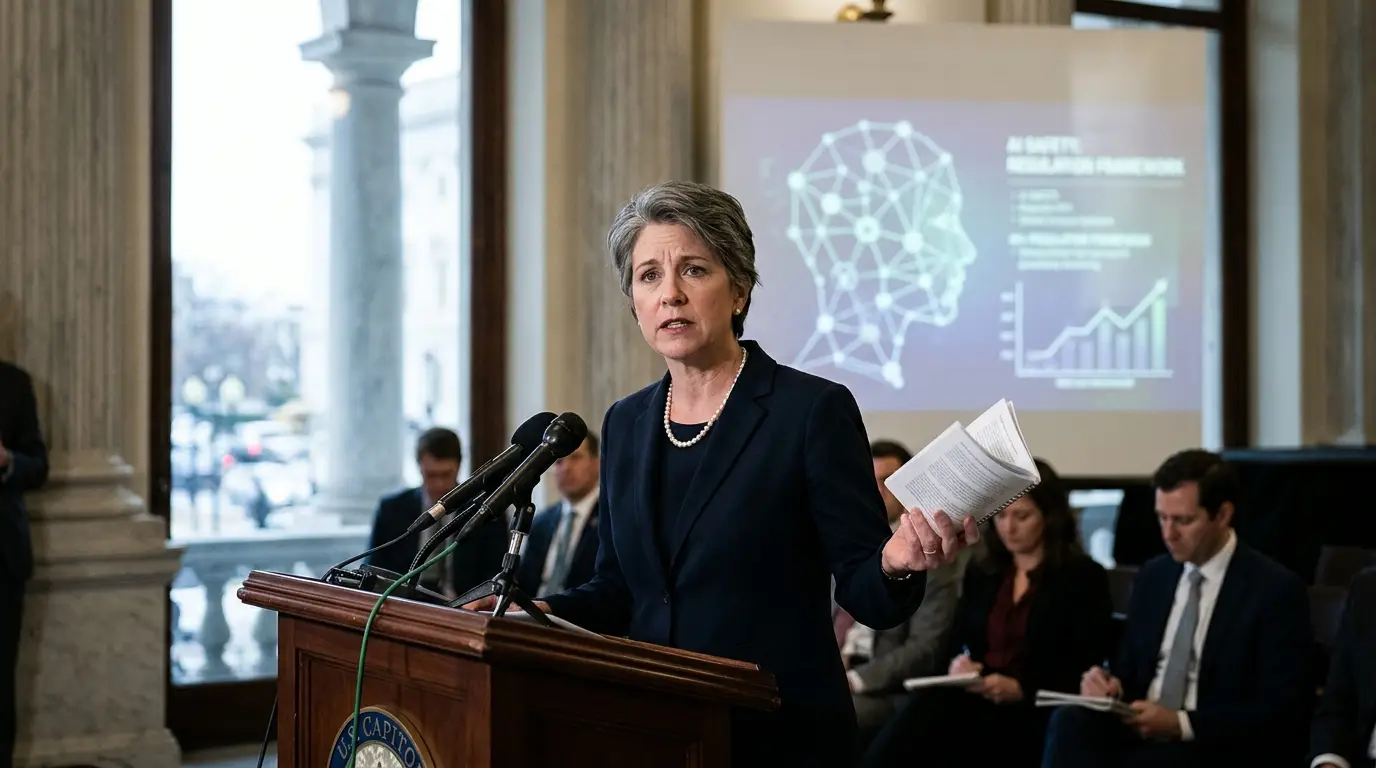
The push for federal regulation of artificial intelligence is gaining significant momentum ahead of the upcoming midterm elections. Concerns about technology risks are drawing heightened attention from both voters and politicians. Recent surveys indicate growing public support for government oversight.
Majorities across political parties now favor stricter rules. Candidates and political groups are actively bringing artificial intelligence into their campaigns. They highlight safety risks, effects on workers, and the rising costs of expanding data center infrastructure.
Voters in both parties want guardrails, and candidates have noticed this shift. However, for most voters, artificial intelligence remains part of a broader economic story rather than a standalone voting issue. Safety advocates see increased odds for federal legislation next year if Democrats gain control of Congress.
Significant hurdles would still remain in passing comprehensive bills. A new Congress ushered in by voters wanting stronger guardrails will feel the pressure to pass legislation that meets the moment.
Rising Public and Corporate Concerns
The stakes are rising for business leaders as real world cases involving rogue artificial intelligence agents begin to emerge. Major United States banks are currently restricting third party artificial intelligence agents.
This follows reports of agents accessing customer accounts and potentially acting beyond user instructions. Senators like Mark Warner have made artificial intelligence regulation a key focus of their reelection campaigns. They emphasize the urgent need for immediate guardrails to protect consumer finances.
As federal lawmakers struggle to agree on rules, states such as California and New York are moving ahead with their own safeguards. This growing focus on safety is expected to force corporate executives to step up their risk management and governance efforts.
Chief financial officers will play a central role in this transition. They must evaluate the full cost of deployment, including software, integration, human review, security, compliance, insurance, and the potential cost of an error. Relying solely on vendor safety claims is no longer a sufficient governance program, as noted by legal experts at Reed Smith.
Legislative Hurdles and State Actions
The debate over safeguards has gained urgency as prominent industry executives call for stronger protections. Leaders from major technology companies have disclosed security incidents involving their own models. They recognize that regulation is coming and prefer to discuss terms rather than face abrupt congressional mandates. Despite growing support for safeguards, lawmakers in Washington remain divided over how to regulate the industry.
Bipartisan Senate talks on safety legislation reached a standstill recently. No committee action is expected before the midterm elections. Negotiations are complicated by disagreements over how models should be tested before release.
Testing frameworks remain a point of contention regarding mandatory government evaluations versus internal assessments. In the House, bipartisan legislation would authorize the Commerce Department to suspend advanced artificial intelligence models presenting an imminent catastrophic risk. However, committee leaders have declined to commit to a vote this year, preferring to avoid rushing complicated legislation, according to the CFO Dive report.
| Legislative Proposal Focus | Current Status | Primary Challenge |
| Federal Testing Mandates | Stalled in Senate | Disagreement over evaluation methods |
| State Level Safeguards | Active in multiple states | Risk of conflicting compliance landscapes |
| Commerce Department Authority | Introduced in House | Reluctance to rush complex bills |
| Voluntary Industry Commitments | Signed by major tech firms | Lack of enforceable penalties |
Financial Leadership and Risk Management
Chief financial officers must now navigate a complex environment of emerging regulations and operational risks. The financial impact of noncompliance can be severe, encompassing regulatory fines, reputational damage, and operational downtime. Companies are increasingly advised to implement robust internal audit frameworks specifically designed for artificial intelligence deployments.
This proactive approach ensures that financial leaders can accurately forecast liabilities and allocate resources for continuous monitoring. As the regulatory environment evolves, maintaining transparency and accountability will be essential for sustaining investor confidence and market stability. Experts emphasize that evaluating the full cost of deployment requires looking beyond initial software expenses. Leaders must account for integration, human review, security protocols, compliance measures, insurance premiums, and the potential financial fallout of an error.

Popular news

Gemini 4 Carbon leads today's AI news as ChatGPT adds API credits

Apple Creator Studio Update Adds MotionVFX and Artificial Intelligence Features

MIT Researchers Observe AI Agents Playing Without Assigned Tasks

Meta Tests AI Pet Journaling App in the Philippines

Nvidia and Oracle Expand Cloud Infrastructure to Fix Idle GPU Problems

Dartmouth Provost Resigns Over Undisclosed Artificial Intelligence Use
Latest comments
Loading