
Google's latest world-model preview adds sound to environments you can explore. Today's episode also follows AI equipment onto the highway, looks at a developer's attempt to improve his family's television, and checks two new tools for putting assistants to work.
Listen to the episode
Follow AI World Today: Daily News on Spotify, Apple Podcasts, or Amazon Music. Explore previous editions in the podcast archive.
Genie 4 makes its worlds audible
Google DeepMind's Genie 4 announcement describes environments that generate sound alongside their visuals, including ambience, music and conversational characters. Users can explore a scene and request changes while it unfolds.
For a filmmaker, that could mean trying a different atmosphere or camera position before production. For a game designer, it could offer a quick way to explore how a setting feels. These are promising creative uses, although the announcement does not establish a dependable engine for a finished game.
Access remains a research preview for selected testers. Google plans to bring the model to Google AI Ultra through Project Genie and to selected developer partners, without a wider release date.
The model's limitations matter: continuous interaction lasts a few minutes, details can drift, and plausible scenes can misrepresent how the world works. Sound makes the experience richer; sustained consistency remains an important test.
Expensive AI equipment faces ordinary transport risks
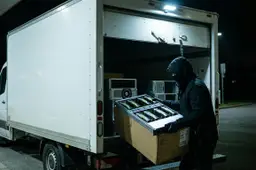
The equipment behind AI still travels through warehouses and along public roads. That creates opportunities for theft before it reaches a data center.
Cargo-security company Overhaul reports more than $150 million in AI equipment stolen this year. The figure comes from the company's reporting, rather than a comprehensive official count. The category includes chips and other computing equipment, so describing every incident as a GPU theft would overstate the evidence.
The FBI has described cargo fraud involving impersonated logistics companies and compromised accounts. Securing the destination alone leaves part of the journey exposed.
An earlier September case involving PlusAI supplies the unusual twist. Two stolen trailers, one carrying Nvidia branding, contained 40,000 pounds of testing sand. A photograph helped locate them, and police recovered the trailers and their contents. What the thieves expected to find remains unknown.
A better home screen for the family TV
AI World Today's device-customization story points toward a practical use for coding assistants: helping owners understand and improve the software on hardware they already have.
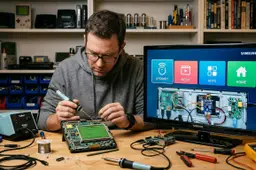
A concrete example is CleanYourTV. Developer Gathin says he used Claude Code to disable 25 advertising and tracking packages on his parents' Xiaomi television and create a simpler home screen.
The published project uses existing Android tools with the owner's authorization. It disables selected packages rather than permanently uninstalling them and provides a way to undo the changes.
Compatibility varies by device. The main approach targets Android TV and Google TV, does not remove every advertisement inside streaming apps, and can be affected by firmware updates.
The useful idea is modest: a working television may need a better software experience. AI assistance could make that kind of personal project easier to attempt, provided owners check the changes and understand their effects.
Apple puts assistants inside familiar documents
Apple's Creator Studio update brings assistants to Pages, Keynote and Numbers in November. They begin in U.S. English beta for subscribers with compatible devices and software. On Macs running macOS 27 or later, Model Context Protocol support will also let external agents read, edit and act within the apps.
Akamai draws boundaries around generated code
Akamai's Agent Sandbox is a technology preview for executing AI-generated code with restrictions on permissions and resources. Outbound internet access is blocked by default.
The company says its runtime enforces those boundaries. That is a product claim, and the effectiveness of isolation depends on its implementation.
The preview currently suits short execution steps. Support for agents that remain active for days or weeks is planned for a later addition. The distinction matters when evaluating what a tool can do today.
What connects today's stories
These stories put AI into very different settings: an imagined landscape, a truck shipment, a family living room and a work document.
Each also raises a practical question. Will the generated world remain consistent? Will the equipment arrive? Can an owner undo a software change? What is an assistant allowed to access?
Those questions will help determine which demonstrations become useful everyday tools.
This episode is narrated by an AI voice.

Popular news
Grand Theft GPU - How Thieves Steal Data Center Hardware in Transit

Anthropic Is Going Public: What Claude’s Numbers Reveal

Steam Next Fest Top Demos Reveal Player Preferences Beyond AI Hype

More FPS with AI and DLSS Doesn’t Automatically Mean a More Responsive Game
AI Reverse Engineering Movement Revives Old Gadgets and Strips Smart TV Ads

Epic CEO Criticizes Steam AI Disclosure Rules as Partisan Overreach
Latest comments
Loading