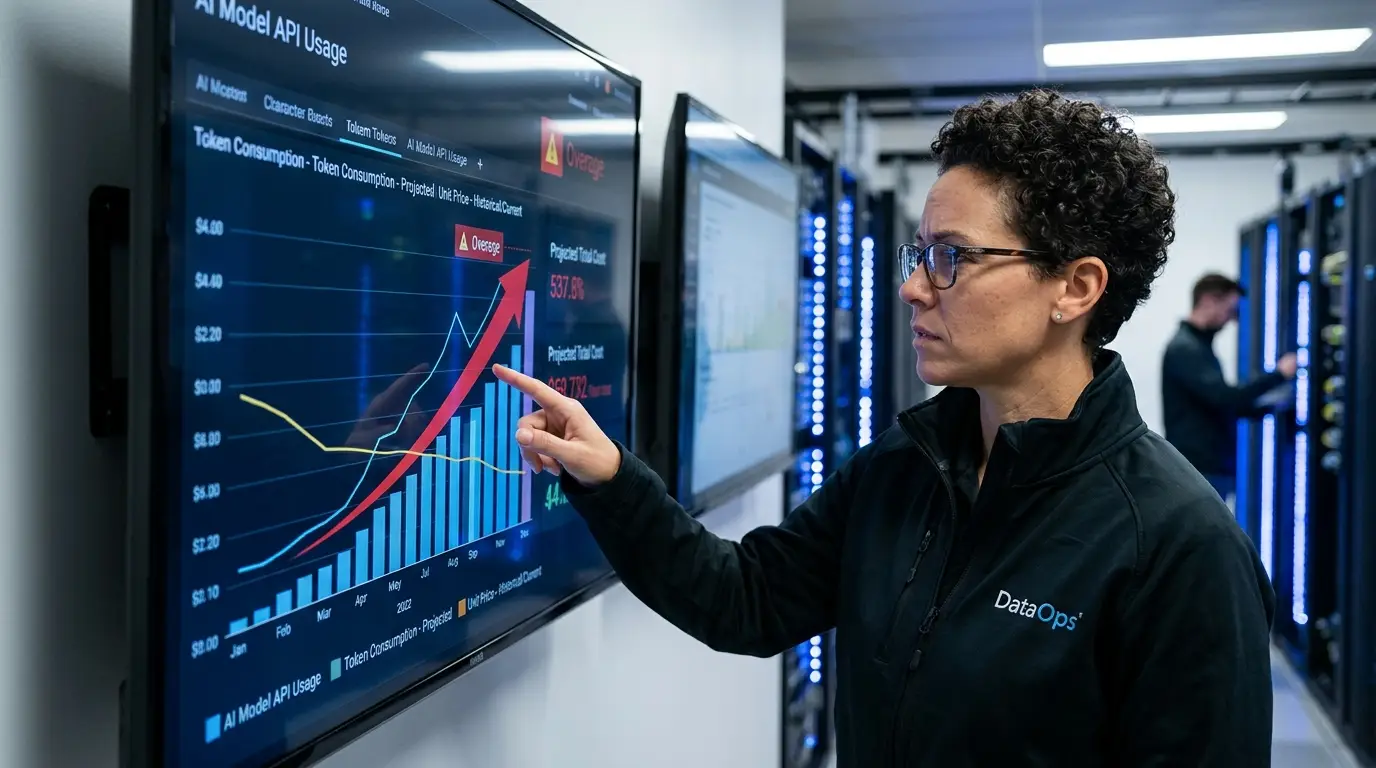
Artificial intelligence costs may not decrease alongside dropping unit prices. A new Accenture research report indicates that enterprise AI token consumption is projected to surge by 78 percent over the next 24 months. This massive increase in usage will likely cancel out the anticipated 19 percent drop in average token prices. Businesses must now focus on the total cost of artificial intelligence enabled work rather than relying on falling per unit metrics. Leaders must evaluate the complete financial picture before expanding their digital infrastructure.
The Hidden Cost of Expanding AI Use
Many organizations struggle to connect artificial intelligence spending with tangible business results. The official Accenture research portal reveals that fewer than 20 percent of enterprise token expenditures can be traced to a quantified financial outcome. This creates a significant blind spot for technology leaders across all industries. Companies often cannot predict their quarterly token volume or explain the return on investment after the money is actually spent.
When costs remain unpredictable, finance departments hesitate to approve larger artificial intelligence budgets. Boards of directors increasingly demand clear explanations for these rapidly growing expenses. Chief information officers must now transform token consumption from an unpredictable operating expense into a measurable investment that drives real corporate value.
Strategic Responses to Falling Prices
The research highlights a fascinating behavioral trend among corporate leaders. If token prices were to decline by 25 percent or more, only 5 percent of organizations would choose to retain those savings. Instead, 42 percent of executives plan to expand AI access to more employees. Another 35 percent intend to introduce new applications that were previously deemed too expensive.
This pattern demonstrates that cheaper technology naturally encourages wider adoption. Companies must decide how to deploy the additional capacity created by artificial intelligence. Survey data shows that 60 percent of executives plan to redirect newly released human capacity toward higher value strategic work. Meanwhile, 51 percent intend to reinvest those resources directly into growth initiatives.
| Metric Category | Projected Change | Business Impact |
| Token Consumption Volume | 78 percent increase | Higher aggregate spend despite lower unit costs |
| Average Token Price | 19 percent decrease | Encourages broader employee access and new use cases |
| Budget Exhaustion Rate | 1 in 3 organizations | Companies run out of AI funds before year end |
| Outcome Tracking Capability | 35 percent of firms | Minority can calculate cost per specific business outcome |
The Path Forward for Technology Leaders
Human skills remain absolutely critical as artificial intelligence assumes more routine analytical tasks. The survey found that 70 percent of organizations use AI primarily to augment human effort. Only 4 percent deploy it mainly to replace human workers.
Businesses must continuously reassess how they allocate work between people and automated systems. Tracking the true cost of delivering business outcomes requires entirely new governance frameworks. Implementing chargeback models and routing tasks to appropriately sized models can prevent severe budget overruns. Organizations that master these financial disciplines will successfully convert artificial intelligence consumption into a sustainable competitive advantage for the future.

Popular news

Gemini 4 Carbon leads today's AI news as ChatGPT adds API credits
PsiQuantum Unveils Optical Circuit Switch for AI Data Centers

Dartmouth Provost Resigns Over Undisclosed Artificial Intelligence Use

Samsung Electronics Posts Record Profit Driven by AI Chip Demand

GitHub Copilot Fusion Cuts Coding Costs Through Intelligent Model Orchestration

Google Gemini 4 Carbon Secures Top Benchmark Rankings With Limited Cybersecurity Access
Latest comments
Loading