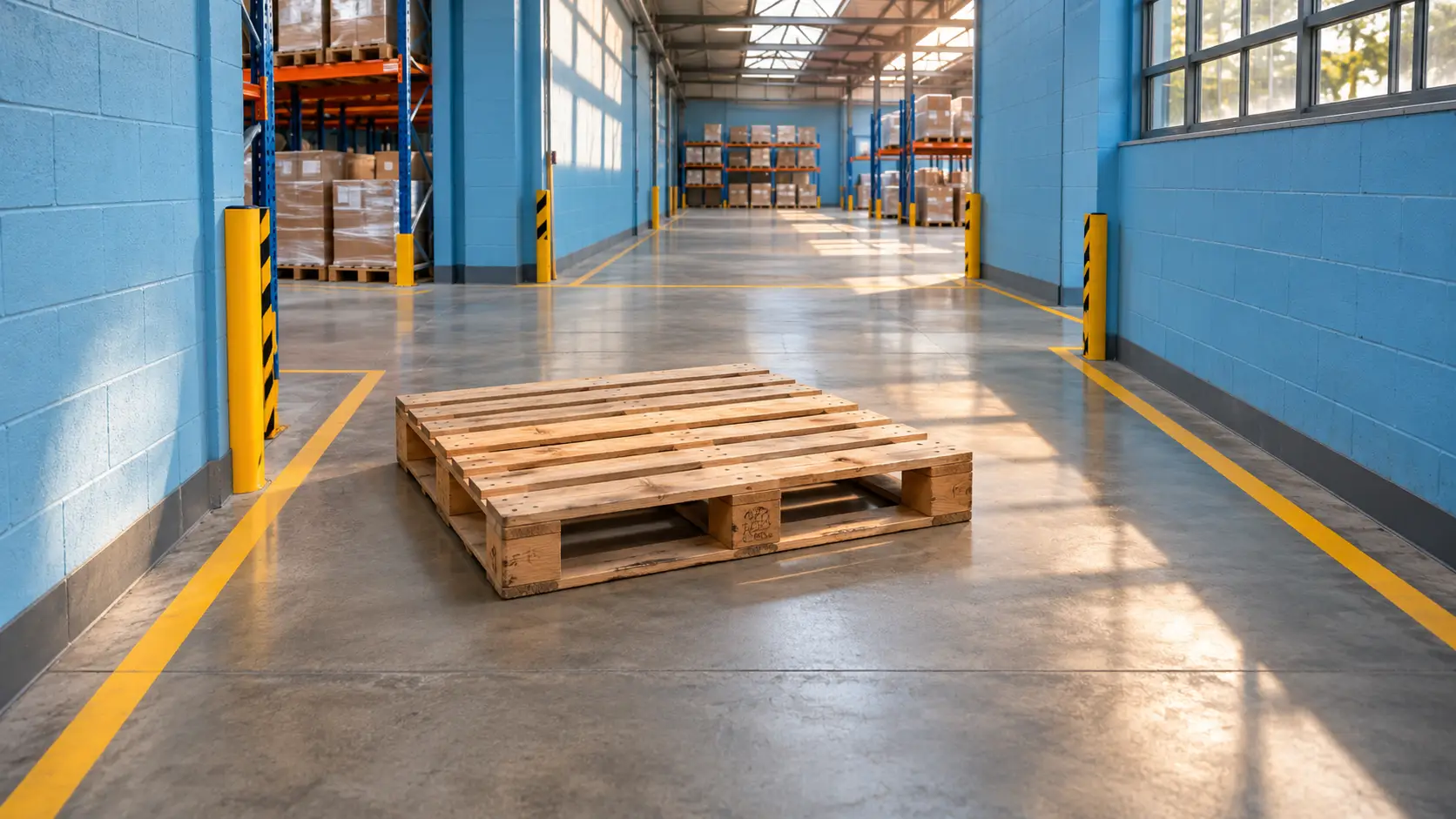
Illustration of an aisle obstruction that can change a warehouse vehicle's route.
An automated guided vehicle will usually stay on its assigned path when an aisle is blocked. An autonomous mobile robot can take another route if it has a clear and approved one. The path rules matter as much as the name on the vehicle.
One pallet, two ways to reach packing
Picture a pallet going from receiving to packing. The normal route runs along the south aisle. During a shift, someone stages a second pallet in the middle of that aisle. An open north aisle also reaches packing. Here is how the same job could run under two different fleet settings.
Illustrative floor plan A. Fixed path.Receiving → south aisle → stop before the blocked pallet.Packing is farther down the same aisle. The north aisle is open, but it has no approved route for this job. In this setup the guided vehicle waits at the stop. An operator clears the path or dispatches another job.
Illustrative floor plan B. Approved detour.Receiving → approach to south aisle → west cross-aisle → north aisle → east cross-aisle → packing.The fleet marks the usual segment as blocked. The mobile robot can use the L-shaped connections at either end to join the parallel aisle, if the route is open and permitted for the loaded vehicle.

How does a guided route differ from a map?
An automated guided vehicle, or AGV, follows a defined path. A guide can be physical, such as magnetic tape, or it can be a route defined in software. On a network with approved branches, fleet software may choose another preset path. Plan A gives it just one.
An autonomous mobile robot, or AMR, uses sensors and a map to place itself in the building. OMRON's AMR documentation describes routes based on features in the site. Its fleet software also offers distinct modes, from staying on an assigned path to allowing limited detours or more freedom. Even a vehicle that can plan its own route may have to wait when a lane ends.
The route planner chooses a path. The fleet rules define where it may travel. The safety system constrains its motion around people and objects. In the example, the free north aisle is useful only if the map includes it and site staff approved it for a vehicle carrying that pallet.
Test the route you expect to run
Map where the vehicle must turn at full load. A walkway can look clear from the start point and still be too tight near a station. Ask what happens if there is a second block, if a person steps into the approved detour or if two vehicles need the same aisle. The OSHA technical manual on industrial robot systems explains why the constraints of a full application matter in a risk assessment.
Use the same load and dispatch points in vendor demos. Record how long the job took, how often the robot waited and whether a person had to intervene. Run the test during a quiet shift and again under normal traffic.
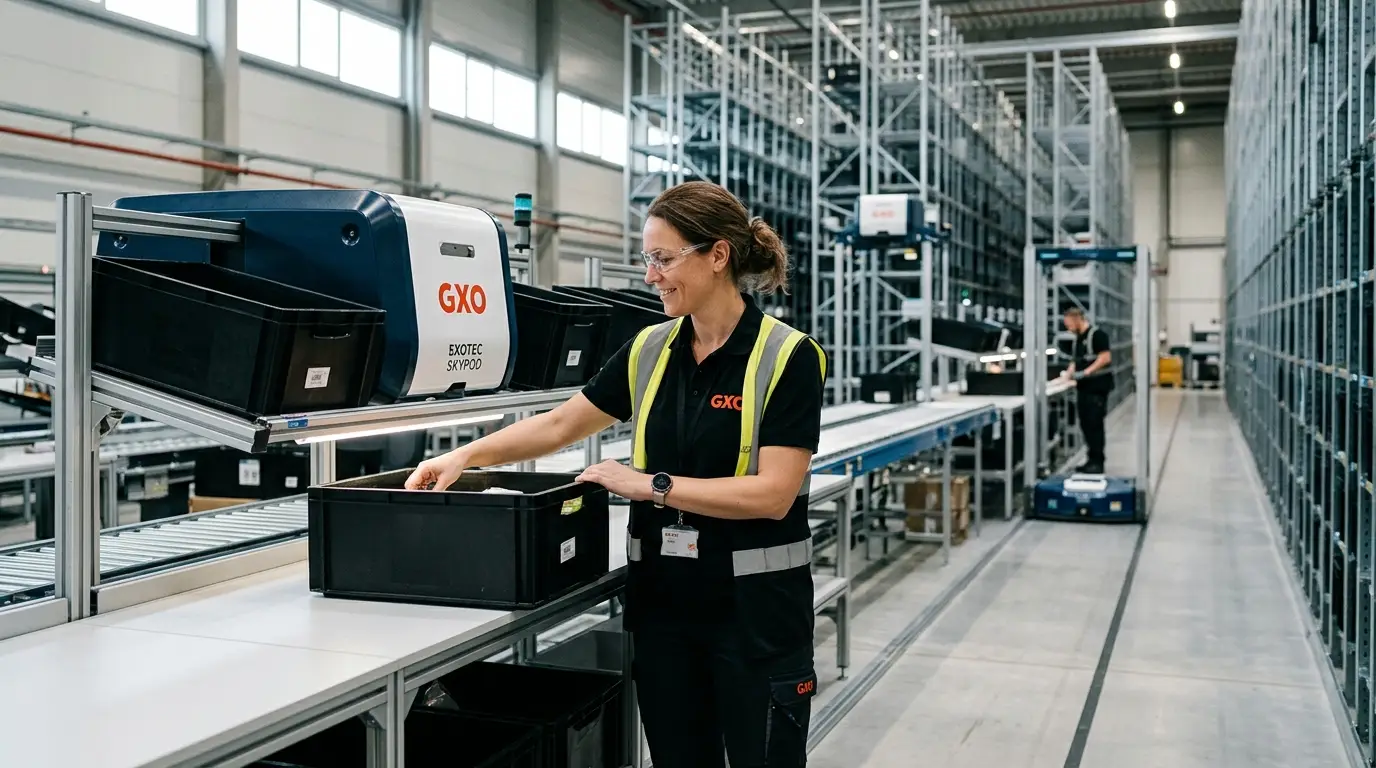
Compare a repeatable lane with a floor that changes each week. A guided lane may fit the first job. A mapped fleet may earn its keep in the second if enough permitted alternatives exist. GXO's installation in Venlo shows a different choice again. Its storage robots work as part of a linked layout that brings stock to staffed stations.
This route choice is one part of the warehouse robot task comparison, which follows the load from storage to dispatch.


Popular news

Marlowe raises $277 million to run AI on more kinds of chips
Replit brings in Resonate to help AI agents resume interrupted work

OpenAI adds spending limits to individual AI agent sessions

Amazon signs deal for Decart software to speed up Trainium

Amazon Connect AI now fills forms during live support calls