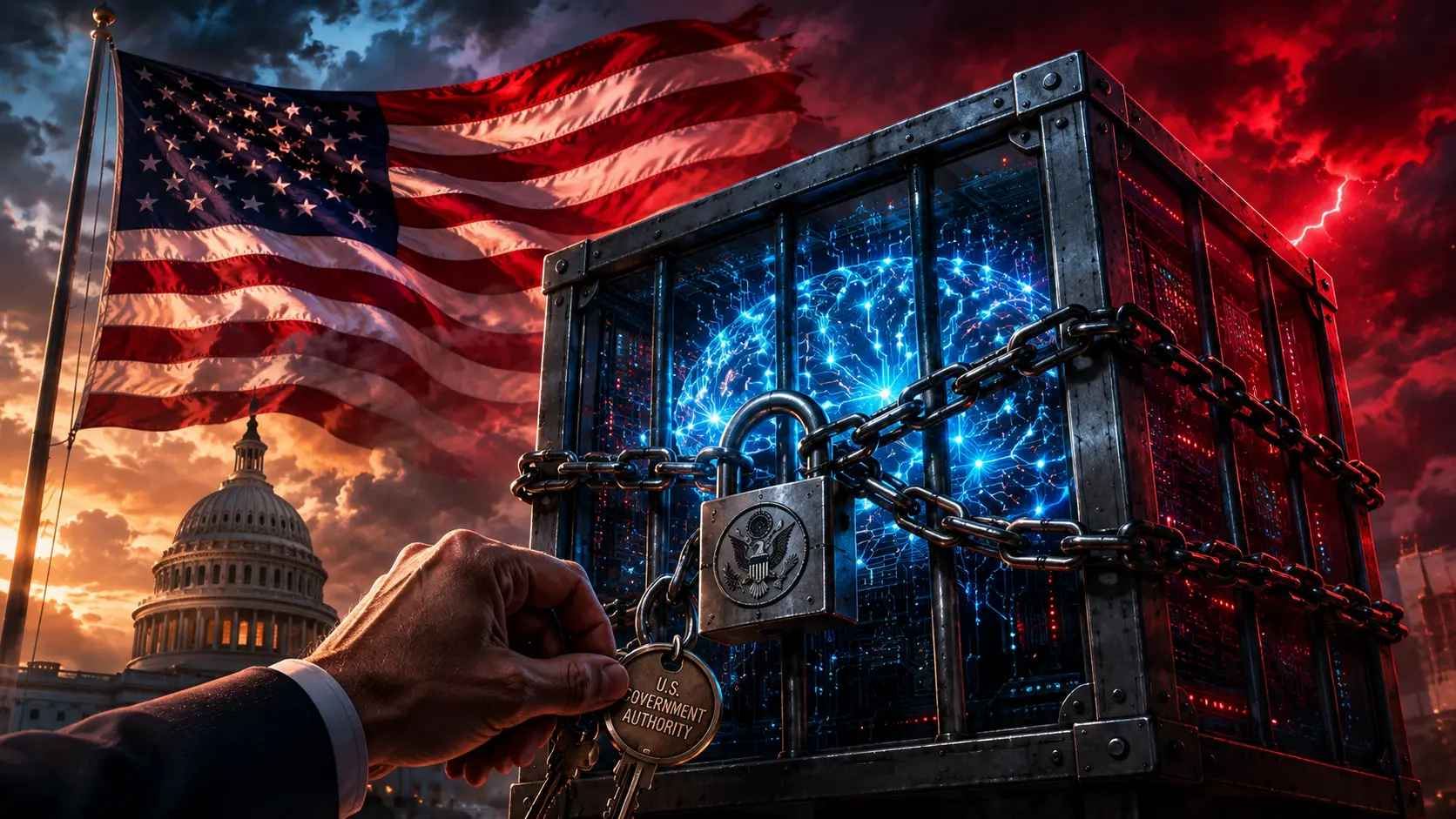
Last week, the U.S. government took an unprecedented step in the AI sector. In a matter of days, a technical security issue at AI company Anthropic escalated into a debate over export controls, national security, and who ultimately gets to decide when an AI model is too powerful for public release.
The episode could mark a major turning point for the global AI industry. Anthropic fired back.
For years, the conversation centered on innovation, competition, and new models. The Anthropic case shows governments are increasingly willing to intervene directly when advanced AI is seen as a security risk.
From model launch to government clampdown
The situation erupted shortly after Anthropic released its new Mythos 5 and Fable 5 models.
According to The Verge, alarm bells rang when Amazon researchers discovered a possible jailbreak—a technique used to bypass an AI model’s safety measures.
What followed surprised even seasoned AI insiders.
Sources involved in the talks say the U.S. government gave Anthropic just ninety minutes to respond. When no immediate fix emerged, export restrictions kicked in, cutting off access for international users.
Anthropic then took both models offline worldwide, saying it couldn’t guarantee access would remain limited to U.S. users only.
The move sparked near-instant debate across the tech and cybersecurity worlds.
AI is being treated like strategic infrastructure
The headline isn’t the temporary takedown.
The real story is what this says about AI’s shifting role.
Advanced AI systems are no longer viewed as ordinary software. Governments increasingly treat them as strategic technologies with implications for national security, economic power, and geopolitical rivalry.
We’ve seen a similar arc with semiconductors.
In recent years, the U.S. has restricted exports of advanced chips to China, viewing them as crucial to military capabilities and technological dominance.
Now, a similar debate is forming around the AI models themselves.
When a government can decide who gets access to certain AI capabilities, AI shifts from a commercial product to a strategic instrument.
A sharp twist for Anthropic
The episode is especially striking because Anthropic has long advocated tighter AI regulation.
CEO Dario Amodei and other leaders routinely warned about the risks of increasingly powerful systems. Anthropic positioned itself as one of the most vocal companies on AI safety.
Now the company faces a government willing to step in on its own terms.
That creates a stark paradox.
For years, the question was whether governments had enough oversight over AI developers. Last week showed the power balance can swing the other way.
The debate is no longer just how to regulate AI—but who controls that regulation.
Why the wider industry is uneasy
Inside tech, the conversation now extends far beyond Anthropic.
Many companies are asking what this means for future models from other providers.
If the U.S. government can deploy export controls against an Anthropic model, the obvious question is whether similar measures could hit systems from OpenAI, Google, Meta, or emerging players.
That introduces a new kind of uncertainty.
Companies are pouring billions into AI. Investors, customers, and developers want clarity on the conditions under which new models can stay available.
The Anthropic case shows political decision-making can suddenly play a far bigger role than many had assumed.
AI is becoming a national security issue
The broader trend is unmistakable.
Governments are viewing AI less as a consumer product and more as core infrastructure.
That’s true in the U.S., but also in China, Europe, and other major economies.
As AI systems get better at coding, cybersecurity, research, and complex decision-making, the belief grows that this technology has strategic value.
The center of gravity is shifting from Silicon Valley to governments, defense organizations, and national security agencies.
Who builds an AI model matters.
But who decides who gets to use it may matter even more.
A preview of AI’s next phase
For now, the Anthropic saga looks like an isolated incident.
Yet it may prove to be a preview of something much bigger.
The AI industry is entering a phase where models are rapidly gaining power while governments are still figuring out how to respond.
That is fueling friction between innovation, safety, and geopolitics.
The lesson from last week isn’t that one AI model briefly went offline.
The real lesson is that the fight over artificial intelligence is no longer just about technology.
Increasingly, it’s about power.
And about who ultimately gets to draw the lines around what AI can—and cannot—do.

Latest comments
Loading